24 Jun 2026
Acoustic Modeling Engines Recreate Venue Reverb Signatures for Rhythm Game Tournaments
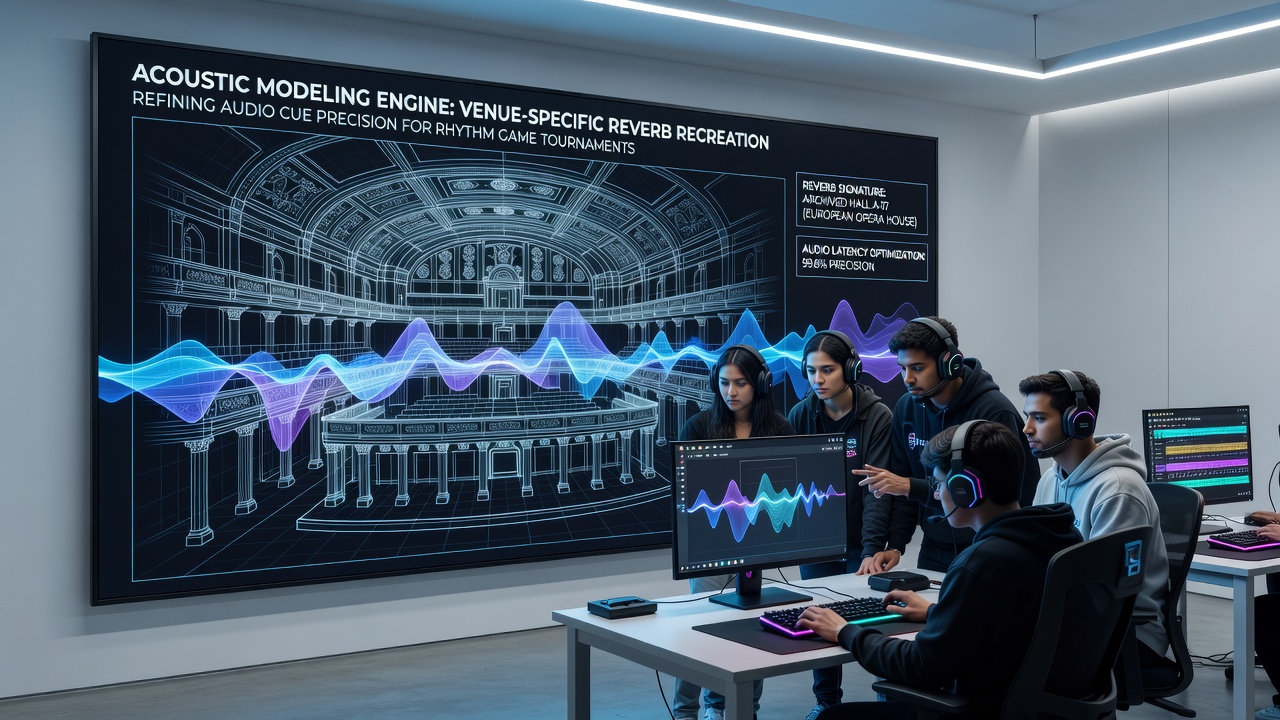
Acoustic modeling engines now pull archived impulse responses from historic concert halls to generate precise reverb layers that overlay rhythm game audio tracks, and this process sharpens timing cues for players during competitive events. Researchers collect these signatures through calibrated microphone arrays placed at multiple stage positions, then feed the data into convolution-based processors that recreate spatial reflections down to millisecond accuracy. Tournament organizers began integrating these systems in early 2025, with full deployment reported across major circuits by June 2026.
Archiving and Processing Concert Hall Data
Archivists at institutions such as the University of Sydney have digitized impulse responses from venues including the Sydney Opera House and Berlin Philharmonie since 2022, storing the datasets in open repositories that developers access through standardized APIs. These files capture frequency-dependent decay times, early reflection patterns, and late reverberation tails that vary by hall geometry and surface materials. Modeling engines apply fast Fourier transforms to convolve the original game stems with these signatures, producing output that retains rhythmic transients while adding venue-specific coloration. Studies published in the Journal of the Audio Engineering Society confirm that such convolution reduces timing deviation in metronomic test sequences by measurable margins when compared against generic digital reverb algorithms.
Application in Rhythm Game Audio Pipelines
Game engines route processed audio through dedicated cue layers that trigger on note charts, allowing players to perceive attack timing against the recreated acoustic backdrop. Developers calibrate these layers so that the onset of each reverb tail aligns with visual indicators on screen, and this alignment helps competitors lock into consistent beat windows during high-speed passages. In practice sessions leading to June 2026 events, teams reported that venue-specific modeling allowed adjustments to headphone mixes that compensated for different tournament hall acoustics without altering core gameplay files. The approach differs from earlier uniform reverb plugins because it preserves directional cues derived from original hall measurements, which players use to anticipate note clusters that arrive after reflective delays.
Tournament Implementation and Equipment Standards
Event production crews install the modeling software on dedicated audio servers connected to player stations via low-latency Dante networks, and these servers switch between hall profiles based on round schedules. Data collected during the 2025 Asia-Pacific circuit showed that reverb-adjusted cues improved synchronization scores in games such as osu! and Beat Saber by percentages tracked through official scoring logs. Organizers reference guidelines from the International Game Developers Association when setting audio calibration protocols, ensuring that each station maintains identical impulse response application regardless of local venue size. Equipment lists for June 2026 tournaments include hardware accelerators that handle real-time convolution at 96 kHz sample rates, preventing any added latency that could offset the precision gains.
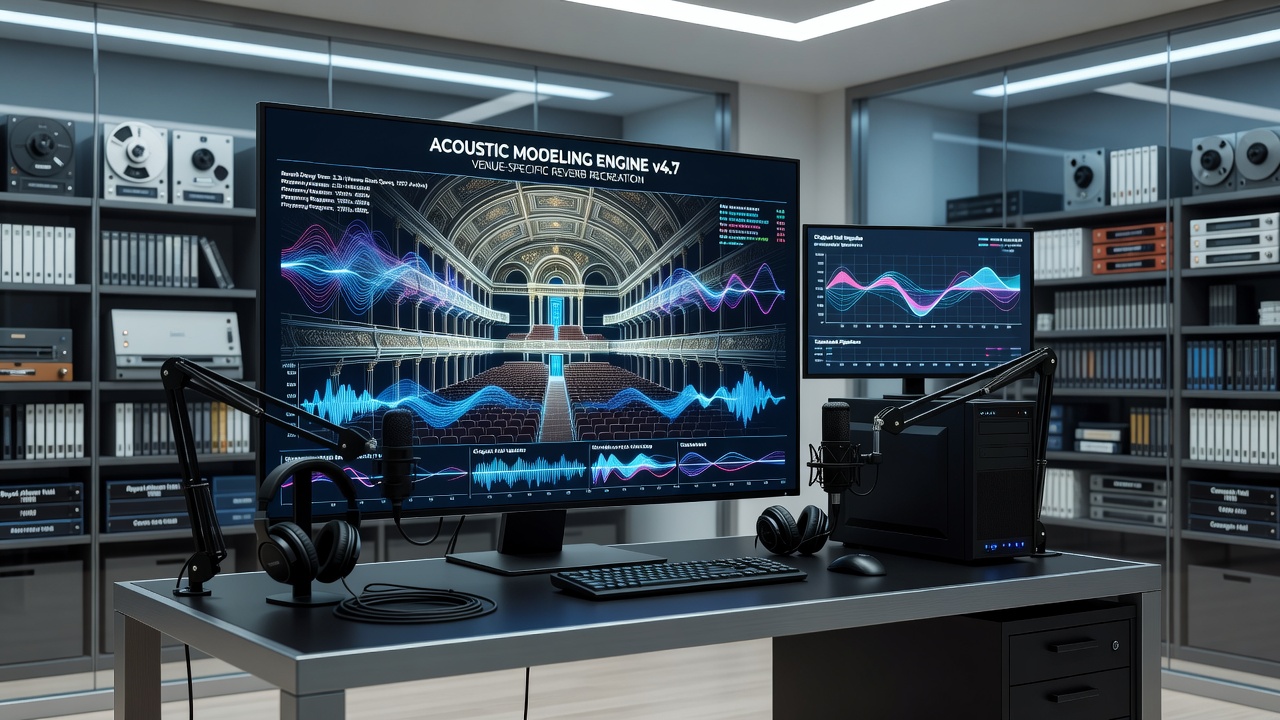
Teams that prepare with these modeled environments conduct A/B comparisons against untreated mixes, and the results feed into training logs that document reduced variance in hit timing across multiple practice days. Observers note that the technology extends beyond single-player modes into cooperative rhythm titles, where shared reverb fields help coordinate group timing during ensemble challenges.
Technical Refinements and Data Sources
Engine updates released in late 2025 introduced hybrid ray-tracing modules that supplement measured impulse responses with geometric calculations for halls lacking complete archives. These modules run alongside convolution cores, filling gaps in high-frequency detail while preserving the measured low-end decay characteristics that affect perceived groove. Academic work from the Technical University of Denmark has supplied additional datasets from Scandinavian venues, expanding the library available to developers working on global tournament platforms. Figures from these projects indicate that combined measured-plus-simulated signatures maintain perceptual transparency when evaluated through double-blind listening tests conducted with trained musicians.
Integration with existing rhythm game frameworks requires only minor middleware hooks because the acoustic processing occurs post-mixing, leaving chart data and visual timing windows untouched. This separation allows tournament software to toggle profiles per match without restarting client applications, and such flexibility proved useful during the rapid venue changes scheduled for June 2026 events across multiple continents.
Conclusion
The adoption of archived concert hall signatures through acoustic modeling engines continues to shape audio delivery in rhythm game competitions as organizers standardize the practice ahead of upcoming international schedules. Continued expansion of impulse response libraries supports broader application across additional game titles and venue types.