19 Jun 2026
Analyzing Data Compression Methods Enabling Low-Latency Streaming of High-Fidelity Game Footage to Remote Viewing Audiences
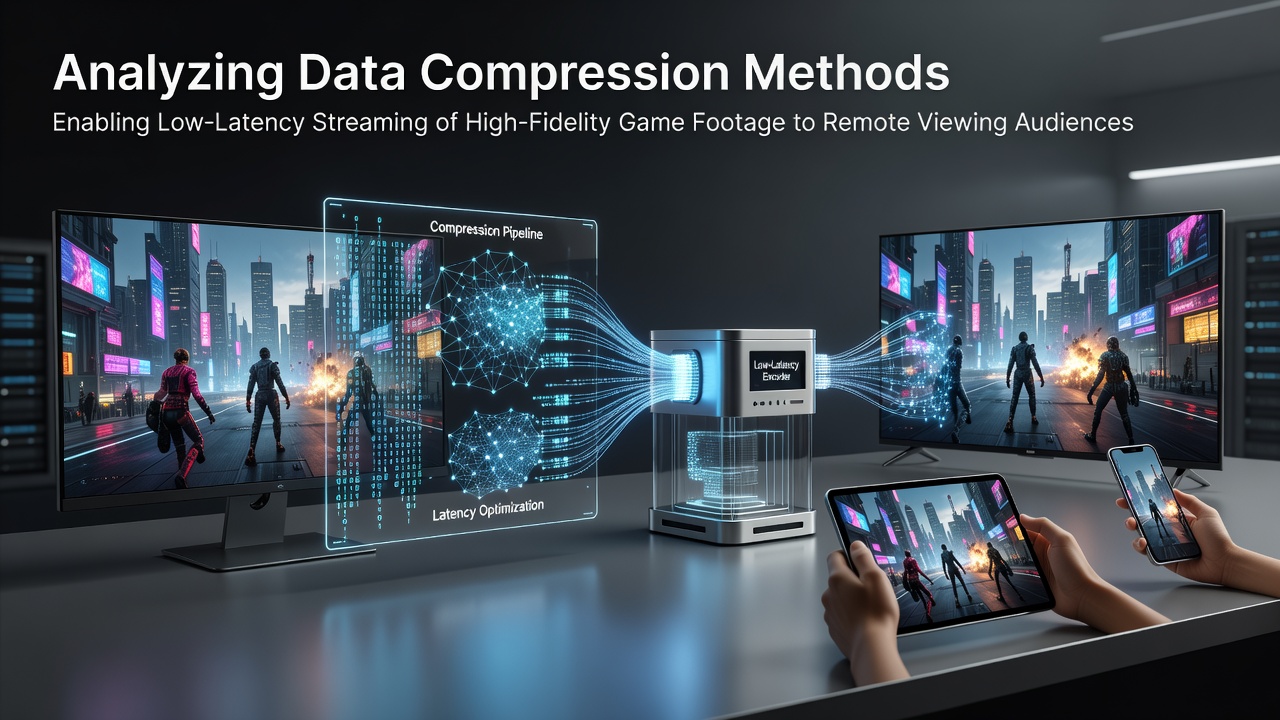
Game footage streaming to remote audiences relies on compression techniques that balance visual fidelity against transmission delays, and observers note that these methods have evolved through iterative refinements in codec design since the early days of cloud gaming services. Data centers handling live game broadcasts process frames at high resolutions while maintaining end-to-end latencies under 50 milliseconds in many professional setups, according to industry reports tracking esports production pipelines.
Core Technical Requirements for Low-Latency Delivery
High-fidelity game footage demands compression that preserves fine details such as particle effects and texture gradients, yet the encoding process must complete within tight time windows to avoid perceptible lag for viewers. Researchers have documented how traditional broadcast codecs introduce buffering delays when applied directly to interactive content, which prompted developers to adapt algorithms for real-time constraints. In practice, systems reduce group-of-pictures sizes and employ intra-refresh techniques so that each frame can be decoded independently without waiting for reference frames from distant timestamps.
Hardware encoders integrated into graphics cards accelerate these operations through parallel processing pipelines, and studies indicate that such acceleration cuts encoding times by factors of three to five compared with software-only implementations. Remote audiences accessing streams through standard broadband connections receive packets that have undergone quantization and entropy coding steps designed to minimize bitrate spikes during fast-motion sequences common in competitive titles.
Established and Emerging Codec Frameworks
Standards such as H.264 continue to serve many streaming platforms because of widespread decoder support across consumer devices, while H.265 offers improved efficiency through larger coding tree units that capture spatial redundancies more effectively. Data from the International Telecommunication Union shows that adoption rates for newer codecs have accelerated as hardware decoding becomes standard in televisions and mobile chipsets. AV1, developed through collaborative efforts among multiple technology firms, provides royalty-free licensing that appeals to platforms seeking cost predictability, and its implementation in game streaming software has demonstrated bitrate reductions of 20 to 30 percent over previous generations for equivalent quality levels.
Versatile Video Coding, ratified more recently, introduces additional partitioning modes that adapt to the irregular motion patterns found in rendered game environments. Those who have measured performance across these codecs report that selection depends on the target audience's device ecosystem and available network headroom, with hybrid deployments often routing different streams based on detected client capabilities.
Optimizations Specific to Interactive Content
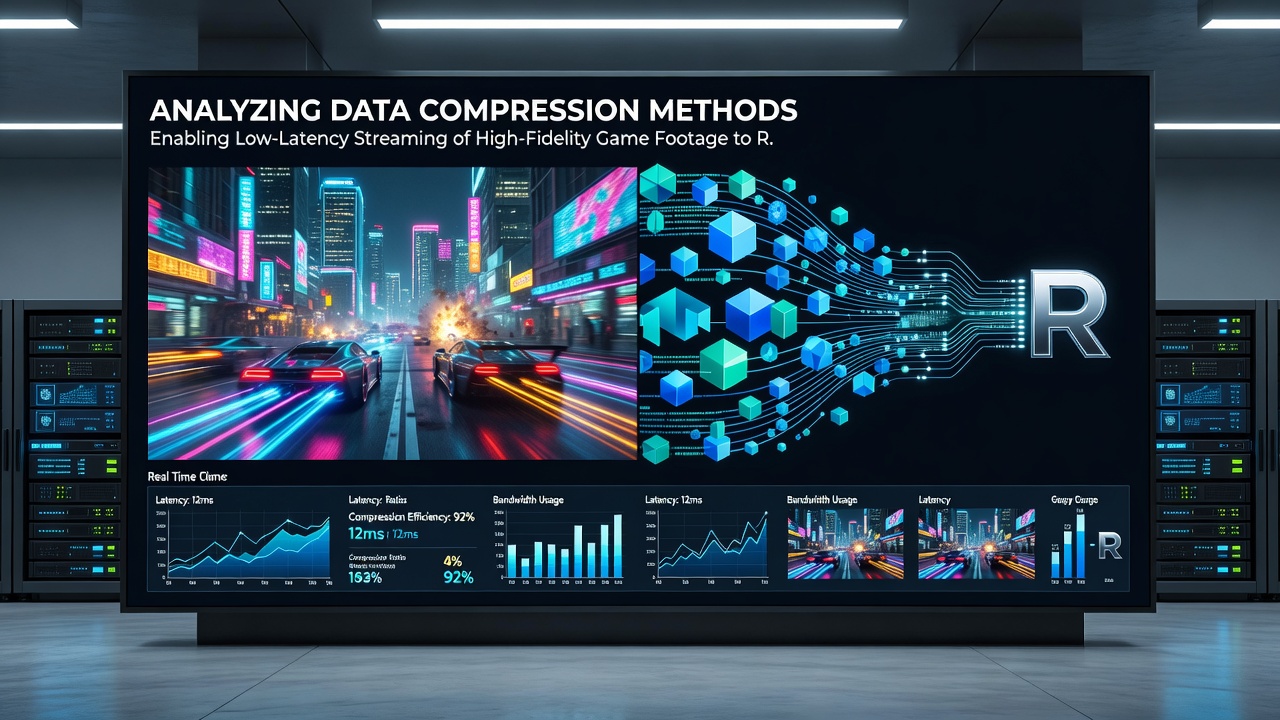
Game engines generate frames with predictable temporal coherence between consecutive renders, and compression pipelines exploit this property through motion estimation vectors that reference prior frames more accurately than camera-captured video allows. Slice-based encoding divides each frame into independently decodable segments, enabling partial transmission and reconstruction that lowers perceived latency when packet loss occurs on congested networks. Observers tracking deployments note that forward error correction layers are frequently added to these streams without substantially increasing overhead, because the added redundancy compensates for wireless interference common in home viewing environments.
By June 2026 several major tournaments are scheduled to test next-generation encoder configurations that integrate machine-learning-based rate control, which predicts scene complexity from game state data rather than analyzing pixels alone. Figures released by research consortia indicate these predictive models can maintain target bitrates with fewer quality fluctuations during rapid camera movements or particle-heavy effects sequences.
Network Integration and Delivery Protocols
Protocols such as WebRTC incorporate congestion control algorithms that interact directly with the encoder to adjust output rates dynamically, and evidence from production environments shows this closed-loop approach prevents buffer underruns more reliably than static bitrate ladders. Content delivery networks cache encoded segments at edge locations, yet live game footage requires origin servers to handle unique per-viewer encoding instances when personalized overlays or camera angles are involved. Measurements collected across transcontinental links reveal that geographic distance still imposes baseline propagation delays, which compression alone cannot eliminate, prompting architects to place encoding clusters closer to major audience regions.
Conclusion
Compression methods for high-fidelity game footage continue to advance through refinements in both algorithmic design and hardware support, enabling remote audiences to receive streams that preserve visual detail while respecting strict latency budgets. Ongoing standardization efforts and production deployments scheduled through 2026 illustrate how these techniques integrate with evolving network infrastructures and viewer hardware, sustaining the growth of distributed esports viewership without compromising the clarity that competitive spectators require.