10 Jul 2026
Analyzing Electromagnetic Shielding Patterns in Wireless Gaming Peripherals to Maintain Signal Stability Across Crowded Esports Venues During Live Broadcasts
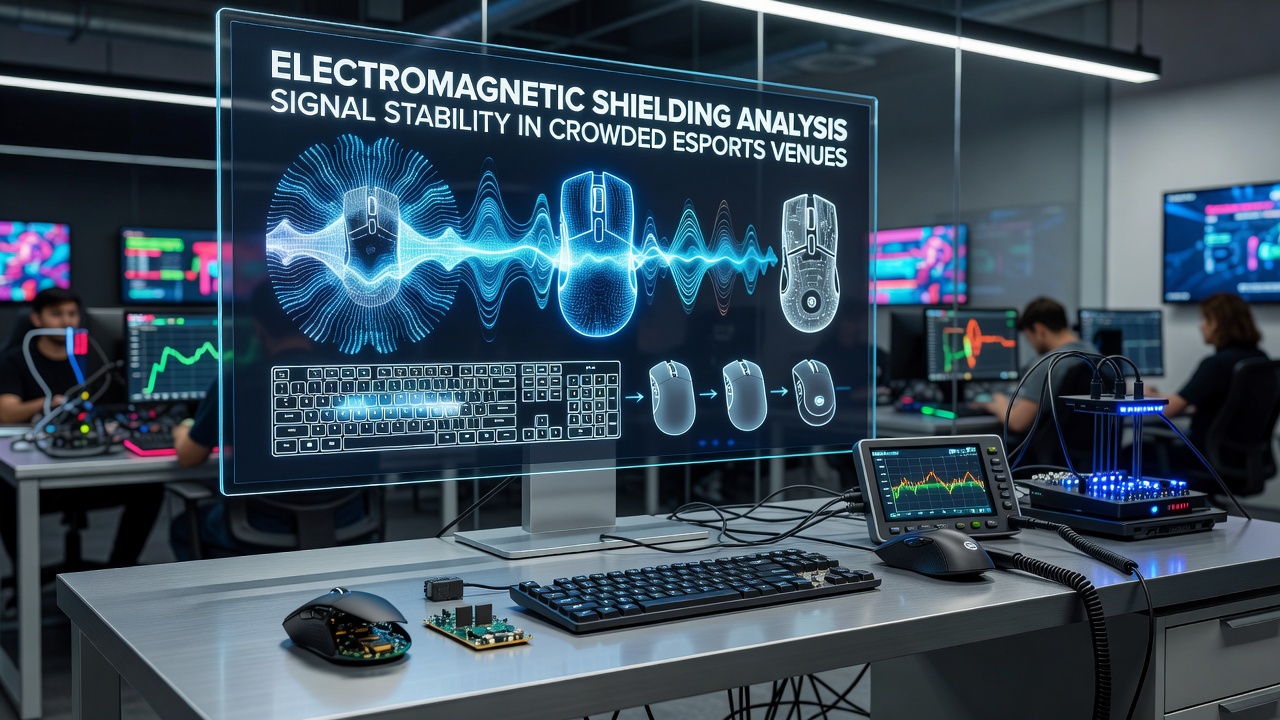
Wireless gaming peripherals such as mice, keyboards and headsets rely on consistent radio frequency connections in environments filled with competing signals from broadcast equipment, spectator devices and venue infrastructure. Researchers analyze shielding patterns to identify how conductive enclosures, layered materials and grounding techniques reduce interference across 2.4 GHz and 5 GHz bands commonly used by these devices.
Data from venue deployments shows that signal dropouts increase when multiple wireless units operate within 10 meters of high-power cameras and LED displays. Engineers map field strength patterns using spectrum analyzers to locate null zones where shielding fails to contain emissions or block external noise, and they adjust enclosure designs accordingly.
Core Principles of Shielding in Gaming Hardware
Manufacturers apply Faraday cage principles by incorporating metalized plastics, copper tape and ferrite cores around circuit boards. These elements create barriers that attenuate electromagnetic fields while preserving the lightweight profiles required for competitive use. Studies conducted at major tournaments indicate that optimized seam placement and multi-layer coatings lower leakage by up to 30 dB in controlled tests.
Observers note that pattern analysis often begins with computational modeling of current distribution on enclosure surfaces. Simulation software predicts how openings for buttons and scroll wheels affect overall performance, allowing designers to add internal dividers that redirect currents away from antenna paths. Real-world validation follows through anechoic chamber measurements that replicate the dense radio environment of an esports arena.
Venue-Specific Challenges During Live Events
Crowded esports venues introduce variable interference sources that change throughout the day. Broadcast trucks generate strong harmonics near the 2.4 GHz band, while thousands of attendee smartphones create fluctuating background noise. Teams competing in events scheduled for July 2026 at large convention centers must account for these dynamics when calibrating peripheral firmware.
Analysis teams deploy portable spectrum monitors around player stations to capture time-varying interference maps. These maps reveal that peak disruption occurs during broadcast segments when multiple cameras activate simultaneously, prompting adjustments such as frequency hopping sequences that avoid congested channels. Shielding patterns are refined by adding localized conductive gaskets around USB receivers placed near stage edges.
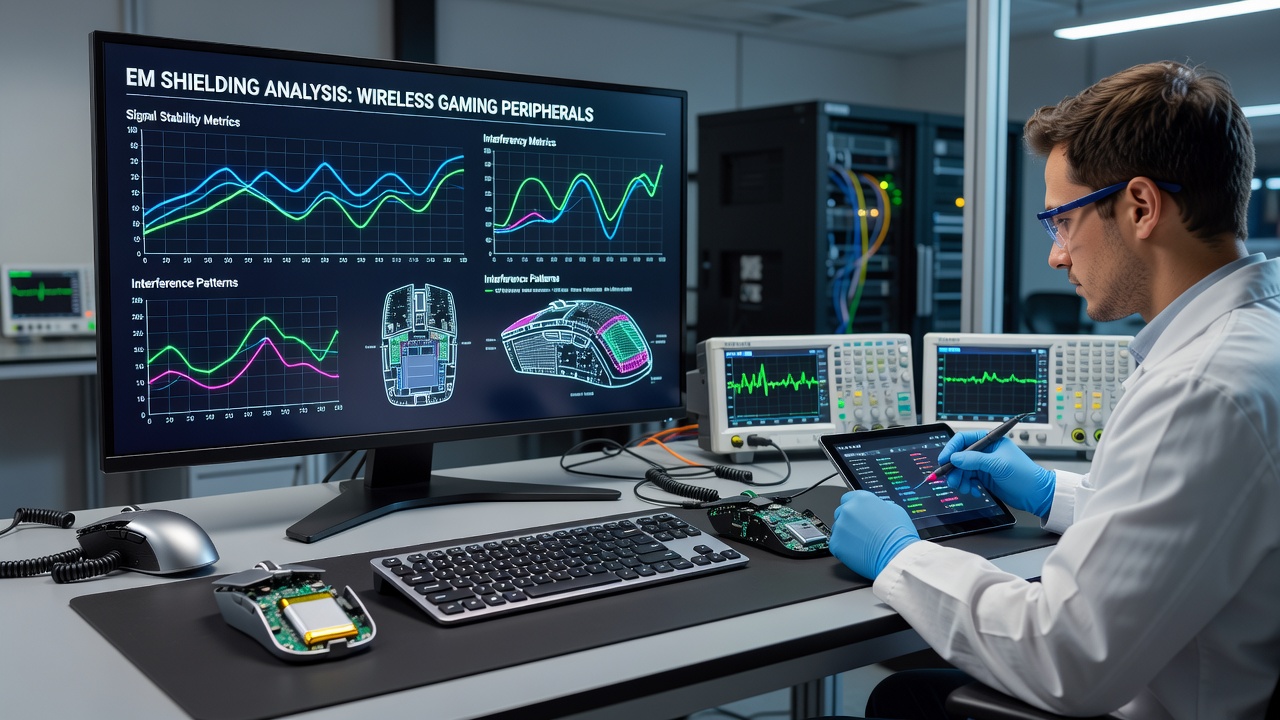
One documented case involved a North American league that retrofitted player mice with additional internal shielding layers after preliminary tests showed packet loss rates exceeding 2 percent during peak hours. Post-modification measurements confirmed reduced error rates, allowing stable operation even when broadcast trucks operated within 15 meters of the stage. Similar patterns have emerged in European and Asian events where dense urban venues compound radio congestion.
Measurement and Testing Protocols
Standardized protocols from regulatory bodies guide much of the analysis work. The Federal Communications Commission maintains guidelines on unintentional radiator limits that apply directly to wireless peripherals, while Australia's ACMA provides complementary testing frameworks for devices sold in that region. Engineers combine these requirements with custom venue scans that capture real-time data across entire arenas.
Techniques include near-field probing to locate emission hotspots on device surfaces and far-field measurements to assess radiated performance at competition distances. Researchers correlate these findings with packet-level logs from the peripherals themselves, creating comprehensive datasets that link physical shielding geometry to digital stability metrics.
Software tools process the collected information to generate heat maps of vulnerability zones. Teams then iterate on enclosure designs by repositioning seams, altering material thickness or incorporating additional grounding points. Iterative testing continues until signal integrity remains within acceptable bounds under simulated full-capacity crowd conditions.
Integration with Broadcast and Network Systems
Live broadcasts add another layer of complexity because video and audio transmission equipment shares spectrum with gaming devices. Coordination between broadcast engineers and peripheral specialists ensures that shielding patterns account for both ingress and egress concerns. Data indicates that properly shielded units experience fewer retransmissions, which in turn reduces overall network load during high-viewership matches.
Industry groups such as the IEEE have published reports on coexistence strategies for dense wireless environments, and these findings inform best practices adopted by esports organizers. Venues now schedule pre-event spectrum audits that incorporate both gaming hardware and broadcast gear, allowing early identification of potential conflicts before competition begins.
Conclusion
Continued refinement of electromagnetic shielding patterns supports reliable operation of wireless gaming peripherals in increasingly complex esports settings. Measurement-driven design adjustments, informed by venue-specific data and regulatory standards from multiple regions, help maintain the signal stability required for uninterrupted competition and broadcast coverage. Ongoing collaboration between hardware developers, tournament organizers and technical teams ensures these systems adapt as venue densities and broadcast demands evolve.