23 Aug 2026
Biometric Sensor Arrays Transform Driver Precision in Endurance Esports Sim Rigs
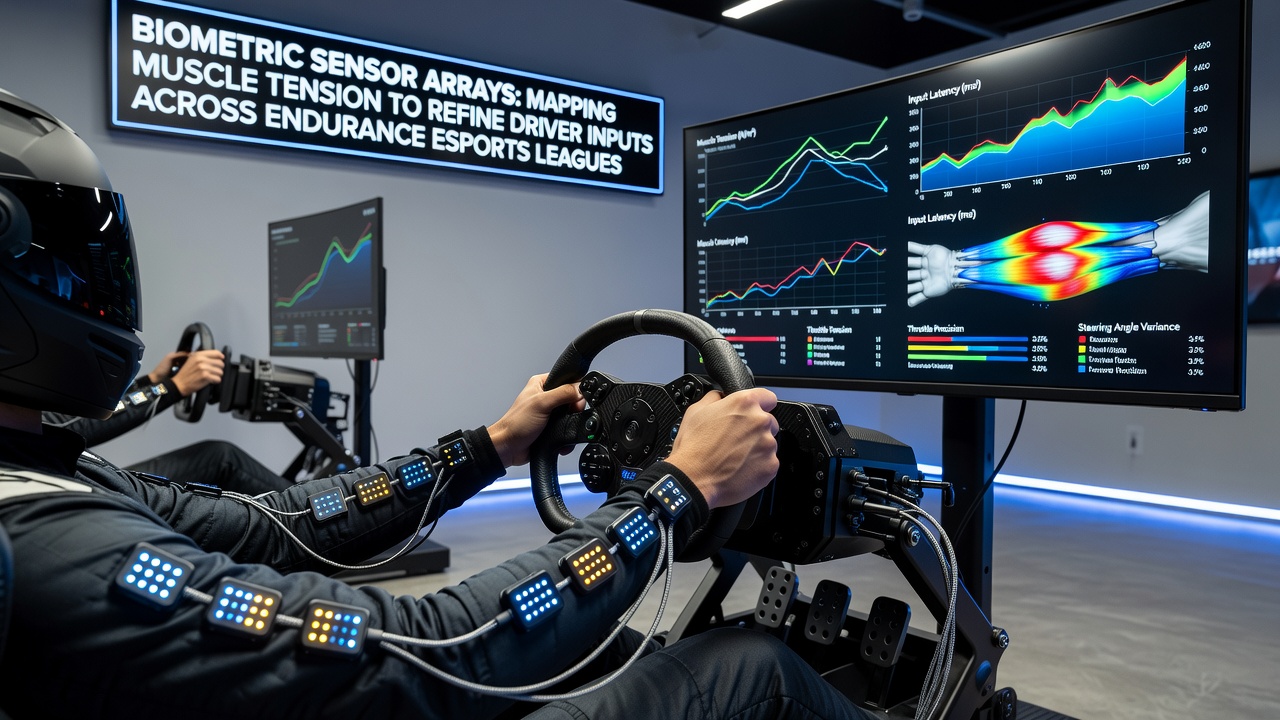
Biometric sensor arrays now sit embedded throughout racing sim rigs where they track muscle tension patterns across drivers' arms, shoulders, and core during extended sessions, and these systems feed data directly into input refinement algorithms that adjust steering sensitivity along with throttle and brake response curves. Observers note that teams in endurance esports leagues have adopted the arrays to maintain consistent performance over multi-hour races where fatigue typically alters physical inputs. Research indicates the sensors operate through electromyography electrodes paired with pressure mapping pads that capture subtle shifts in muscle activation before those changes reach the controls themselves.
Technical Integration of Sensor Arrays
Engineers position the arrays at key contact points including the wheel rim, pedal faces, and seat bolsters while wireless transmitters relay signals to onboard processing units that run pattern recognition models trained on professional driver baselines. Data shows these models identify early tension spikes associated with oversteer corrections or delayed braking and then apply micro-adjustments to wheel force feedback or pedal travel resistance. Those who've studied the setups report calibration sessions lasting several hours where drivers perform standardized maneuvers and the system builds individualized profiles that account for variations in grip strength and seating posture.
Teams update firmware regularly to incorporate new tension signatures collected during qualifying rounds, and this process allows the arrays to distinguish between intentional aggressive inputs and involuntary tightening caused by prolonged concentration. Studies from the University of Melbourne have documented how such refinements reduce lap time variance by measurable margins across consecutive stints in simulated 24-hour events.
Application Across Endurance Esports Leagues
Endurance leagues schedule races that span four to twenty-four hours where driver swaps occur at fixed intervals, yet the sensor arrays remain active throughout to log cumulative muscle load and flag potential degradation before it affects lap consistency. League organizers in North America and Europe have incorporated the technology into official rig specifications, requiring participating teams to use approved sensor suites that upload anonymized tension data to central servers for post-event analysis. Figures from the 2025 season reveal that squads utilizing the arrays maintained tighter input distributions during night segments when visibility challenges increase physical strain.
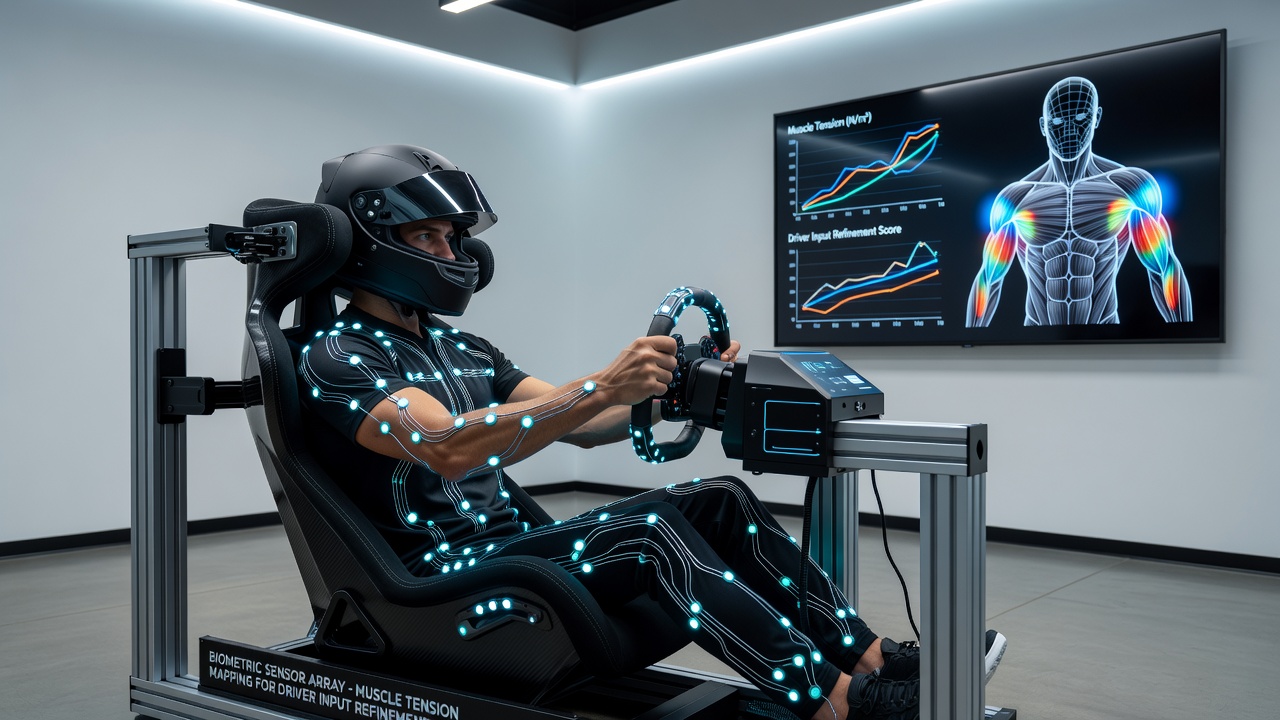
Coaches review the mapped patterns between stints to recommend posture tweaks or brief stretching protocols that reset tension baselines without disrupting race flow. In August 2026 several major leagues plan to introduce real-time tension dashboards visible to spotters who can then cue drivers via voice comms when arrays detect rising shoulder load that correlates with steering overcorrection. This approach builds on existing telemetry streams rather than replacing them, allowing teams to layer biometric insights onto traditional speed and tire wear metrics.
Data Processing and Input Refinement Mechanisms
Processing pipelines convert raw electromyography readings into normalized tension scores that feed predictive models, and these models forecast how continued tension buildup will alter braking force or steering angle over the next several laps. Algorithms apply corrective scaling factors that gradually increase pedal resistance or dampen wheel rotation to counteract emerging patterns without alerting the driver mid-corner. According to reports from the Canadian Institute for Sports Technology the models achieve over 85 percent accuracy in predicting input drift after training on datasets exceeding ten thousand hours of logged endurance sessions.
Integration with existing sim software occurs through open APIs that let rig manufacturers embed the arrays without custom firmware overhauls, while third-party analytics platforms aggregate league-wide tension statistics to identify common fatigue thresholds across different rig configurations. Teams that cross-reference these statistics with their own driver profiles often discover optimal stint lengths that keep muscle activation within performance bands.
Conclusion
Biometric sensor arrays continue to expand their role in endurance esports by providing continuous muscle tension mapping that directly informs input refinements, and ongoing developments scheduled for 2026 point toward tighter integration with league infrastructure. The technology supplies objective data streams that teams use to sustain driver performance across long-duration events while maintaining compatibility with current sim rig ecosystems.