19 Jul 2026
Calibration Routines for Force Feedback Wheels in Sim Racing Hardware Communities
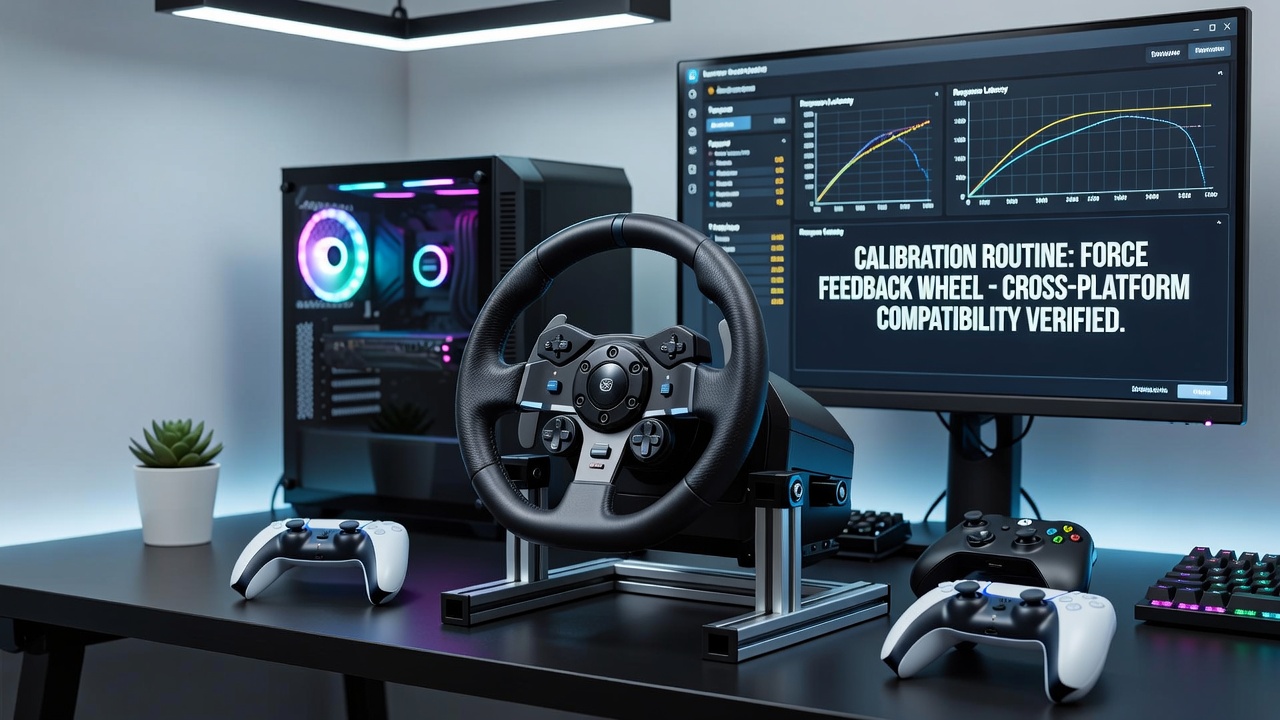 Communities dedicated to sim racing hardware have developed extensive calibration routines for force feedback wheels that address compatibility across Windows, Linux, and console environments, and these practices continue to evolve through shared documentation and firmware adjustments. Research from academic institutions shows that consistent calibration reduces input latency variations by measurable margins when wheels transition between different operating systems and game engines. Data collected by industry groups indicates that enthusiasts maintain detailed protocols covering sensor zeroing, torque mapping, and response curve adjustments to support titles running on multiple platforms simultaneously. ## Core Elements of Calibration Protocols
Observers note that effective routines begin with hardware-level sensor initialization, which involves locking the wheel at center position before applying software offsets. This step ensures baseline accuracy regardless of whether the wheel connects through USB to a PC or via adapters to consoles. Those who document these processes emphasize combining physical centering tools with digital diagnostics to verify that force feedback motors align properly with game-reported steering angles. Communities distribute spreadsheets and scripts that list calibration values for popular models such as those from Logitech, Thrustmaster, and Fanatec, and these resources update regularly to accommodate new firmware releases. Figures from hardware monitoring tools reveal that small deviations in steering ratio settings can produce noticeable differences in vehicle handling across simulation software. ## Cross-Platform Compatibility Approaches
And here is where shared routines demonstrate their value, since consoles impose stricter input validation than open PC environments. Enthusiasts create adapter configurations and virtual device layers that translate calibration data between systems, allowing the same wheel to maintain consistent feedback strength whether used with a Windows-based title or a PlayStation racing game. Studies conducted by research teams at institutions including the University of Melbourne have examined how these translation layers affect signal timing, with results showing that properly tuned offsets preserve force response integrity. In July 2026 several hardware groups released updated calibration templates that incorporate console-specific deadzone corrections alongside PC linearity adjustments. These templates support simultaneous multi-platform testing setups where one wheel feeds data to both a PC and a console through split-signal hardware. People who apply the routines report that combining USB protocol emulators with firmware patches allows older wheel models to function reliably on newer console generations. ## Software Tools and Community Resources
Experts have observed that open calibration utilities such as those integrated into SimHub and specialized driver packages serve as central hubs for sharing validated settings. These applications permit users to export profiles that include platform flags, so a single configuration file adapts automatically when loaded on different systems. Industry reports compiled by organizations like the International Game Developers Association highlight how community-driven updates to these tools have expanded support for Linux-based racing stacks that previously lacked native force feedback handling. Take one documented case where a collective of sim racers standardized torque scaling factors across multiple wheelbases, and the resulting dataset became a reference point for firmware developers seeking broader compatibility. Such efforts rely on iterative testing cycles where participants log feedback data from repeated laps on standardized tracks before finalizing values.
Communities dedicated to sim racing hardware have developed extensive calibration routines for force feedback wheels that address compatibility across Windows, Linux, and console environments, and these practices continue to evolve through shared documentation and firmware adjustments. Research from academic institutions shows that consistent calibration reduces input latency variations by measurable margins when wheels transition between different operating systems and game engines. Data collected by industry groups indicates that enthusiasts maintain detailed protocols covering sensor zeroing, torque mapping, and response curve adjustments to support titles running on multiple platforms simultaneously. ## Core Elements of Calibration Protocols
Observers note that effective routines begin with hardware-level sensor initialization, which involves locking the wheel at center position before applying software offsets. This step ensures baseline accuracy regardless of whether the wheel connects through USB to a PC or via adapters to consoles. Those who document these processes emphasize combining physical centering tools with digital diagnostics to verify that force feedback motors align properly with game-reported steering angles. Communities distribute spreadsheets and scripts that list calibration values for popular models such as those from Logitech, Thrustmaster, and Fanatec, and these resources update regularly to accommodate new firmware releases. Figures from hardware monitoring tools reveal that small deviations in steering ratio settings can produce noticeable differences in vehicle handling across simulation software. ## Cross-Platform Compatibility Approaches
And here is where shared routines demonstrate their value, since consoles impose stricter input validation than open PC environments. Enthusiasts create adapter configurations and virtual device layers that translate calibration data between systems, allowing the same wheel to maintain consistent feedback strength whether used with a Windows-based title or a PlayStation racing game. Studies conducted by research teams at institutions including the University of Melbourne have examined how these translation layers affect signal timing, with results showing that properly tuned offsets preserve force response integrity. In July 2026 several hardware groups released updated calibration templates that incorporate console-specific deadzone corrections alongside PC linearity adjustments. These templates support simultaneous multi-platform testing setups where one wheel feeds data to both a PC and a console through split-signal hardware. People who apply the routines report that combining USB protocol emulators with firmware patches allows older wheel models to function reliably on newer console generations. ## Software Tools and Community Resources
Experts have observed that open calibration utilities such as those integrated into SimHub and specialized driver packages serve as central hubs for sharing validated settings. These applications permit users to export profiles that include platform flags, so a single configuration file adapts automatically when loaded on different systems. Industry reports compiled by organizations like the International Game Developers Association highlight how community-driven updates to these tools have expanded support for Linux-based racing stacks that previously lacked native force feedback handling. Take one documented case where a collective of sim racers standardized torque scaling factors across multiple wheelbases, and the resulting dataset became a reference point for firmware developers seeking broader compatibility. Such efforts rely on iterative testing cycles where participants log feedback data from repeated laps on standardized tracks before finalizing values. 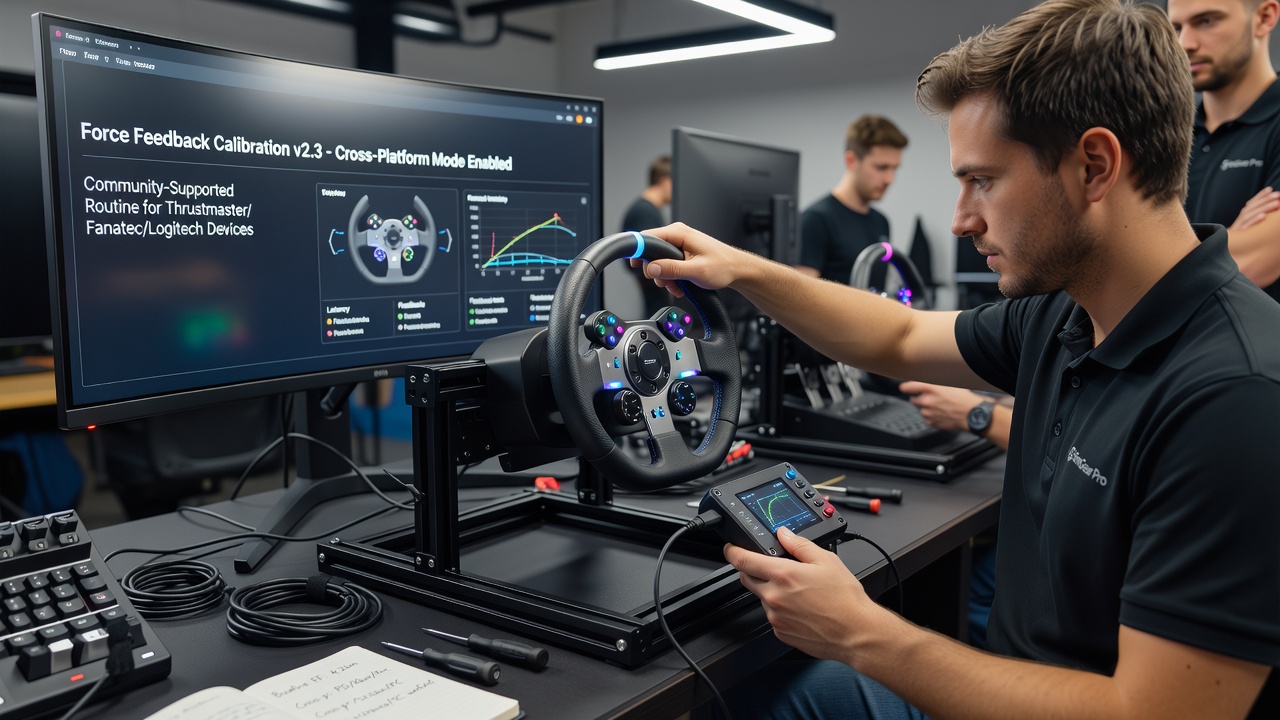 ## Firmware Updates and Sensor Adjustments
Firmware communities release patches that expose additional calibration parameters previously locked by manufacturers, and these modifications enable finer control over spring, damper, and friction effects across platforms. Research indicates that recalibrating internal potentiometers or hall-effect sensors after firmware flashes restores original performance characteristics while adding cross-system consistency. Groups maintain version histories that track which firmware builds pair best with specific calibration routines for each supported platform. Those documenting procedures stress the importance of backing up factory settings before applying community modifications, since improper sensor recalibration can introduce drift that only appears under prolonged use. Hardware monitoring applications help verify that post-calibration force output remains within expected ranges when switching between PC and console sessions. ## Testing Methodologies Across Setups
Communities employ standardized testing tracks and telemetry logging to validate calibration routines, comparing steering input graphs from different platforms side by side. This approach identifies discrepancies in force feedback timing that might otherwise go unnoticed during casual driving. Data collected through these methods feeds back into shared repositories, allowing continuous refinement of offset values and response curves. ## Conclusion
Calibration routines developed within sim racing hardware communities provide structured pathways for maintaining force feedback wheel performance across diverse platforms, supported by ongoing firmware work and shared testing data. These practices rely on precise sensor handling and documented configuration sets that adapt to evolving hardware and software environments. Continued collaboration among participants sustains the availability of updated routines that address new compatibility requirements as they emerge.
## Firmware Updates and Sensor Adjustments
Firmware communities release patches that expose additional calibration parameters previously locked by manufacturers, and these modifications enable finer control over spring, damper, and friction effects across platforms. Research indicates that recalibrating internal potentiometers or hall-effect sensors after firmware flashes restores original performance characteristics while adding cross-system consistency. Groups maintain version histories that track which firmware builds pair best with specific calibration routines for each supported platform. Those documenting procedures stress the importance of backing up factory settings before applying community modifications, since improper sensor recalibration can introduce drift that only appears under prolonged use. Hardware monitoring applications help verify that post-calibration force output remains within expected ranges when switching between PC and console sessions. ## Testing Methodologies Across Setups
Communities employ standardized testing tracks and telemetry logging to validate calibration routines, comparing steering input graphs from different platforms side by side. This approach identifies discrepancies in force feedback timing that might otherwise go unnoticed during casual driving. Data collected through these methods feeds back into shared repositories, allowing continuous refinement of offset values and response curves. ## Conclusion
Calibration routines developed within sim racing hardware communities provide structured pathways for maintaining force feedback wheel performance across diverse platforms, supported by ongoing firmware work and shared testing data. These practices rely on precise sensor handling and documented configuration sets that adapt to evolving hardware and software environments. Continued collaboration among participants sustains the availability of updated routines that address new compatibility requirements as they emerge.