26 Jul 2026
Collaborative Databases Tracking Coil Whine Frequencies Across High-End Power Supplies
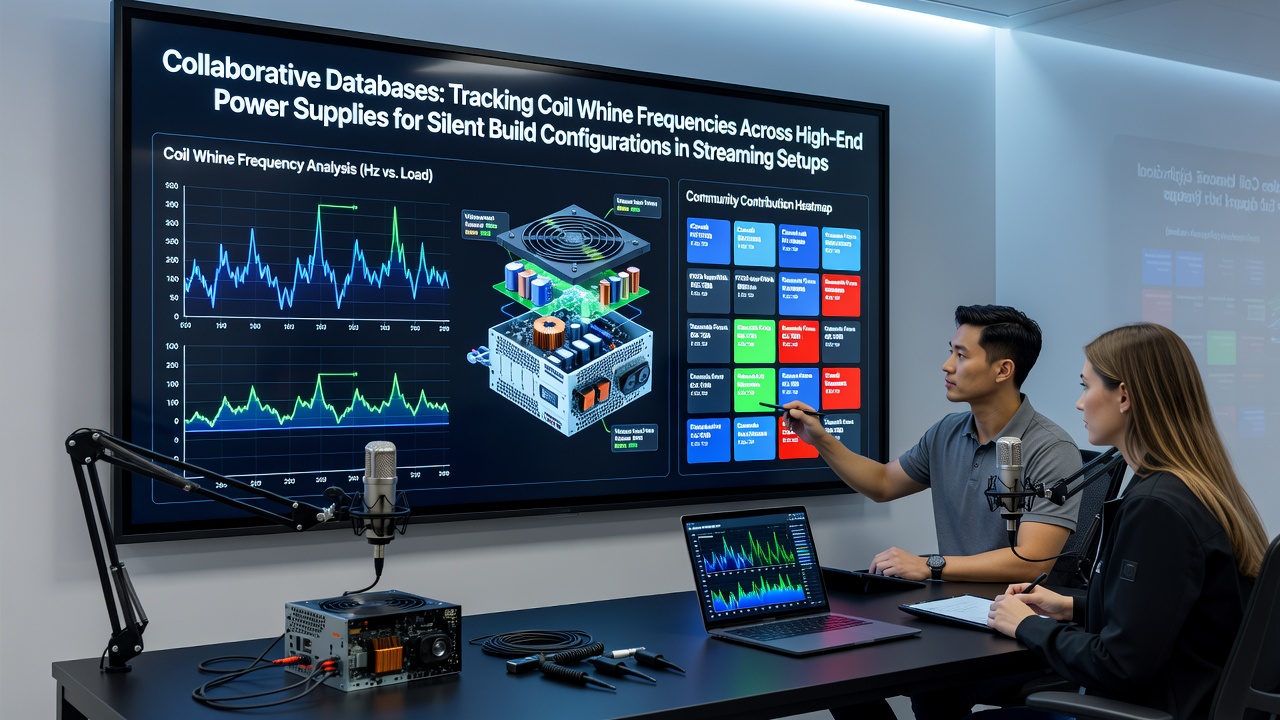
Collaborative databases have emerged as centralized repositories where enthusiasts and engineers log coil whine frequencies from various high-end power supplies and those records help users configure silent streaming setups that minimize audible interference during extended broadcasts. Researchers at institutions across multiple continents compile these entries alongside load conditions and model numbers while participants submit measurements taken with calibrated microphones and spectrum analyzers.
Understanding Coil Whine in Power Supplies
Coil whine occurs when electromagnetic forces cause inductors and transformers to vibrate at frequencies often between 1 kHz and 20 kHz and this produces tones that become noticeable in quiet environments typical of streaming studios. Data collected through these shared platforms shows patterns tied to specific capacitor designs and switching frequencies in units rated above 750 watts and observers note that higher efficiency ratings such as 80 Plus Titanium correlate with certain whine profiles under variable loads.
Engineers document how pulse width modulation controllers influence these vibrations and one study from an Australian research consortium revealed consistent frequency clusters around 8 kHz to 12 kHz in several flagship models when graphics cards drew over 300 watts. Such findings allow builders to cross-reference units before purchase and avoid configurations that amplify noise during live encoding sessions.
How Collaborative Platforms Operate
Users upload spectrogram data and environmental details through standardized forms and algorithms then categorize entries by power supply series and firmware revisions. Moderators verify submissions against hardware serial ranges and this process maintains accuracy across thousands of records accumulated since the databases expanded in 2024.
Access remains open to registered contributors who include professional reviewers and hobbyist builders alike and search tools filter results by wattage tier or connector type. Platforms integrate export functions that generate compatibility charts for popular cases used in streaming rigs and those charts highlight models with lower reported whine amplitudes at common frame rates.
Applications in Silent Streaming Configurations
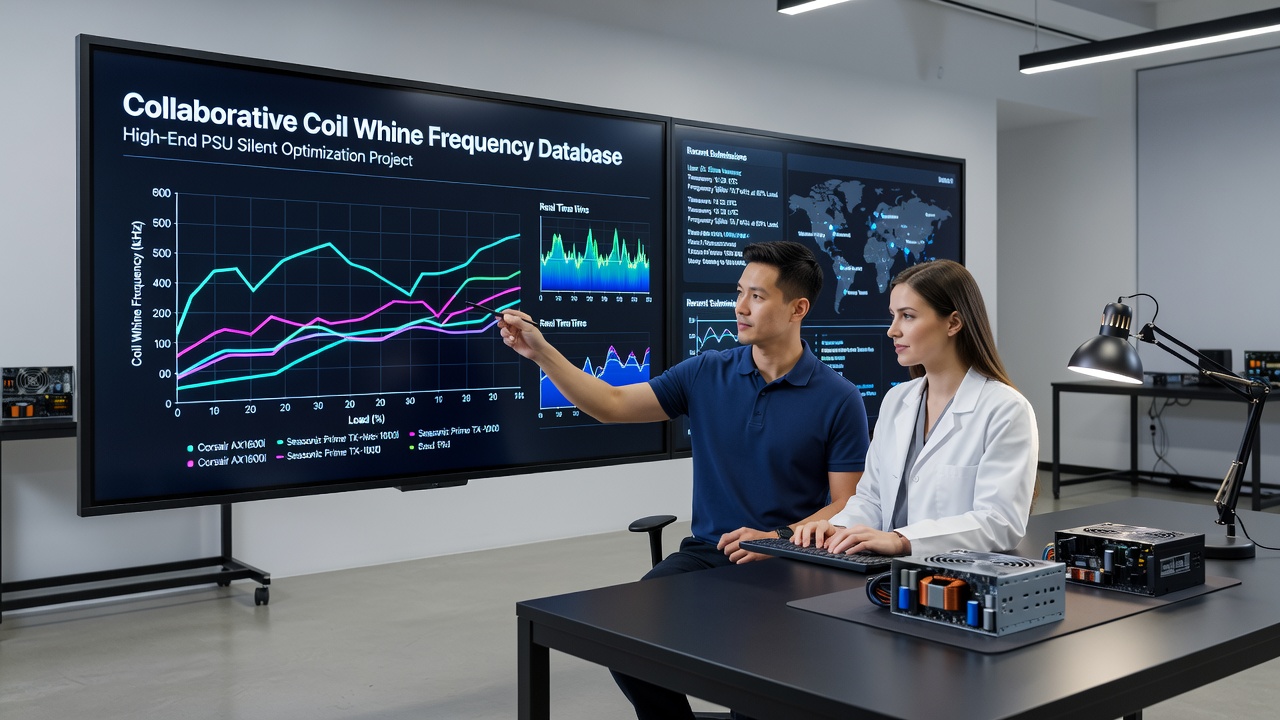
Streamers assembling systems for 24-hour broadcasts rely on these databases to select power supplies that maintain low acoustic output when paired with high-performance CPUs and GPUs. Entries often include notes on fan curve adjustments and chassis airflow that interact with whine characteristics and builders combine this information with vibration damping materials to further reduce transmission through case panels.
One documented case involved a European team that cross-checked multiple 1000-watt units against database logs and identified a model whose primary whine peak fell outside the sensitive range of their microphone setup. Subsequent tests confirmed stable operation at 1440p streaming resolutions without additional post-processing filters and similar approaches have spread through North American hardware forums.
Data Trends Observed Through Mid-2026
By July 2026 the aggregated datasets encompassed over 15,000 individual measurements and analysis indicated a gradual shift toward gallium nitride components in newer units which produced narrower frequency bands compared to older silicon-based designs. Figures from an industry report published by the Canadian Standards Association highlight efficiency gains that coincide with these acoustic improvements and participants continue to upload fresh samples as manufacturers release updated revisions.
Trends also show seasonal variations in reported whine intensity linked to ambient temperatures and contributors adjust entries accordingly to account for thermal expansion effects on coil windings. This level of detail supports precise matching of power supplies with water-cooled streaming workstations where fan noise remains minimal.
Future Developments and Integration
Developers plan to incorporate machine learning classifiers that predict whine behavior based on partial load profiles and these tools will draw directly from the expanding database entries. Integration with CAD software used for custom PC layouts could allow real-time simulation of acoustic signatures before hardware arrives and regulatory bodies in several regions have begun referencing similar collaborative efforts when drafting guidelines for consumer electronics noise emissions.
Academic partnerships continue to grow and researchers access anonymized datasets to study electromagnetic compatibility across broader consumer electronics categories. The collaborative model demonstrates how distributed measurement networks accelerate understanding of component-level acoustics that affect professional content creation workflows.
Conclusion
Collaborative databases focused on coil whine frequencies deliver practical resources for those constructing silent high-end streaming builds and ongoing contributions ensure the information stays current with evolving power supply technologies. Participants benefit from shared empirical data that supports informed component selection and configuration decisions across diverse hardware ecosystems.