26 Aug 2026
Community Collectives Engineer Modular Adapter Boards to Integrate Discontinued Trackball Sensors into Esports Training Rigs
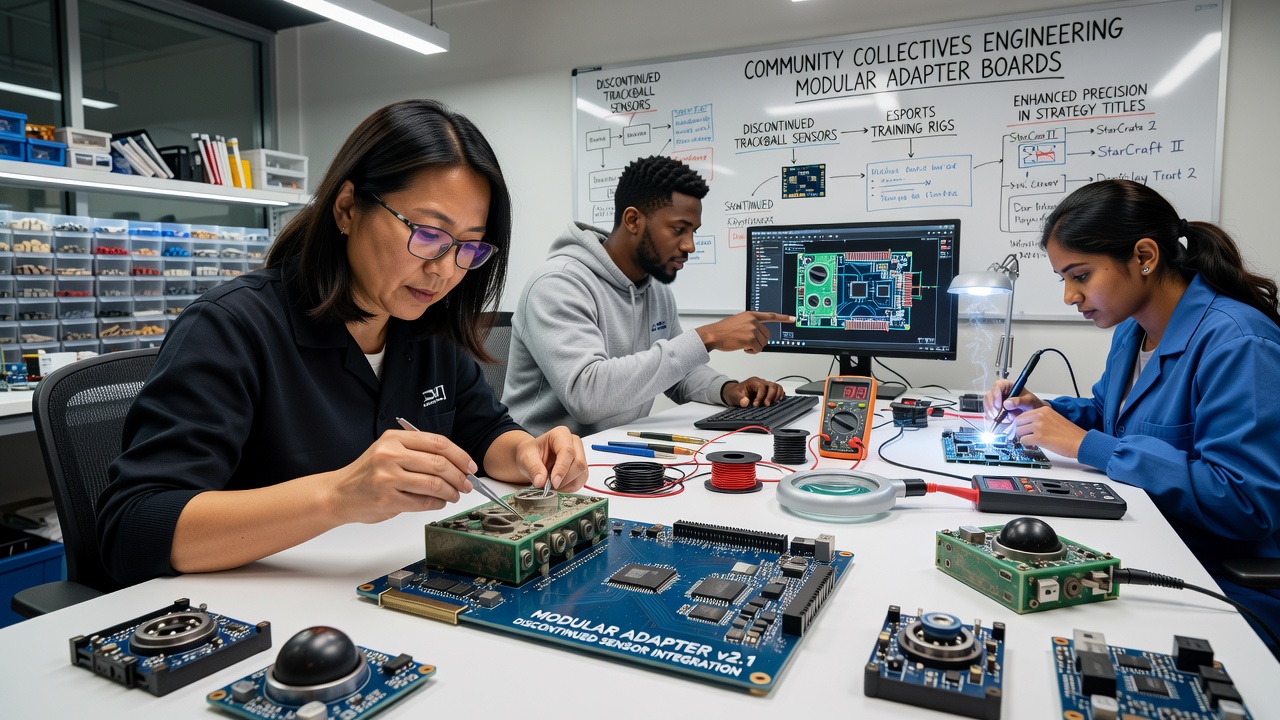
Community collectives have developed modular adapter boards that connect discontinued trackball sensors with current esports training rigs, and these efforts focus on strategy titles where precise cursor control determines outcomes in competitive play. Groups in multiple regions began sharing schematics and firmware code during 2024, which led to standardized designs by mid-2025 that support sensors from legacy peripherals such as early Logitech and Microsoft trackball models.
Origins of the Adapter Board Projects
Discontinued trackball sensors often retain optical resolution values that align with requirements in real-time strategy games, and collectives identified this compatibility when older hardware became scarce in secondary markets. Researchers at the University of Waterloo documented sensor output characteristics in a 2025 technical report, which showed consistent polling rates across several vintage models when paired with updated microcontrollers. Collectives then created printed circuit boards that handle voltage translation and signal conversion, allowing these sensors to interface with USB-C ports on modern training stations without custom drivers.
Teams in North America and Europe collaborated through shared repositories to refine pin mappings and power management circuits, while Australian gaming associations contributed testing protocols that verified latency under tournament conditions. By August 2026 several collectives reported successful deployments in training facilities used by professional strategy teams, where the adapters support hot-swapping between multiple sensor types during practice sessions.
Technical Integration Process
Engineers design the adapter boards with field-programmable gate arrays that process raw trackball data streams, and this approach reduces conversion overhead compared with software-based emulation layers. The boards include onboard calibration routines that compensate for mechanical wear in older ball mechanisms, maintaining consistent tracking across extended sessions. Data from the Entertainment Software Association indicates that strategy game tournaments in 2026 continue to emphasize sub-millisecond input precision, which drives demand for these hybrid configurations.
One collective in Sweden produced a variant that incorporates additional filtering capacitors to stabilize signals when rigs operate near high-frequency wireless equipment, and similar designs now appear in training setups across multiple continents. These modifications allow players to retain the tactile feedback of physical trackballs while connecting to contemporary software ecosystems that manage macro bindings and sensitivity profiles.
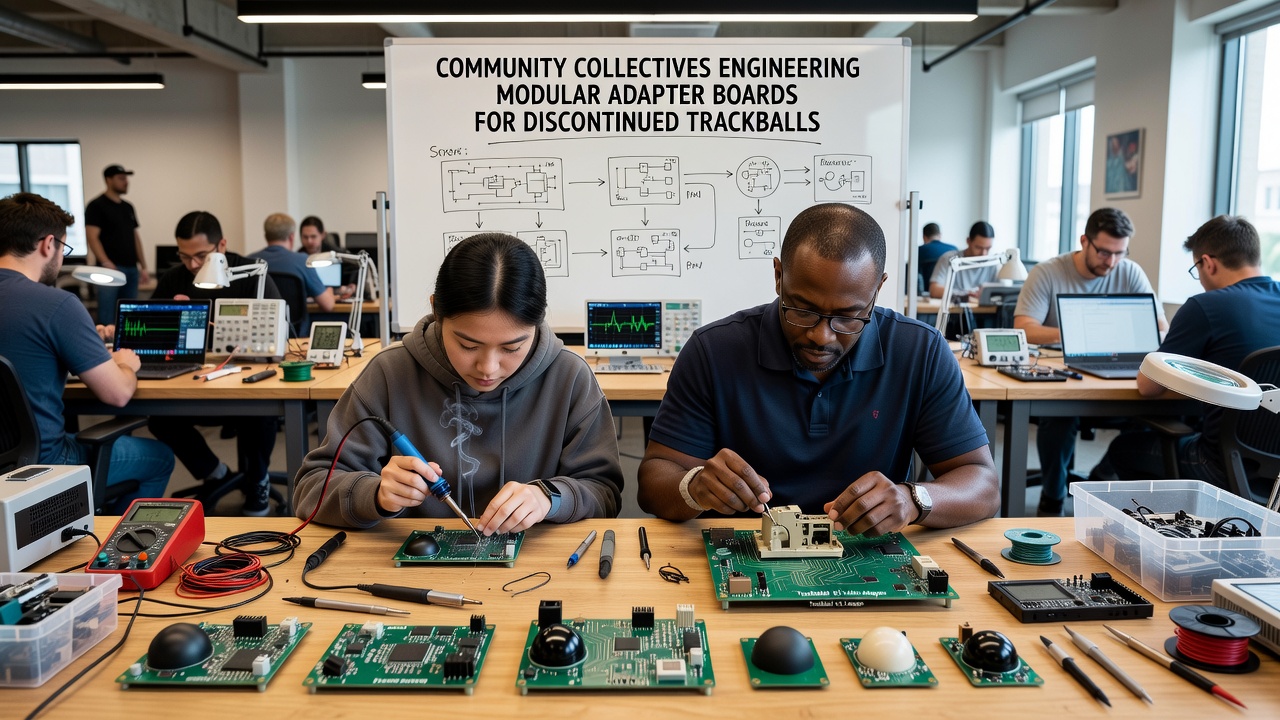
Applications in Strategy Title Training
Strategy titles require rapid unit selection and map navigation that benefit from the rotational input characteristics of trackballs, and collectives have measured improvements in target acquisition times when athletes transition from standard mice to adapted trackball setups. Training rigs equipped with these boards enable simultaneous use of multiple input devices, supporting hybrid control schemes where one hand operates a trackball for camera control while the other manages keyboard commands.
Documentation from the International Game Developers Association highlights how open hardware projects reduce dependency on single-vendor supply chains, and this principle applies directly to the adapter initiatives that repurpose existing sensor inventory. Facilities in South Korea adopted several board designs during 2026 preseason camps, integrating them with retinal-tracking overlays already common in high-level practice arenas.
Current Developments and Adoption Trends
By August 2026 firmware updates from community repositories included support for additional sensor variants that previously lacked published datasheets, expanding compatibility lists maintained by volunteer contributors. These updates incorporate diagnostic tools that report sensor health metrics directly to coaching software, allowing teams to monitor degradation patterns during intensive training blocks. Academic papers from institutions in Canada and Germany have begun citing these adapter projects as case studies in sustainable hardware reuse within competitive gaming environments.
Trade groups such as the European Games Developer Federation have noted increased participation in adapter-building workshops at industry events, where participants exchange board layouts and testing methodologies. The resulting ecosystem connects enthusiasts with professional organizations seeking alternatives to mass-produced peripherals that may carry higher latency profiles in specific use cases.
Conclusion
Modular adapter boards developed by community collectives continue to bridge discontinued trackball sensors with modern esports infrastructure, delivering functional hardware solutions grounded in shared engineering resources and verified performance data. Ongoing refinements through 2026 reflect sustained interest in precision input methods for strategy competition, supported by documented collaborations across research and industry networks.