24 May 2026
Community Firmware Projects Extend Wireless Mouse Sensor Calibration for Discontinued Esports Peripherals
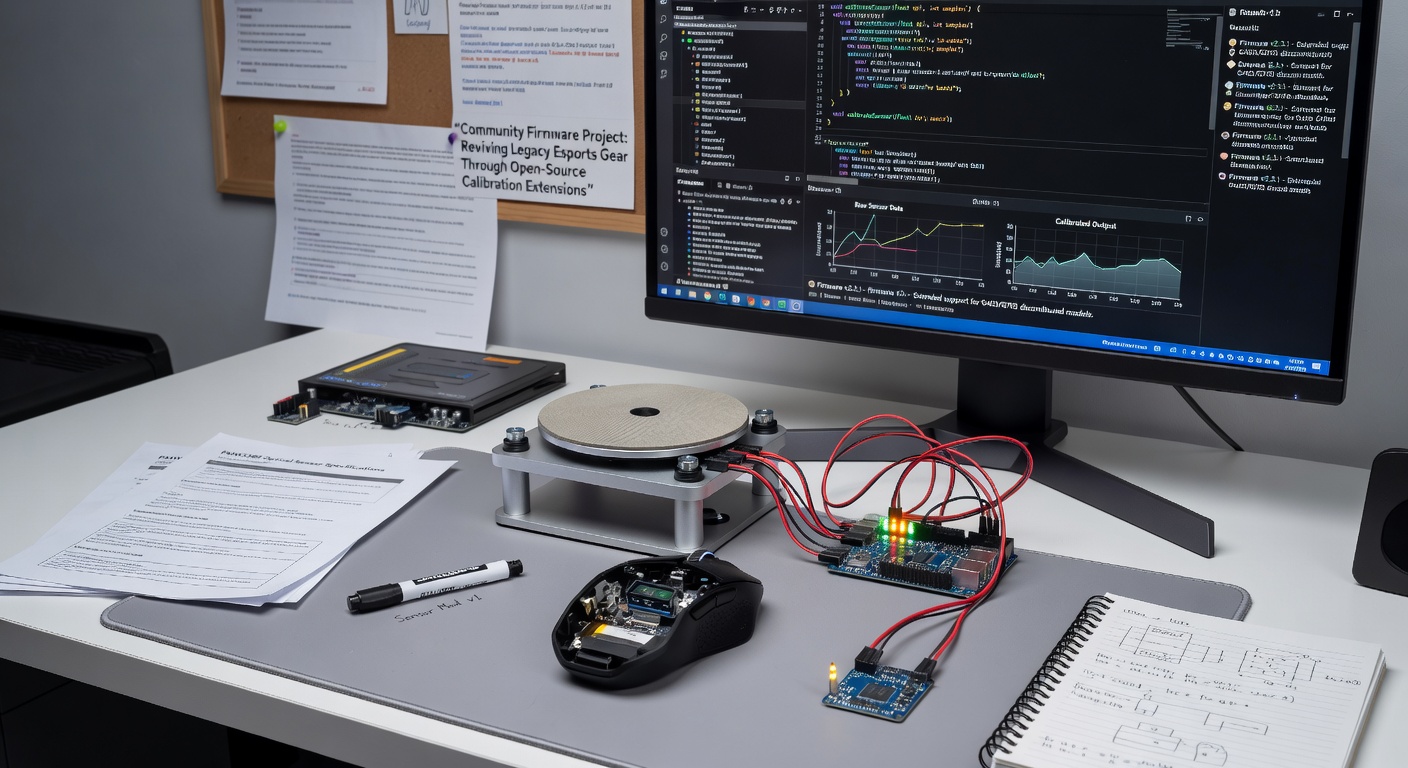
Community firmware projects have taken on the task of updating sensor calibration routines for wireless mice that manufacturers no longer support, allowing these devices to maintain precision tracking in competitive play. Discontinued models from earlier generations often rely on sensors such as the PixArt PMW3360 or Hero variants, and their original firmware leaves calibration parameters fixed at factory defaults that degrade over time with battery voltage changes and surface variations.
Background on Discontinued Wireless Peripherals
Manufacturers release new wireless mice every two to three years, which leaves earlier esports favorites without official updates after support cycles end. Data from industry tracking shows that many competitive players continue using these older units because of familiar button layouts and weight distributions, yet sensor drift becomes noticeable after firmware updates stop. Projects organized through open repositories address this gap by reverse-engineering communication protocols between the mouse microcontroller and the sensor chip, then releasing modified firmware that reintroduces adjustable calibration steps.
Technical Approaches to Sensor Calibration
Calibration routines focus on adjusting CPI scaling, lift-off distance, and surface tuning parameters that the original firmware locked after initial pairing. Developers extract the sensor register maps through hardware debugging tools, then write new code that allows users to run on-device tests with standardized calibration surfaces. These routines compensate for wireless transmission jitter by sampling motion data at higher intervals before applying smoothing filters, which keeps reported coordinates consistent across different USB receiver placements. Observers note that such modifications often require careful power management adjustments because wireless models operate under strict battery constraints that wired predecessors never faced.
Key Project Examples
One established effort centers on the Logitech G Pro Wireless series, where contributors published calibration patches that restore full sensor register access after official support concluded. Another initiative targets older Razer models equipped with the same PixArt sensors, providing scripts that recalibrate tracking after battery replacements alter voltage curves. Participants document each release with before-and-after tracking logs captured on controlled test rigs, demonstrating reduced deviation at speeds above 2 meters per second. These repositories also include tools that let users back up original firmware images before flashing modified versions, reducing risk during the update process.
Community Collaboration and Documentation
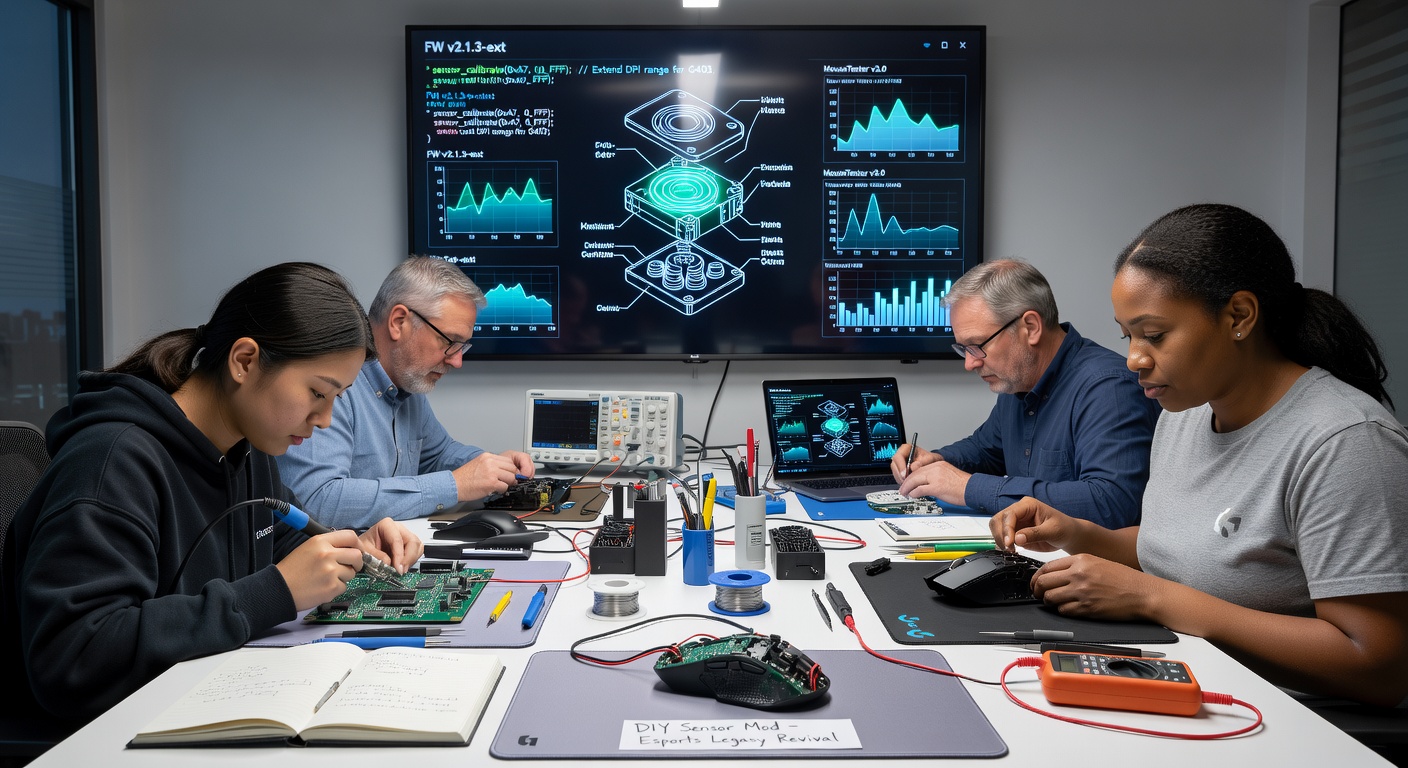
Developers coordinate through dedicated forums and version control platforms where they share register dumps, oscilloscope captures, and test results from multiple hardware revisions. Documentation covers region-specific regulatory considerations, such as those outlined by the Consumer Technology Association in the United States and the Interactive Software Federation of Europe, because firmware modifications must avoid interference with certified wireless bands. Contributors in different time zones maintain continuous update streams, and testing groups verify compatibility across Windows, Linux, and macOS receiver drivers. As of May 2026 these efforts have produced stable releases for more than a dozen discontinued models, each accompanied by step-by-step flashing guides and troubleshooting checklists.
Impact on Esports Training and Equipment Longevity
Players who adopt these firmware updates report sustained tracking consistency during extended practice sessions, which matters when organizations standardize on specific peripheral batches for tournaments. Research papers hosted by academic institutions such as those affiliated with the Consumer Technology Association have examined how recalibrated sensors affect input latency measurements in wireless setups. Teams that maintain equipment inventories benefit because older mice can remain in rotation without performance loss, stretching hardware budgets across longer periods. Calibration data collected from community projects also feeds into broader studies on human-computer interaction, where motion accuracy metrics inform training software design.
Future Directions for Firmware Extensions
Current work explores integration with external calibration hardware that connects via USB passthrough, allowing automated surface mapping without manual surface swaps. Additional branches examine power profile optimizations that extend battery life while preserving the higher polling rates required for competitive use. Participants continue mapping new sensor variants as older stock circulates through secondary markets, ensuring calibration tools remain available even after production lines close. These incremental advances keep legacy peripherals viable within training environments where equipment familiarity provides measurable consistency advantages.
Conclusion
Community firmware projects have established systematic methods for extending wireless mouse sensor calibration beyond manufacturer support windows. Through shared technical resources and coordinated testing, these initiatives maintain performance standards for discontinued esports peripherals while generating data that supports ongoing research into input device longevity. The approach demonstrates how distributed developer networks address hardware lifecycle gaps that affect competitive gaming setups worldwide.