1 Jul 2026
Community Reverse Engineering Expands Legacy Game Engines for Modern Displays
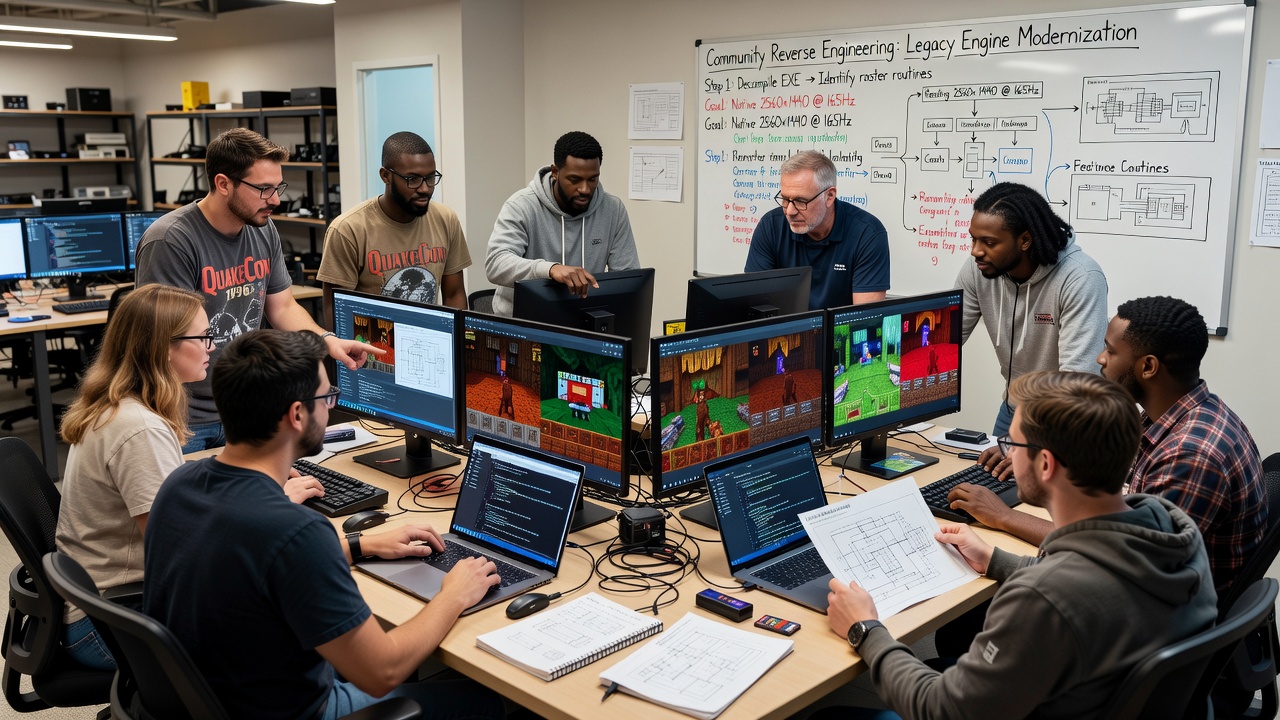
Community groups have spent years dissecting closed source game engines from the 1990s and early 2000s to add native support for widescreen aspect ratios and refresh rates above 60 Hz. These projects focus on titles built with engines such as Build, id Tech 2, and the original Unreal Engine where original developers never anticipated displays beyond 4:3 or standard refresh limits.
Developers begin by mapping memory structures and rendering calls through disassembly tools combined with runtime debugging. Once the graphics pipeline becomes visible, contributors insert new code paths that handle variable aspect ratios without stretching or cropping the original artwork. High refresh support follows when the timing loops get decoupled from fixed frame rates so the engine can query the display's vertical sync interval directly.
Technical Methods Behind the Modifications
One common approach involves locating the original projection matrix calculations and replacing them with updated versions that accept floating point aspect values. Teams then patch the viewport setup routines to read the current monitor resolution at startup while preserving the internal coordinate system that older games expect. For refresh rates the work centers on removing busy wait loops or hardcoded timers that cap frame delivery and substituting them with platform specific synchronization calls.
Projects often publish their findings as open source patches or complete source ports. These releases include detailed changelogs that document each function altered so later contributors can apply similar techniques to additional titles. Data from ongoing repositories shows hundreds of individual commits each month as new edge cases surface during testing across different operating systems.
Documented Projects and Their Reach
Groups working on the Build engine have produced updates that allow Duke Nukem 3D and Shadow Warrior to run at 21:9 and 32:9 resolutions while maintaining correct field of view. Separate efforts on the Quake engine family have extended support for 144 Hz and 240 Hz displays through modified client timing code. Observers note that these changes appear in public releases rather than remaining private tools because contributors coordinate through shared forums and version control systems.
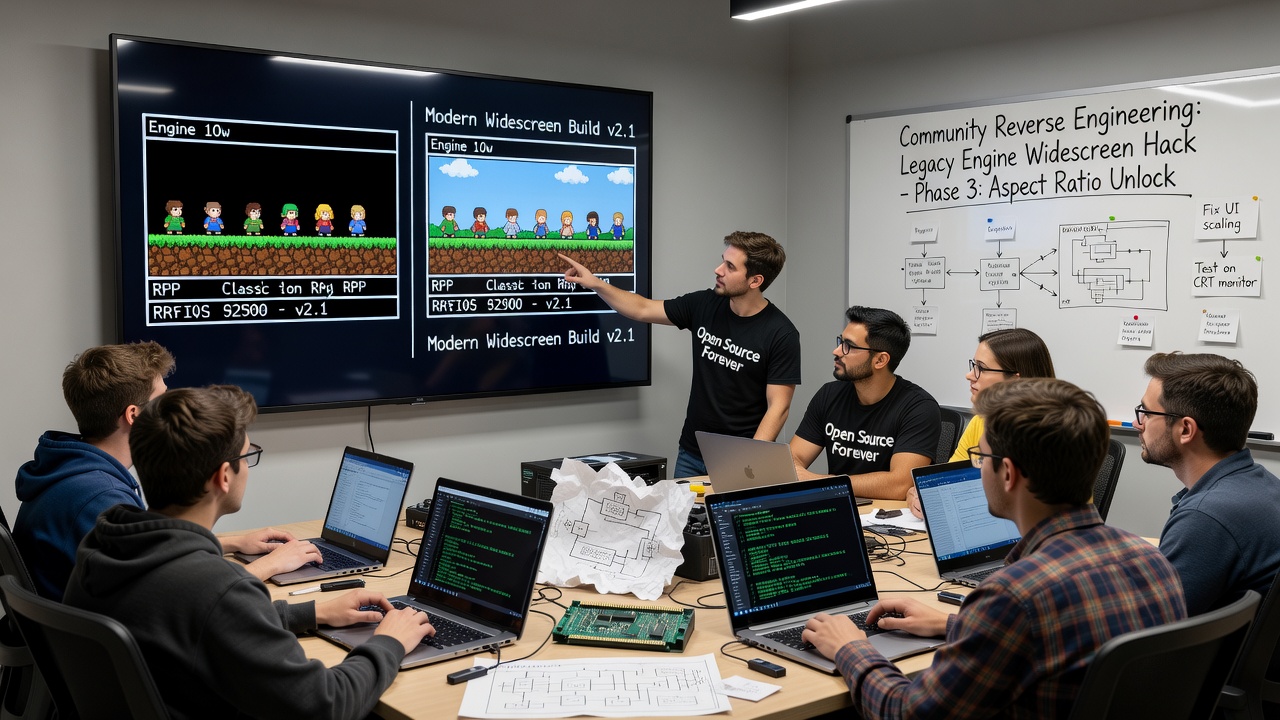
Academic researchers have tracked preservation outcomes. A study conducted at the University of Melbourne examined how such modifications affect long term accessibility of game assets and found that community patches frequently become the primary distribution method once official support ends. Figures from that work indicate thousands of downloads per title within the first year after a widescreen update appears.
Current Developments in Mid 2026
Activity remained steady through July 2026 with several teams releasing updates that addressed edge cases on newer graphics drivers. One project added dynamic resolution scaling to an older racing title originally limited to 640x480 so it now matches 16:9 panels without performance loss at 120 Hz. Another group documented how they located and rewrote the vertical blank interrupt handler in a 1998 first person shooter to eliminate tearing on variable refresh displays.
These releases continue to rely on reverse engineered symbols rather than any official cooperation from rights holders. Documentation published alongside each update lists the exact memory addresses changed and the rationale for each modification so the work can be verified and extended by others.
Preservation Outcomes and Distribution
Once patches stabilize they move into distribution channels that include dedicated mod sites and package managers maintained by volunteer maintainers. Players report that installation typically involves replacing a single executable or loading a dynamic library at runtime. Metrics collected by the hosting platforms show consistent monthly active users for titles that received widescreen and high refresh updates five or more years earlier.
International game preservation organizations have referenced these community outputs in reports that highlight the role of technical documentation in keeping software playable on contemporary hardware. The pattern repeats across regions with contributors in North America, Europe and Asia sharing disassembly notes through translation layers on public repositories.
Conclusion
Reverse engineering work on legacy engines continues to produce measurable compatibility gains for widescreen resolutions and elevated refresh rates. The process relies on sustained community coordination that generates reusable code and detailed technical records. As display technology advances further these same methods remain available for application to additional titles that lack official updates.