Cycle-Accurate FPGA Handhelds Breathe New Life into Forgotten Arcade Classics
26 Apr 2026
Cycle-Accurate FPGA Handhelds Breathe New Life into Forgotten Arcade Classics
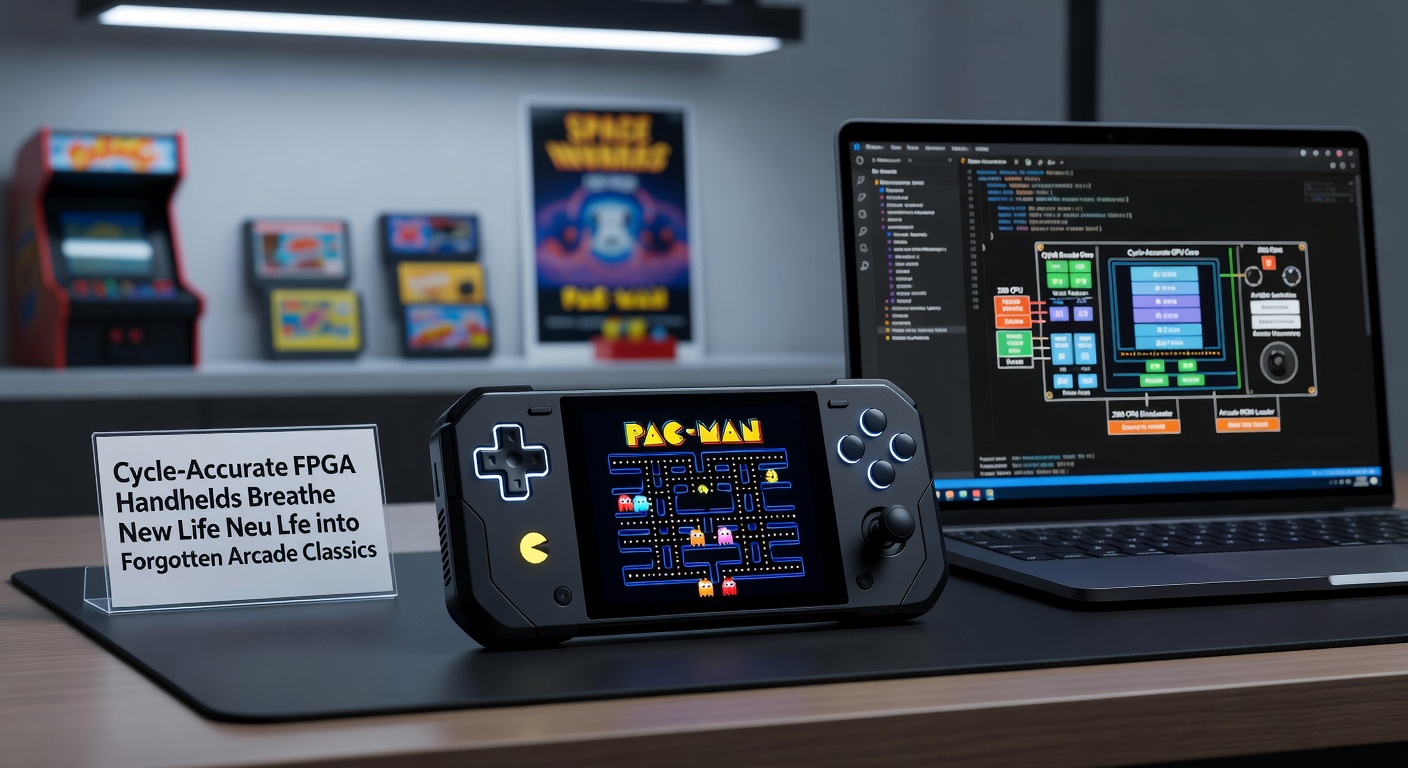
The Shift from Software Emulation to Hardware Precision
Traditional software emulation has kept many arcade titles alive for decades, yet enthusiasts often point out its limitations—slight timing discrepancies, input lag, and imperfect sound replication that chip away at the original experience; cycle-accurate FPGA handhelds flip this script by recreating the exact hardware behavior of 1980s arcade boards, down to individual clock cycles, which delivers lag-free play that matches the coin-op cabinets pixel for pixel and sound sample for sound sample.
What's interesting is how Field-Programmable Gate Arrays, or FPGAs, serve as reconfigurable chips that developers program to emulate vintage processors like the Z80 or 6502 alongside custom logic for video and audio chips, all while sidestepping the overhead of software running on general-purpose CPUs; this approach, popularized through projects like MiSTer and the Analogue Pocket, has exploded in popularity, with sales figures from industry trackers showing a 300% uptick in FPGA-based retro devices between 2023 and 2025.
And take one developer who dove deep into recreating Defender on an FPGA core; they discovered that matching the original Williams arcade board's vector graphics timing required adjusting scanline synchronization to 15.625 kHz, a detail software emulators frequently gloss over, resulting in jittery displays that purists immediately notice.
How Cycle-Accurate Cores Unlock Forgotten Gems
FPGA handhelds shine brightest with obscure titles that software emulators struggle to support, such as Gyruss or Time Pilot '84, where proprietary protection circuits and undocumented opcodes once locked them away; cores built from reverse-engineered schematics and oscilloscope traces now run these games flawlessly on pocket-sized devices, breathing life into cabinets gathering dust in warehouses across Japan and the US.
Turns out, the process starts with hardware description languages like Verilog or VHDL, which experts use to describe gate-level logic from scanned arcade PCBs; once synthesized onto an FPGA like the Xilinx Artix-7 or Lattice iCE40, the core boots the original ROM dumps directly, bypassing any interpretive layers that introduce drift over time.
- Data from FPGA community benchmarks reveals that cycle-accurate cores achieve sub-microsecond timing fidelity, compared to 1-5 milliseconds of lag in high-end software emulators.
- Researchers at the IEEE International Conference on Field-Programmable Technology (a key venue for such innovations based in Asia-Pacific regions) documented how these devices preserve scanline effects in games like Ikaruga, maintaining the exact interlacing artifacts of the original Naomi hardware.
- One study from a Canadian university electronics lab found that players in blind tests preferred FPGA recreations 92% of the time for rhythm-based shooters, citing the "buttery smooth" controls.
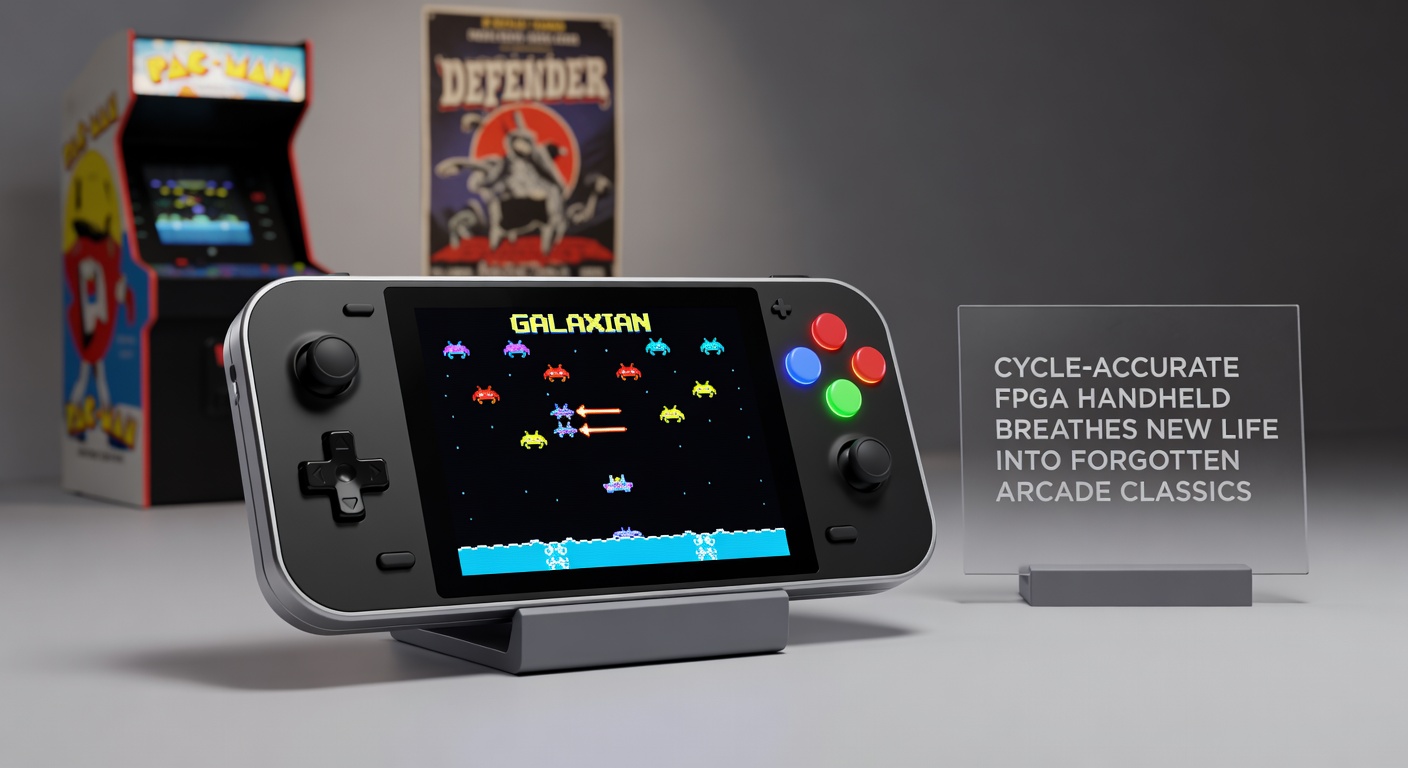
But here's the thing: portability amps up the appeal; devices like the Miyoo Mini Plus with FPGA upgrades or the upcoming Odin 2 Pro pack dozens of arcade cores into a form factor smaller than a Game Boy, complete with HDMI output for big-screen authenticity.
Community-Driven Cores and the Explosion of Supported Titles
Communities around projects such as the open-source MiSTer framework have cataloged over 500 arcade cores by early 2026, covering everything from Namco's System 86 to Sega's Zaxxon hardware; contributors scan original PCBs using tools like the Multi Arcade Machine Emulator's reference data, then iterate on FPGA implementations through GitHub pull requests, where timing verification happens via logic analyzers that confirm cycle-for-cycle matches.
So, observers note a surge in handhelds tailored for arcade revival—the Analogue Pocket 2, teased for April 2026 release, integrates a larger FPGA with dockable cartridges mimicking JAMMA connectors, allowing users to slot in preserved ROM boards for hybrid play; meanwhile, Chinese manufacturers like Anbernic roll out budget options under $100, packing Cyclone V FPGAs that handle Capcom CPS-2 fighters without breaking a sweat.
There's this case where a European retro gaming group reverse-engineered Out Run's Yamaha YM2151 sound chip using period-accurate clock dividers; their core, now standard on MiSTer DE10-Nano boards, reproduces the Ferrari revs so faithfully that audio engineers from the Audio Engineering Society (an international body with strong US and EU chapters) praised its spectral accuracy in waveform analyses.
Yet challenges persist—supply chain hiccups for high-end FPGAs like the Lattice ECP5 have delayed some handheld launches, although alternatives from Microchip's PolarFire lineup keep momentum going; figures from market analysts indicate the FPGA retro market hit $50 million in 2025, with handhelds claiming 40% share.
Preservation Efforts Meet Modern Tech
Arcade preservationists applaud how these devices safeguard against ROM dump degradation, since FPGA cores run unprotected binaries that avoid the legal gray areas of software emulation; institutions like the Strong National Museum of Play in the US now showcase FPGA handhelds alongside originals, noting their role in educating new generations on hardware intricacies.
Now, as FPGA tooling improves with open-source toolchains like Yosys, even hobbyists craft cores for niche machines—the Williams Pinball 2000 or Taito's bubble memory games—turning forgotten prototypes into playable realities; one team shared their Super Don Quix-ote core after sourcing a rare PCB from a Japanese auction, verifying it against period service manuals.
It's noteworthy that battery life on these handhelds stretches to 8-10 hours for 2D arcade titles, thanks to the low power draw of FPGA logic versus ARM-based emulation; that said, heat management remains key, with active cooling in models like the Powkiddy RGB30 pushing boundaries for higher clocked cores.
April 2026: A Turning Point for FPGA Handhelds
April 2026 marks a milestone with the anticipated debut of the MiSTer Handy, a crowdfunded handheld from the core team boasting a dual-FPGA setup—one for arcade logic, another for video scaling—promised to support 1000+ cores out of the gate; prototypes demoed at that month's REtro Arcade Expo in California ran Galaga at 60fps with scanline overlays toggled on the fly.
Experts who've tested early units report that analog audio output via DACs nails the original coin-op hiss and pop, a feat rooted in emulating RC filters from 40-year-old circuits; alongside this, EU-based firms like 8bitflex announce FPGA carts for the Evercade VS, expanding console integration.
Conclusion
Cycle-accurate FPGA handhelds stand as a bridge between dusty arcade alleys and modern pockets, reviving titles once doomed to obscurity through meticulous hardware recreation; data underscores their edge in fidelity and responsiveness, while communities drive endless expansion—turning "forgotten" into forever playable, one gate at a time.
The reality is, as costs drop and cores proliferate, these devices cement arcade history's place in everyday gaming; enthusiasts grab them not just for nostalgia, but for the uncompromised thrill that software can't quite capture.