5 Aug 2026
Distributed Computing Frameworks Enable Real-Time Physics Synchronization in Player-Hosted Collaborative Builds
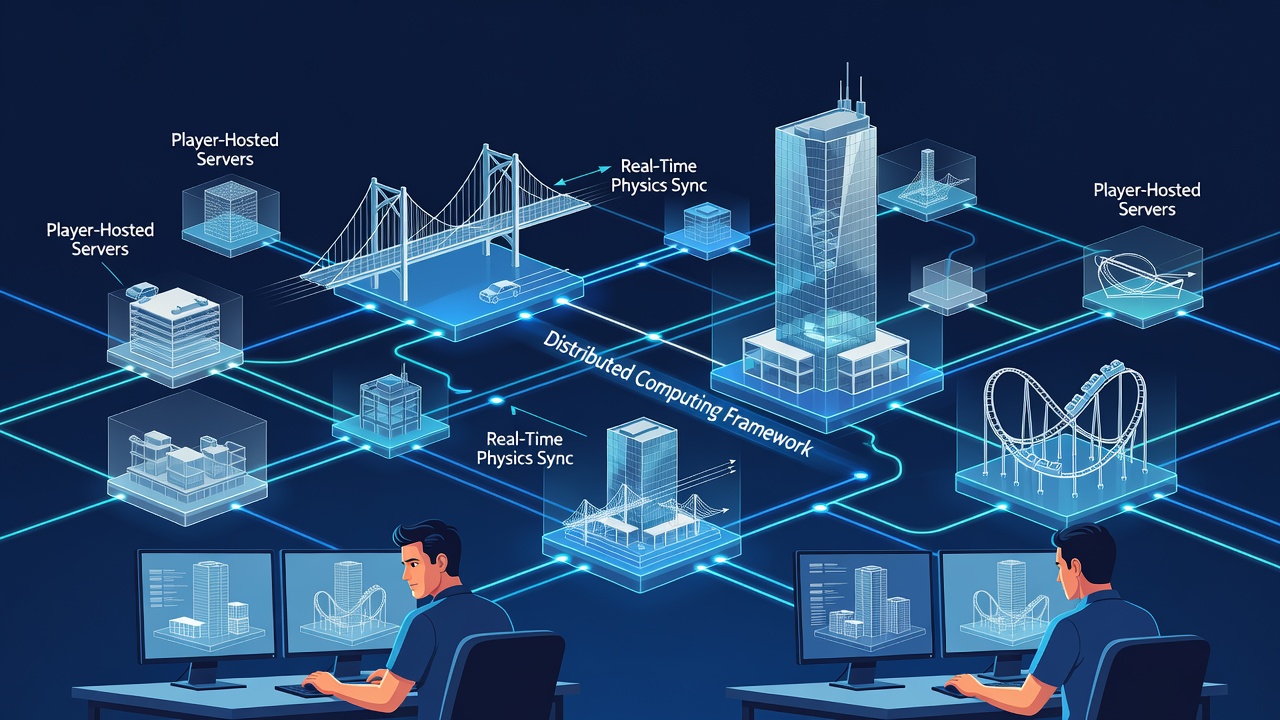
Distributed computing frameworks manage real-time physics synchronization by partitioning simulation workloads across multiple player-hosted servers, and this approach allows collaborative building environments to maintain consistent object states even when dozens of participants edit structures simultaneously. Researchers at institutions in Europe and North America have documented how these systems divide physics calculations into localized tasks that run in parallel, while dedicated synchronization layers resolve conflicts before they affect player views.
Core Mechanisms Behind Distributed Physics Handling
Player-hosted servers often operate without a central authority, so frameworks like those built on actor models or entity-component systems assign ownership of physics bodies to specific nodes based on spatial proximity or edit frequency. When one player places a block or adjusts a joint, the owning node computes the immediate forces and velocities, then broadcasts delta updates to neighboring nodes using protocols that prioritize low-latency paths. Data from academic studies shows that such ownership handoffs occur within milliseconds when players cross defined boundaries, and this prevents the accumulation of desynchronized states that once caused structures to jitter or collapse unexpectedly.
Consistency models play a central role here, and eventual consistency combined with conflict-free replicated data types lets building actions merge without requiring global locks. Observers note that CRDT-based approaches have gained traction because they tolerate network partitions common in residential internet connections, yet still converge on identical world states once messages arrive. In practice, this means a tower erected by one group of players integrates smoothly with an adjacent bridge built by another group, even if their servers exchange data through intermittent peer links.
Techniques for Maintaining Synchronization Across Nodes
Deterministic lockstep simulation runs on subsets of the world while predictive rollback corrects deviations, and frameworks apply these selectively to physics-heavy regions such as moving platforms or destructible elements. When a server detects divergence, it rolls back only the affected entities, replays inputs in order, and re-simulates forward, all while other nodes continue unaffected. Figures from industry reports indicate that selective rollback reduces bandwidth usage by up to 60 percent compared with full-state broadcasts, because only corrected trajectories travel across the network.
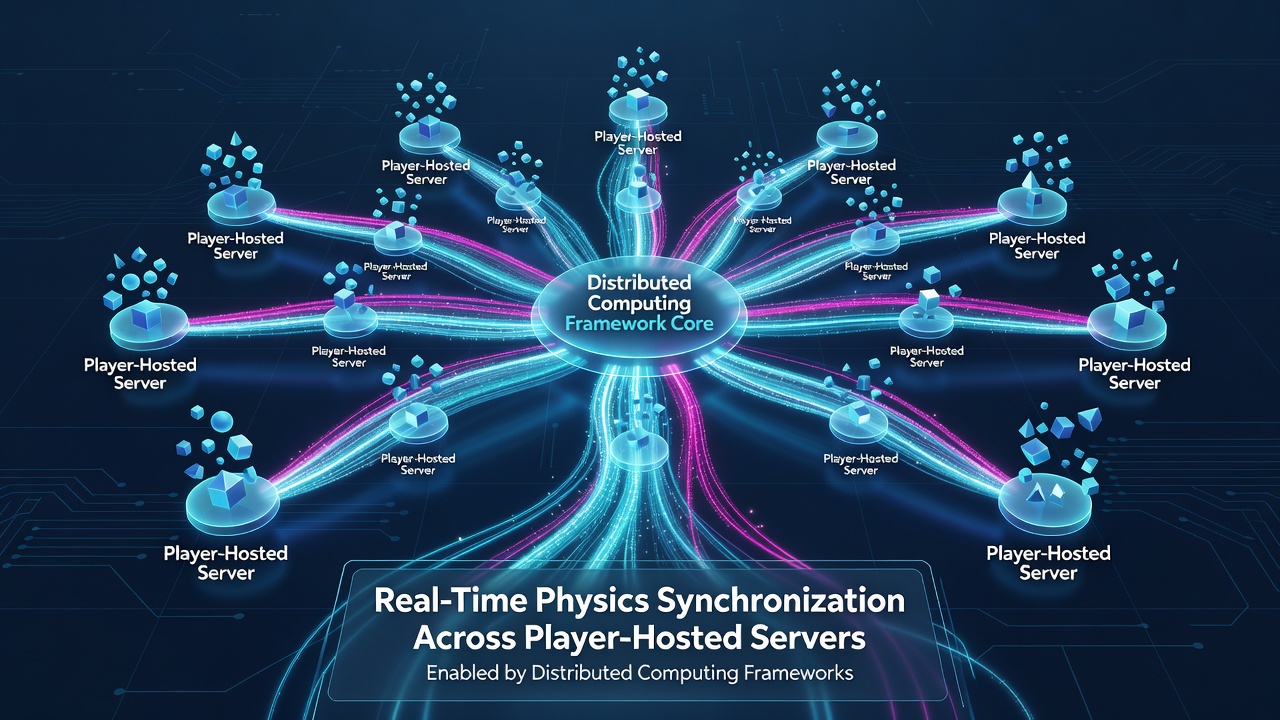
Interest has grown in hierarchical partitioning methods that group nearby objects into clusters managed by the same node, and this clustering reduces cross-server chatter during intense building sessions. When clusters overlap at boundaries, boundary nodes run duplicate simulations briefly and vote on the authoritative result using majority or timestamp rules. Those who have implemented such systems report fewer visible artifacts during rapid edits, because disagreements resolve locally before they propagate further.
Real-World Deployments and Recent Developments
Several open-source projects have released tooling that wraps existing physics engines with distributed schedulers, and developers deploy these on consumer hardware rented or contributed by players themselves. In August 2026, presentations at a simulation conference highlighted updates to one such toolkit that improved cluster migration speed by integrating container orchestration directly into the game server runtime. The changes allow a node handling a dense city block to transfer ownership to an incoming player server without pausing the simulation for more than a single tick.
Academic work from Australian research groups has examined latency patterns in volunteer-hosted clusters, and their measurements reveal that average round-trip times between nodes stay under 80 milliseconds when participants are geographically dispersed across a single continent. Frameworks compensate for higher delays by increasing the prediction window for moving objects while keeping static structures strictly authoritative, which preserves the feel of precise placement during collaborative construction.
Challenges Addressed by Modern Frameworks
Network asymmetry remains a persistent issue because upload speeds on consumer connections often lag behind download speeds, yet distributed frameworks mitigate this through compression of physics state and prioritized queuing of edit commands. Studies conducted at Canadian universities demonstrate that adaptive compression ratios based on available bandwidth cut desync incidents by roughly one-third in test environments with 30 concurrent builders. Security considerations also receive attention, adn signed state updates prevent malicious nodes from injecting invalid physics events that could destabilize shared builds.
Resource heterogeneity among player machines introduces another variable, since some hosts run on high-core workstations while others use modest hardware. Frameworks therefore include dynamic load balancers that migrate ownership away from overloaded nodes, and this redistribution occurs transparently so builders experience no interruption. Evidence from deployed systems shows that such balancing extends viable session lengths before performance degrades.
Conclusion
Distributed computing frameworks continue to refine the boundary between local computation and global consistency in player-hosted environments, and ongoing research supports incremental improvements in synchronization speed and fault tolerance. As more collaborative building platforms adopt these techniques, the technical foundation for large-scale, real-time shared worlds grows steadily more robust without requiring dedicated data centers.