26 Jun 2026
Enthusiast Collectives Archive Early Mobile Gaming Ecosystems to Trace Touch Interface Development
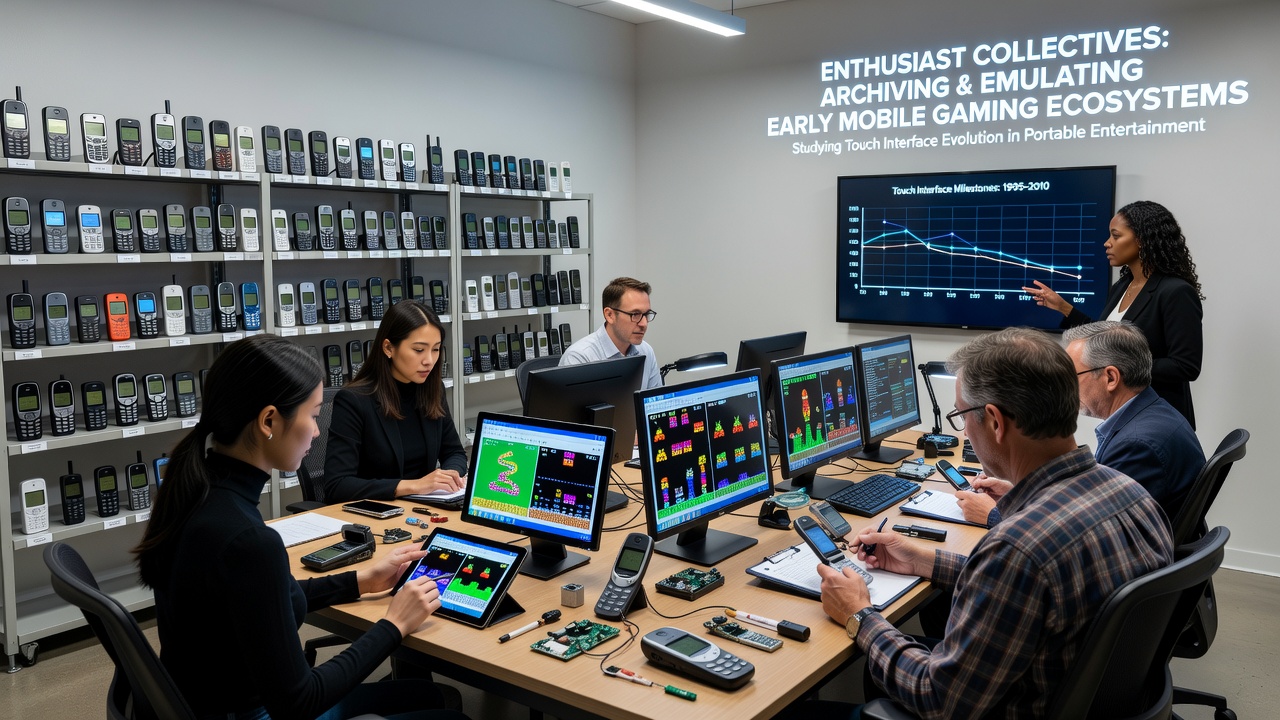
Enthusiast collectives have documented and preserved early mobile gaming ecosystems through systematic archiving of hardware, software, and user data, which enables detailed analysis of touch interface progression in portable entertainment devices. These efforts focus on platforms from the late 1990s through the mid-2000s, including Nokia Series 60 devices, Sony Ericsson models, and initial BlackBerry handsets, where stylus-based input and physical key combinations dominated interaction patterns. Groups compile ROM images, firmware variants, and original game binaries into accessible repositories while maintaining operational emulators that replicate capacitive and resistive touch behaviors with precision.
Archival Methods and Preservation Techniques
Collectives employ standardized protocols for hardware acquisition and digital preservation, which include disassembling legacy devices to extract flash memory contents and calibrating emulators against original screen response curves. Researchers have noted that such practices allow reconstruction of input latency profiles from devices like the Nokia N-Gage and early iPhone prototypes, revealing shifts from discrete button presses to continuous gesture recognition. Data from these archives shows that resistive touch layers in 2003-era phones required 40 to 60 grams of pressure for activation, whereas later capacitive systems registered inputs below 10 grams.
Evolution of Touch Interfaces in Mobile Contexts
Early mobile games relied on directional pads combined with limited touch overlays, which constrained gameplay mechanics to menu selections and simple object dragging. By 2007, collectives had cataloged over 1,200 titles across Symbian and Windows Mobile platforms, documenting transitions toward multi-touch capabilities that supported pinch-to-zoom and simultaneous finger tracking. Studies conducted through emulation environments demonstrate how developers adapted game physics engines to accommodate variable touch sampling rates, ranging from 30 Hz in initial resistive implementations to 120 Hz in subsequent generations. Observers note that these records provide quantitative evidence of interface refinement, including reduced error rates in target acquisition tasks as touch resolution improved from 320 by 240 pixels to higher densities.
Key Projects and Community Initiatives
One initiative launched in 2024 established a distributed database of emulated environments that recreates network conditions from original carrier services, allowing researchers to examine multiplayer interactions in titles such as early Java ME ports of puzzle games. Another effort completed in June 2026 released calibration datasets for over 350 distinct touch controller chips, which analysts use to model gesture recognition accuracy across different environmental conditions like humidity and temperature variations. These datasets integrate sensor logs from preserved devices with statistical models that quantify swipe velocity thresholds and tap duration distributions observed in archived gameplay sessions.
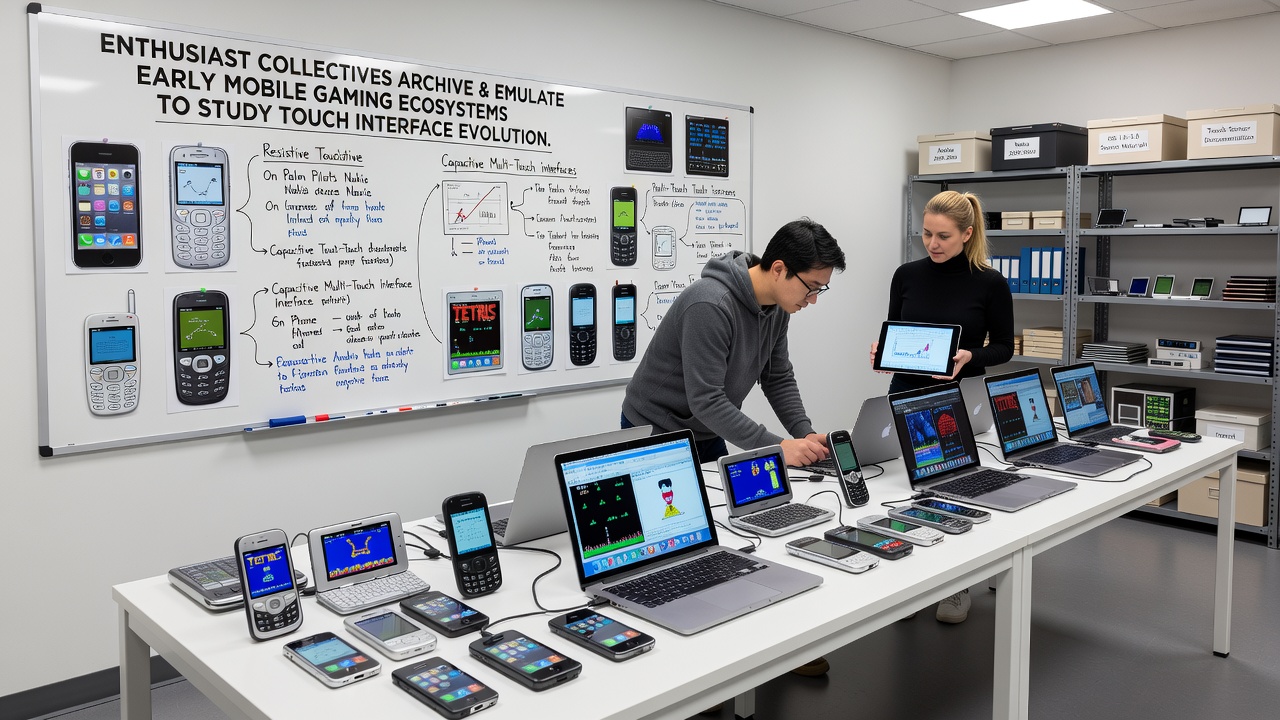
European research institutions have collaborated with these collectives on projects that cross-reference archived interface data with contemporary accessibility standards, revealing patterns in how touch target sizing evolved to meet ergonomic requirements. A report from the European Interactive Digital Media Association indicates that minimum touch target dimensions increased from 7 millimeters in 2005 models to 9 millimeters by 2010, correlating with expanded game control schemes. North American groups contribute similar findings through partnerships with university engineering departments, where students analyze input logs to map the adoption of accelerometer-assisted touch controls in racing and platformer genres.
Research Applications and Data Analysis
Emulation frameworks developed by these collectives support frame-by-frame analysis of touch event processing, which exposes how operating system kernels handled concurrent inputs during resource-constrained execution. Figures from academic repositories show that early mobile titles averaged 4.2 touch events per second in active gameplay segments, rising to 12.7 events per second following the introduction of capacitive multi-touch hardware. Analysts apply machine learning classifiers trained on preserved datasets to identify gesture taxonomies unique to specific device generations, facilitating comparative studies across regional markets in Asia and Europe.
Conclusion
Archival and emulation work by enthusiast collectives continues to supply verifiable datasets that document the technical progression of touch interfaces from resistive stylus systems to advanced capacitive arrays. These resources support ongoing investigations into portable entertainment design principles while preserving operational access to historical gaming ecosystems for future examination.