27 May 2026
Esports Teams Deploy Retinal-Tracking Overlays in Practice Arenas to Map Gaze Patterns During High-Stakes Strategy Sessions
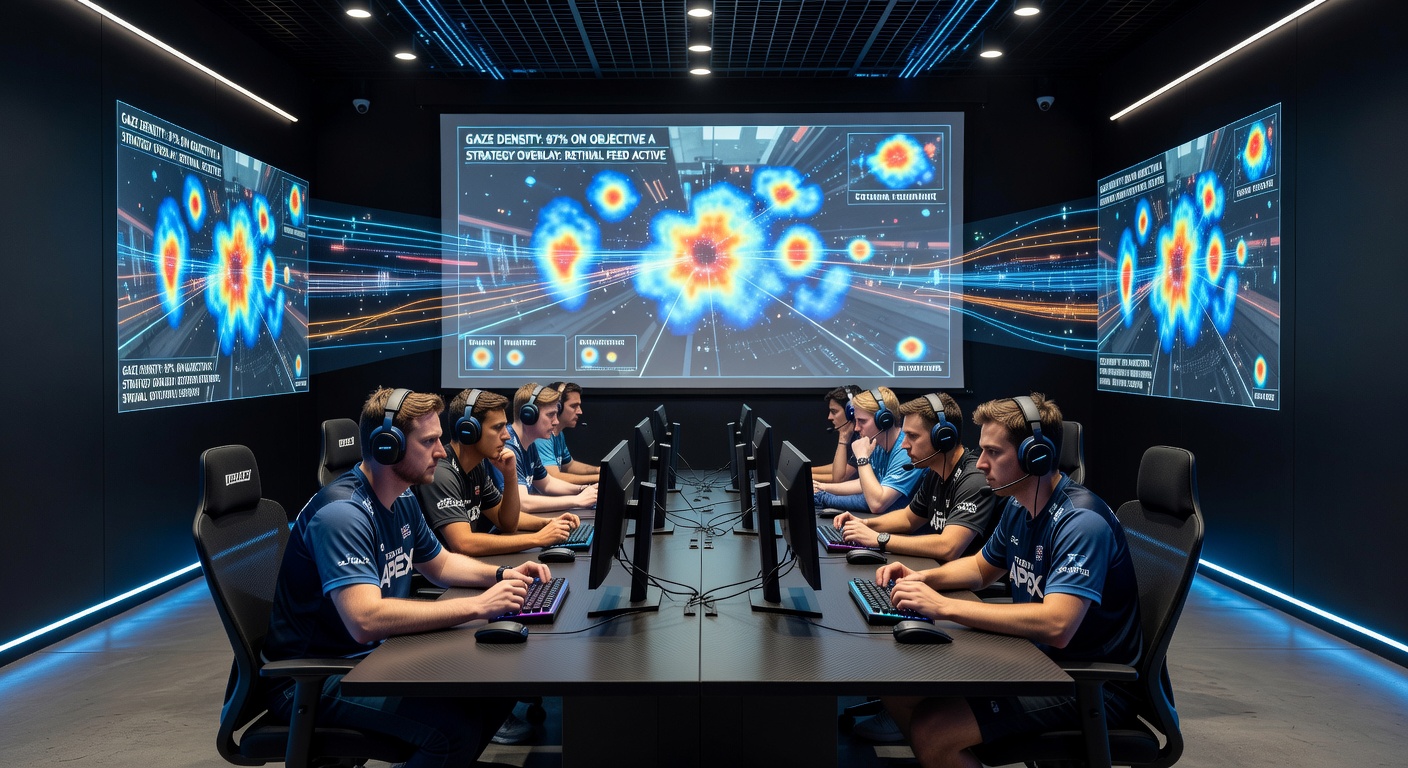
Teams across major esports leagues have integrated retinal-tracking overlays into their training facilities, creating detailed maps of where players direct their visual attention during simulated matches and tactical reviews. This technology captures eye movement data at high frequency, overlaying the results onto game interfaces so coaches can identify patterns in how competitors process information under pressure. Data from these sessions reveal clusters of focus around key elements like minimaps, health bars, and opponent positioning indicators, which teams then use to refine communication protocols and decision trees.
Technical Setup and Data Collection Methods
Retinal-tracking systems combine infrared cameras mounted above monitors with software that processes pupil and corneal reflection points in real time, generating heatmaps and scanpath visualizations that update continuously during play. Practice arenas equipped with these tools record sessions lasting several hours, capturing thousands of data points per minute while players engage in custom scenarios designed to replicate tournament conditions. Engineers calibrate each unit to individual players because eye physiology varies, ensuring accuracy rates above 95 percent according to calibration logs shared by multiple organizations.
Analysts export the gaze data into visualization platforms that align eye movements with specific in-game events, allowing side-by-side comparison between successful and unsuccessful rounds. One European league documented how teams reduced average reaction latency by correlating gaze shifts with audio cues from teammates, leading to adjustments in voice comms timing.
Applications in High-Stakes Preparation
Coaches review aggregated gaze patterns after each session to highlight areas where players consistently overlook critical information, such as flanking routes or resource timers. These insights feed directly into customized drills that train visual scanning habits without altering core gameplay mechanics. In May 2026 several North American squads incorporated retinal data into their preparation for international qualifiers, resulting in documented improvements in map control metrics tracked by league statisticians.
Teams have also begun sharing anonymized datasets with academic partners to study cognitive load during extended competition blocks. A collaboration involving researchers at the University of California produced reports showing distinct gaze signatures between novice and veteran players when handling multi-threaded objectives, information that training staffs now reference when onboarding new roster members.
Integration with Existing Analytics Platforms
Retinal overlays function alongside traditional performance metrics like kill-death ratios and economy management logs, creating layered profiles that combine behavioral and physiological indicators. Software interfaces allow coaches to toggle between raw video footage, gaze heatmaps, and statistical summaries within a single dashboard, streamlining post-session debriefs that previously relied on subjective recall alone. Industry groups such as the Esports Integrity Commission have noted growing adoption rates in their annual technology surveys, with participation rising steadily across regions including Asia-Pacific and South America.

Hardware manufacturers supply modular kits that fit existing arena setups, minimizing disruption during installation. Maintenance protocols require weekly sensor cleaning and monthly firmware updates to maintain consistent tracking performance across different lighting conditions common in large facilities.
Broader Industry Context and Future Developments
Research institutions continue to examine how gaze mapping influences training efficiency over multi-week cycles, with preliminary findings presented at conferences hosted by Canadian esports federations. These studies track retention of visual strategies learned through overlay feedback versus traditional verbal instruction, providing quantitative benchmarks that organizations reference when allocating practice resources.
Regulatory discussions around data privacy have emerged as more teams adopt the technology, prompting leagues to establish guidelines for secure storage and limited access to individual player recordings. Observers note that standardized protocols help maintain competitive balance while protecting sensitive performance information.
Conclusion
Retinal-tracking overlays have become a standard component in elite esports training environments, supplying objective measurements of visual attention that complement existing analytical methods. Teams continue to refine their use of this data to support strategy development, with ongoing collaborations between hardware providers, leagues, and research bodies shaping how the tools evolve. As facilities expand their technical capabilities through 2026 and beyond, the integration of gaze pattern analysis remains focused on measurable outcomes derived from controlled practice conditions.