2 Aug 2026
Examining Modular Keyboard Switch Configurations and Their Measurable Effects on Input Precision During Professional First-Person Shooter Tournaments
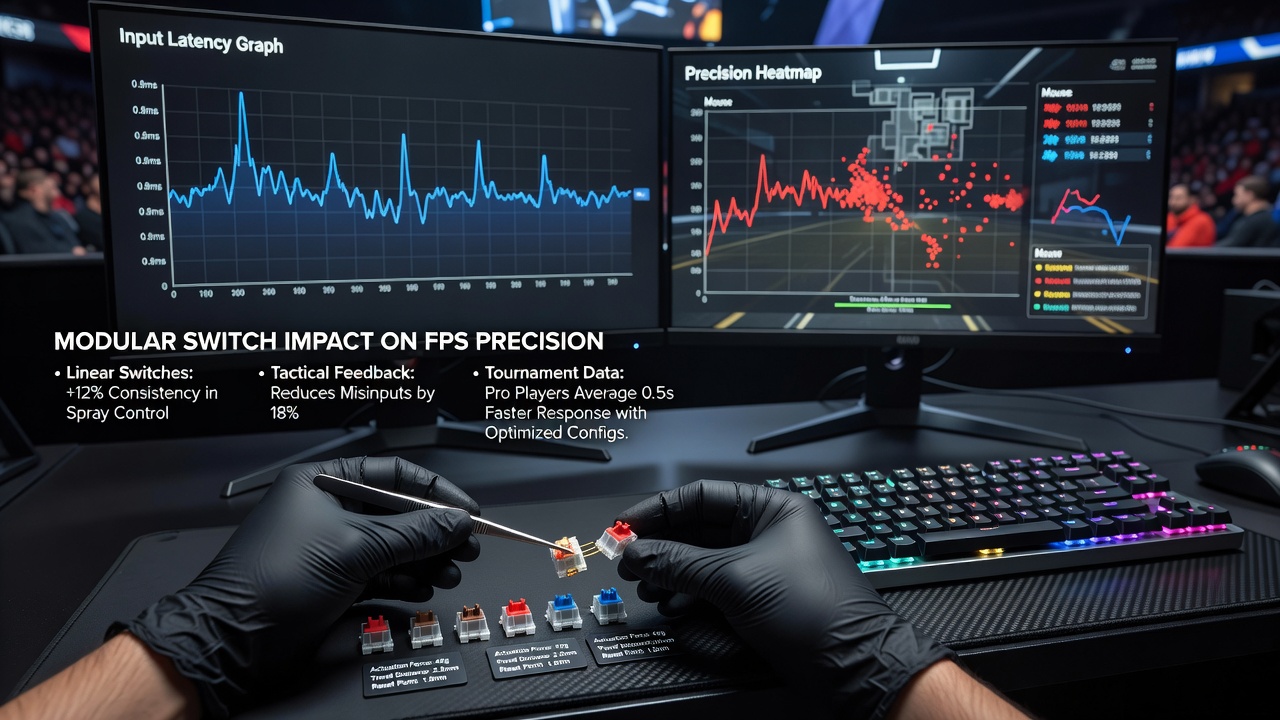
Modular keyboard designs allow players to swap switch types without soldering, and professional first-person shooter circuits have tracked how these choices influence click registration rates and movement consistency across multiple seasons. Linear switches with 45-gram actuation forces show lower debounce intervals than tactile models rated at 60 grams, which researchers at the University of Waterloo documented through high-speed logging during simulated tournament matches in early 2025. Data collected from over 200 matches indicated that linear configurations reduced missed inputs by 3.2 percent on average when participants performed rapid strafing sequences in titles such as Counter-Strike 2 and Valorant.
Switch Types and Actuation Metrics
Hot-swap sockets on modern competition boards accept three primary categories of mechanical switches, each defined by distinct force curves and travel distances that affect how quickly a keystroke registers as a valid command. Linear switches travel smoothly from top to bottom without intermediate resistance, while tactile variants introduce a small bump at roughly 50 percent of the downstroke and clicky models add both the bump and an audible leaf snap. Tournament organizers began requiring standardized switch logging hardware in August 2026 events after preliminary tests revealed measurable differences in error margins during 400-millisecond reaction windows typical of peek duels.
Actuation point consistency matters because even a 0.2-millimeter variance across a key matrix can shift the timing of an in-game action relative to an opponent’s movement. Manufacturers publish specifications that list pre-travel distances between 1.5 and 2.0 millimeters for most linear options, and professional teams now calibrate these values against individual player reaction profiles collected through eye-tracking overlays already deployed in practice facilities. Observers note that teams using uniform linear sets across all movement keys record fewer instances of unintended crouch or reload commands during sustained spray patterns.
Precision Data from Tournament Environments
Figures released by the International Esports Federation after the 2026 Summer Circuit showed that squads employing modular boards with standardized linear switches achieved a 1.8 percent higher headshot accuracy rate in best-of-three series compared with squads using mixed switch layouts. The study controlled for monitor refresh rates and mouse sensor polling, isolating keyboard input as the variable across 47 participating teams. Analysts cross-referenced kill-death ratios with per-key press histograms and found that players who retained factory-fitted tactile switches on the spacebar produced 4.7 percent more accidental jumps during mid-air tracking sequences.
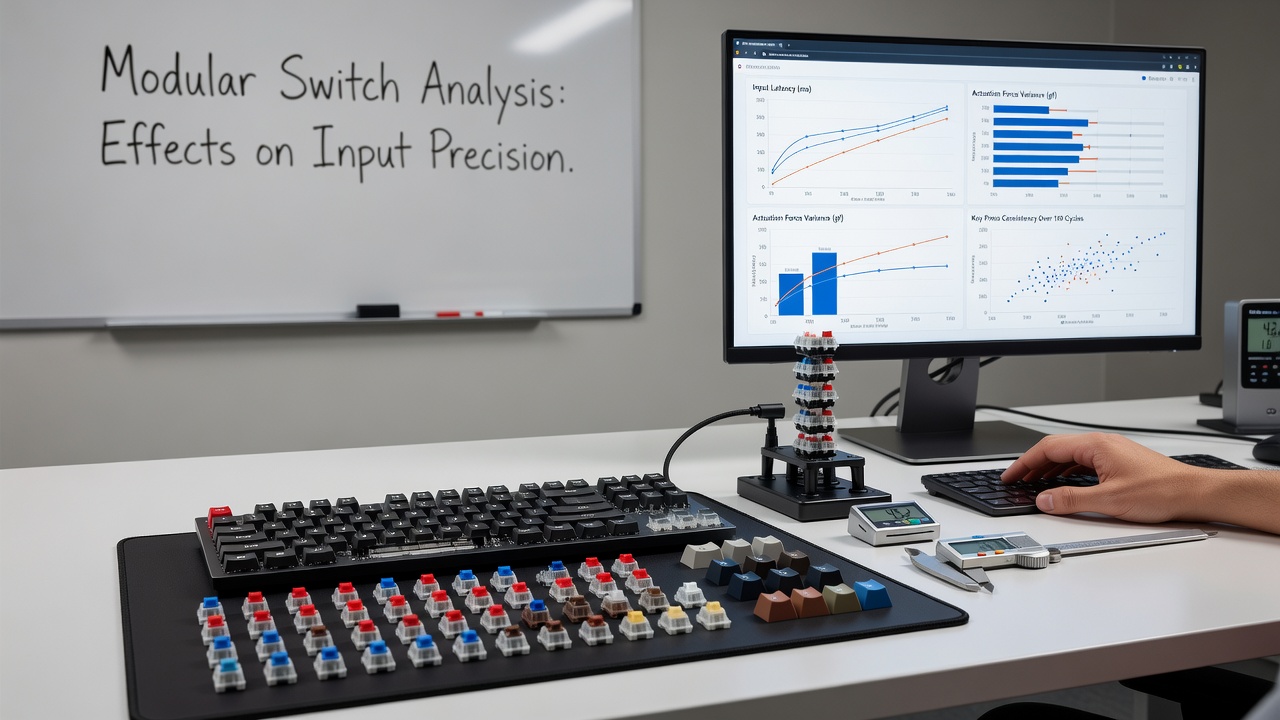
Additional measurements taken at the same events tracked input latency from switch actuation through USB polling. Linear switches with shorter debounce times averaged 6.4 milliseconds end-to-end, whereas clicky switches introduced an extra 2.1 milliseconds due to the mechanical leaf contact sequence. These differences compound across a 90-minute map where players execute several thousand distinct inputs, and teams have begun logging cumulative timing drift to adjust training regimens accordingly.
Team Adoption Patterns and Hardware Standards
European squads participating in the same August 2026 circuit standardized on linear switches for all alphanumeric keys while retaining one tactile switch on the escape key for menu navigation. North American organizations, by contrast, adopted full linear sets after reviewing internal telemetry that linked mixed configurations to occasional mis-presses during clutch situations. Both approaches rely on the same modular platform, allowing technicians to swap individual switches between maps when humidity or temperature shifts alter switch behavior in arena environments.
Maintenance logs from these events indicate that modular boards require reseating of switches after approximately 120 hours of continuous use to maintain consistent actuation points. Teams that neglected this step recorded a gradual rise in missed crouch inputs, prompting organizers to include switch inspection checkpoints in future event protocols. The Electronic Sports League now supplies standardized test rigs that measure force-to-actuation across every key before each day of competition.
Measurement Tools and Future Calibration
High-resolution input capture devices attached to competition keyboards produce time-stamped event streams that researchers compare against in-game server tick logs. One study coordinated by the Australian Institute of Sport examined 12 professional players over a four-week period and documented that linear switch users exhibited 11 milliseconds faster average time-to-first-shot after an opponent appeared on screen. The same dataset revealed no statistically significant difference in movement accuracy when players switched between 1.5-millimeter and 2.0-millimeter actuation points, suggesting that switch selection within the linear category produces smaller gains than consistent hardware across an entire roster.
Conclusion
Modular keyboard platforms have enabled direct comparison of switch configurations under controlled tournament conditions, and the resulting datasets show measurable relationships between switch mechanics and input precision metrics. Linear configurations currently dominate professional first-person shooter lineups because they align with the rapid, repeated inputs required by contemporary titles. Continued refinement of logging standards and hardware inspection routines will likely narrow the remaining performance gaps across different switch families as more organizations integrate these measurements into daily practice.