17 Jun 2026
Fan Translation Collectives Decode Narrative Layers in Region-Locked RPGs
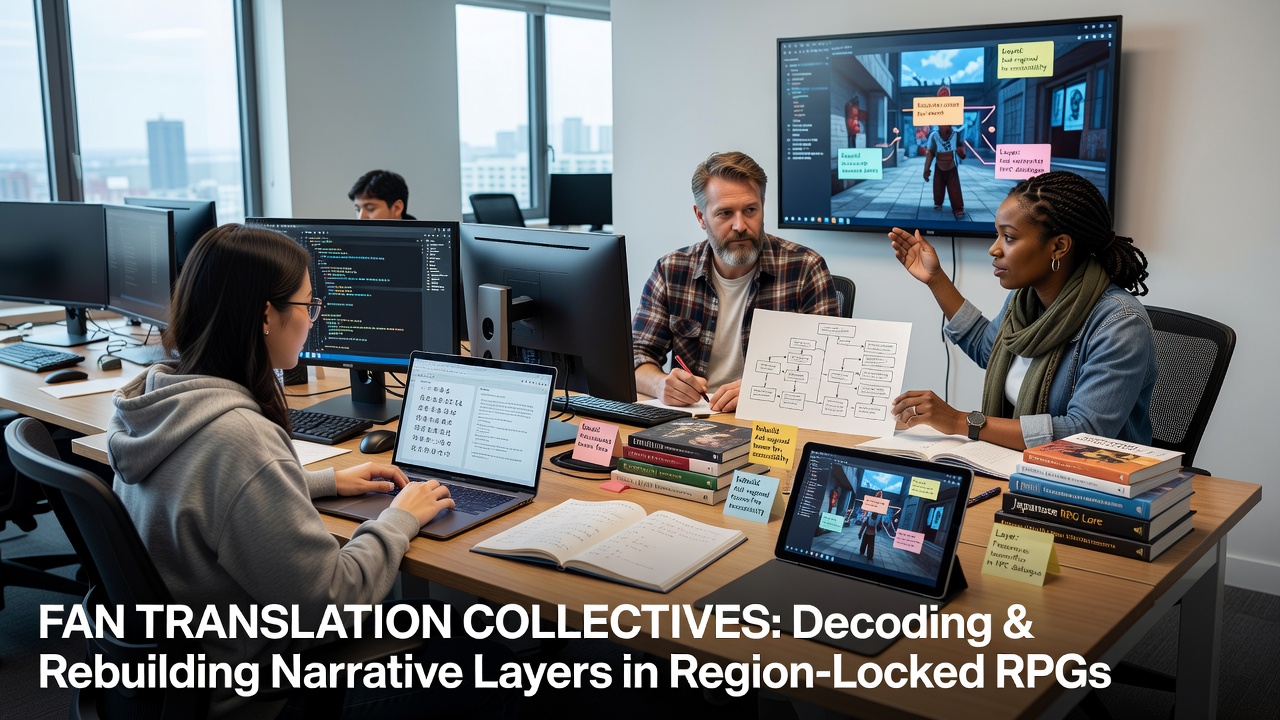
Region-locked RPGs from the 1990s and early 2000s often contain narrative structures built around Japanese cultural references, honorific systems, and branching dialogue trees that resist direct word-for-word conversion, so collectives form around systematic approaches that separate literal text from contextual meaning before reconstruction begins. These groups coordinate volunteers who parse multiple script layers including main story files, NPC side conversations, item descriptions, and hidden debug strings that developers left embedded in release builds.
Layered Script Analysis Methods
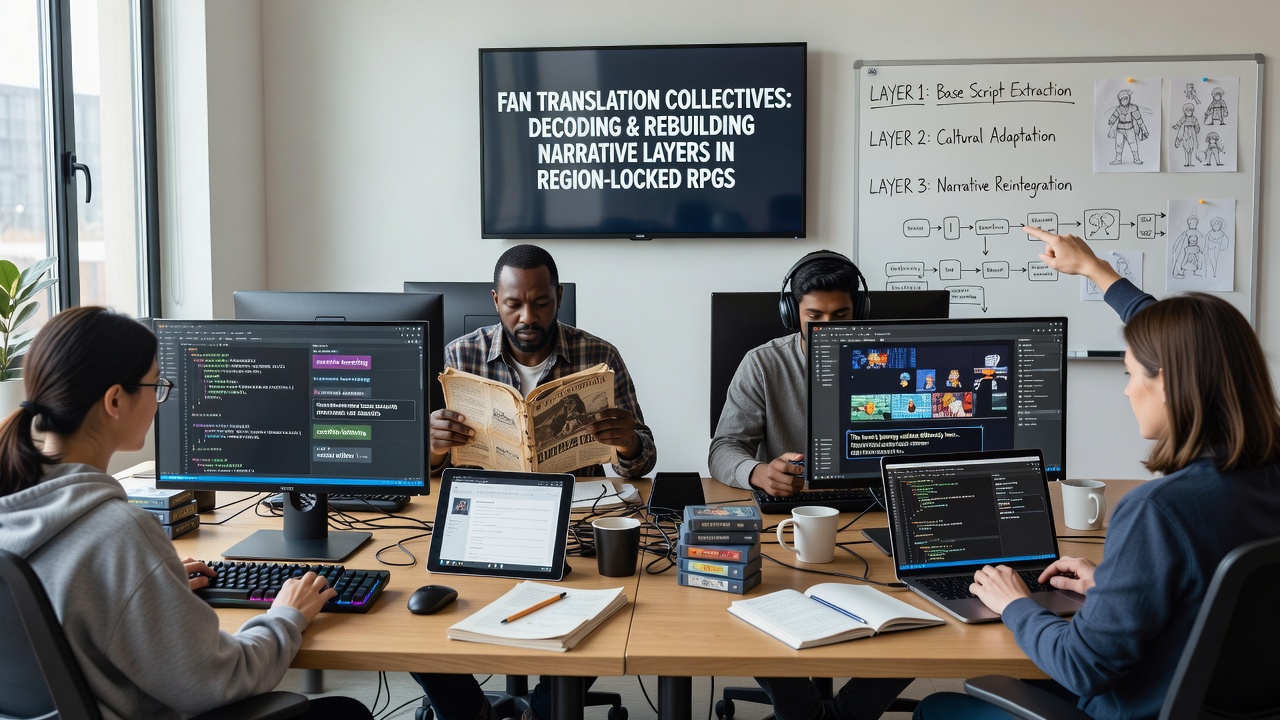
Collectives start by dumping game data through approved extraction tools that isolate text tables while preserving control codes for text box formatting and character limits, then divide scripts into thematic clusters such as combat terminology, relationship dialogue, and world-building lore. Analysts cross-reference each cluster against original Japanese source material using parallel text viewers that highlight discrepancies in tone or implied subtext, while database entries track every instance of repeated phrases across different characters to maintain consistency in personality voice. And because many titles lock certain story branches behind regional release versions, teams reconstruct missing segments by comparing multiple cartridge or disc dumps sourced from different territories.
Cultural Adaptation Workflows
After initial parsing, adaptation specialists map cultural concepts that lack direct equivalents, such as seasonal festivals or hierarchical speech patterns, onto target-language equivalents that preserve emotional weight without introducing anachronisms. Workflow documents record decisions about whether to retain honorifics as untranslated flavor or replace them with contextual descriptors, and these logs circulate among proofreaders who test dialogue flow by reading scenes aloud in group sessions. When a term carries dual meanings that affect plot reveals, the collective flags it for multiple translation variants that later integrate into conditional script branches based on player choices.
One documented case involved a 1998 RPG whose central theme revolved around seasonal impermanence expressed through cherry blossom metaphors, where translators rebuilt those references around local flora cycles documented in regional folklore archives to keep symbolic resonance intact across releases. Such adaptations require coordination between linguists and historians who verify that new imagery aligns with the original narrative timeline rather than altering cause-and-effect sequences.
Community Coordination and Tool Development
Modern collectives rely on version-controlled repositories that allow simultaneous editing by distributed members while automated scripts flag overlapping changes to the same dialogue node, reducing merge conflicts that once delayed projects for months. In June 2026 several established groups released updated frameworks that integrate machine-assisted alignment for repeated phrases, yet human reviewers still validate every suggestion against narrative context to avoid flattening character-specific speech quirks. These frameworks also embed glossaries that update dynamically as new cultural references surface during playtesting, ensuring that later script revisions inherit earlier decisions without requiring full re-analysis.
Researchers at institutions studying digital preservation note that fan translation archives now serve as primary sources for scholars examining how interactive narratives evolve across language boundaries, with metadata standards developed by groups such as the Digital Preservation Coalition helping organize released patches for long-term accessibility. Meanwhile, university translation studies programs have begun incorporating case files from these projects into curricula that examine decision trees behind adaptive localization.
Impact on Accessibility and Preservation
Once patches reach public release, players gain access to story elements previously restricted by region coding, and speedrunners incorporate newly translated dialogue into route documentation that highlights previously overlooked narrative triggers. Data compiled by preservation networks shows increased interest in original hardware playthroughs after translation patches appear, because restored context encourages collectors to seek authentic regional cartridges rather than relying solely on emulation layers. And while hardware limitations such as fixed text box sizes remain constant, adaptation teams develop compression techniques that fit expanded English phrasing back into original memory allocations without truncating key exchanges.
Future Trajectories
Collectives continue refining pipelines that combine static script analysis with runtime variable tracking, allowing translators to account for dialogue that changes based on prior player decisions across multiple sessions. Partnerships with academic researchers have produced open datasets of annotated RPG scripts that support comparative studies of narrative localization practices across different decades of Japanese game development.
Conclusion
Fan translation collectives maintain detailed records of every analytical pass and adaptation choice, creating transparent archives that future contributors can audit when tackling similar region-locked titles. These workflows demonstrate how systematic decomposition of narrative layers followed by culturally informed reconstruction extends the playable lifespan of otherwise inaccessible RPGs while preserving original authorial intent across linguistic boundaries.