19 Aug 2026
Friction Coefficient Measurements in Aftermarket Mouse Feet Among Precision Aiming Communities
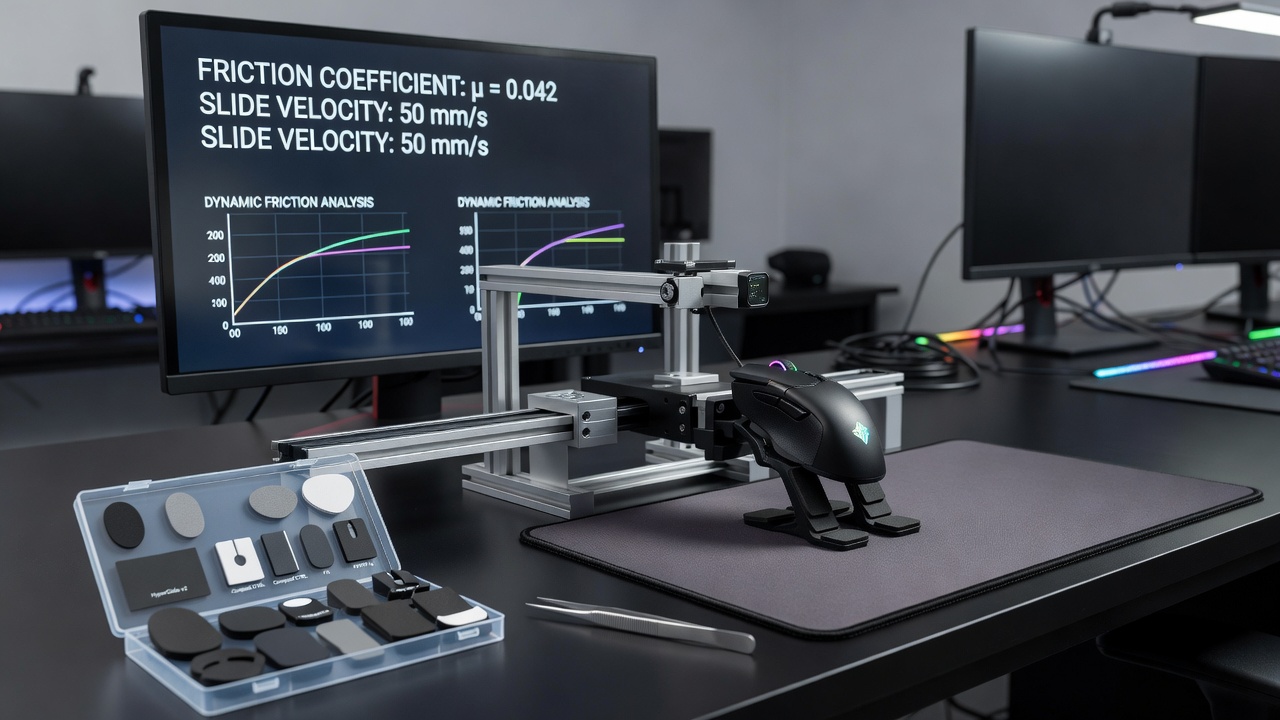
Precision aiming communities have developed systematic approaches to evaluating aftermarket mouse feet through friction coefficient measurements, and these practices draw on established tribology methods while adapting them to consumer peripherals. Data collection often occurs in controlled home labs where participants record both static and kinetic friction values across different surfaces, and the results help distinguish performance characteristics between PTFE, ceramic, and glass options. Communities coordinate through dedicated forums and shared spreadsheets that track material composition alongside measured coefficients, which allows for direct comparisons without reliance on manufacturer claims.
Measurement Techniques and Standards
Researchers in materials science apply standardized protocols such as ASTM G99 for pin-on-disk testing, yet precision aiming groups modify these approaches to accommodate the small contact areas typical of mouse feet. A common setup involves mounting a weighted mouse body on a calibrated platform and recording force required to initiate or sustain movement across test pads, which produces repeatable numbers for kinetic friction under loads between 50 and 150 grams. Equipment ranges from DIY rigs using digital force gauges to more advanced setups that incorporate linear actuators for consistent velocity control, and calibration against reference samples remains essential to maintain accuracy across different sessions.
Communities have noted that surface texture of the mousepad significantly influences recorded values, so many testing protocols specify both cloth and hard pad categories before publishing results. Temperature and humidity also receive documentation because minor environmental shifts can alter PTFE behavior by several percent, and groups in August 2026 began sharing environmental compensation tables to normalize data collected across different geographic regions.
Material Comparisons in Community Datasets
Aftermarket feet constructed from virgin PTFE consistently register kinetic friction coefficients between 0.04 and 0.08 when tested against standard cloth pads, whereas ceramic variants often fall in the 0.12 to 0.18 range under identical conditions. Glass options produce intermediate figures around 0.09 to 0.14, though these values depend heavily on edge rounding and surface polish quality. One collaborative dataset compiled by multiple Discord servers now exceeds 180 individual samples, and contributors cross-reference each entry with microscope images of the contact surface to identify manufacturing variations that affect real-world glide.
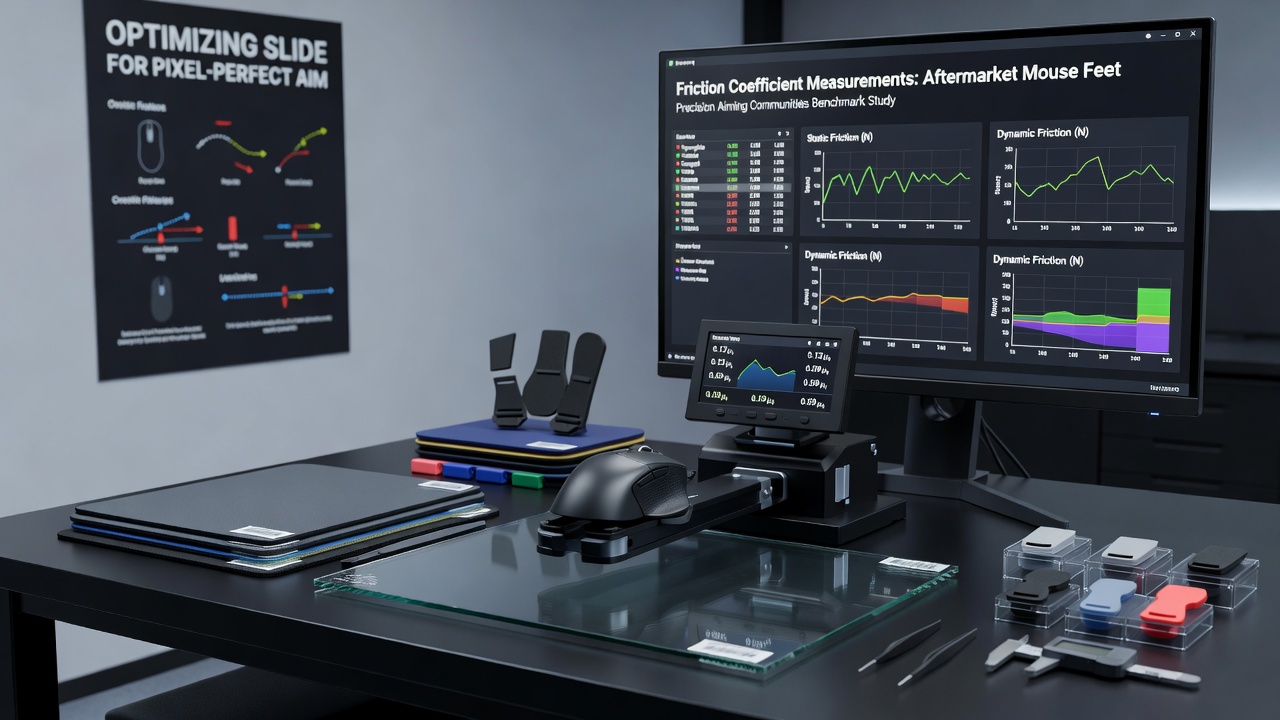
Observers note that break-in periods further modify initial readings, since PTFE surfaces can shed microscopic particles during the first several hours of use and thereby reduce measured friction by up to 15 percent. Groups therefore recommend recording values both before and after a standardized break-in protocol of 10,000 linear passes, which creates more representative data for long-term performance expectations. Those who maintain public leaderboards emphasize that lower coefficients do not automatically translate to superior aiming outcomes, because sensor tracking consistency and mouse weight distribution also contribute measurable effects.
Community Data Sharing and August 2026 Developments
By August 2026 several international groups had synchronized their testing methodologies through an open repository hosted by an academic-adjacent engineering collective, and this effort produced the first multi-region comparison of mouse feet performance across North American, European, and Asian testing environments. Participants from the Canadian Tribology Research Network contributed environmental control data while counterparts in Australia supplied high-resolution surface profilometry scans that revealed how micro-texture depth correlates with friction variance. The combined repository now contains over 300 validated entries and includes both raw force curves and derived coefficient calculations.
Additional work from the University of New South Wales materials laboratory examined polymer aging effects under repeated cleaning cycles, which demonstrated that isopropyl alcohol exposure can raise PTFE friction coefficients by 0.02 to 0.05 after 50 cleaning sessions. Community testers incorporated these findings into updated maintenance guidelines that specify distilled water or specialized polymer cleaners for preserving original glide characteristics.
Impact on Training Protocols
Precision aiming practitioners integrate friction data into equipment selection processes by matching measured coefficients with preferred mousepad textures and personal sensitivity settings. Players who favor high-speed tracking scenarios often select feet with the lowest recorded kinetic values, whereas those focused on micro-adjustments sometimes prefer slightly higher friction for increased tactile feedback during small corrections. Training routines now include periodic re-measurement of personal setups because wear patterns can shift performance over weeks of intensive use, and several aim training platforms have added optional fields for logging equipment specifications alongside accuracy statistics.
Conclusion
Friction coefficient measurement has become a standardized practice within precision aiming communities, supported by shared datasets, adapted laboratory techniques, and cross-regional collaboration that continues to expand in 2026. The resulting body of information provides objective benchmarks for aftermarket mouse feet while highlighting the interplay between material properties, environmental conditions, and long-term usage patterns. Continued refinement of testing protocols and broader participation from academic sources promise to further align community measurements with established tribology research.