Handheld PC Showdown: Aya Neo's Sleek Edge Versus MSI Claw's Raw Muscle
15 Apr 2026
Handheld PC Showdown: Aya Neo's Sleek Edge Versus MSI Claw's Raw Muscle
The Rise of Handheld Gaming Powerhouses
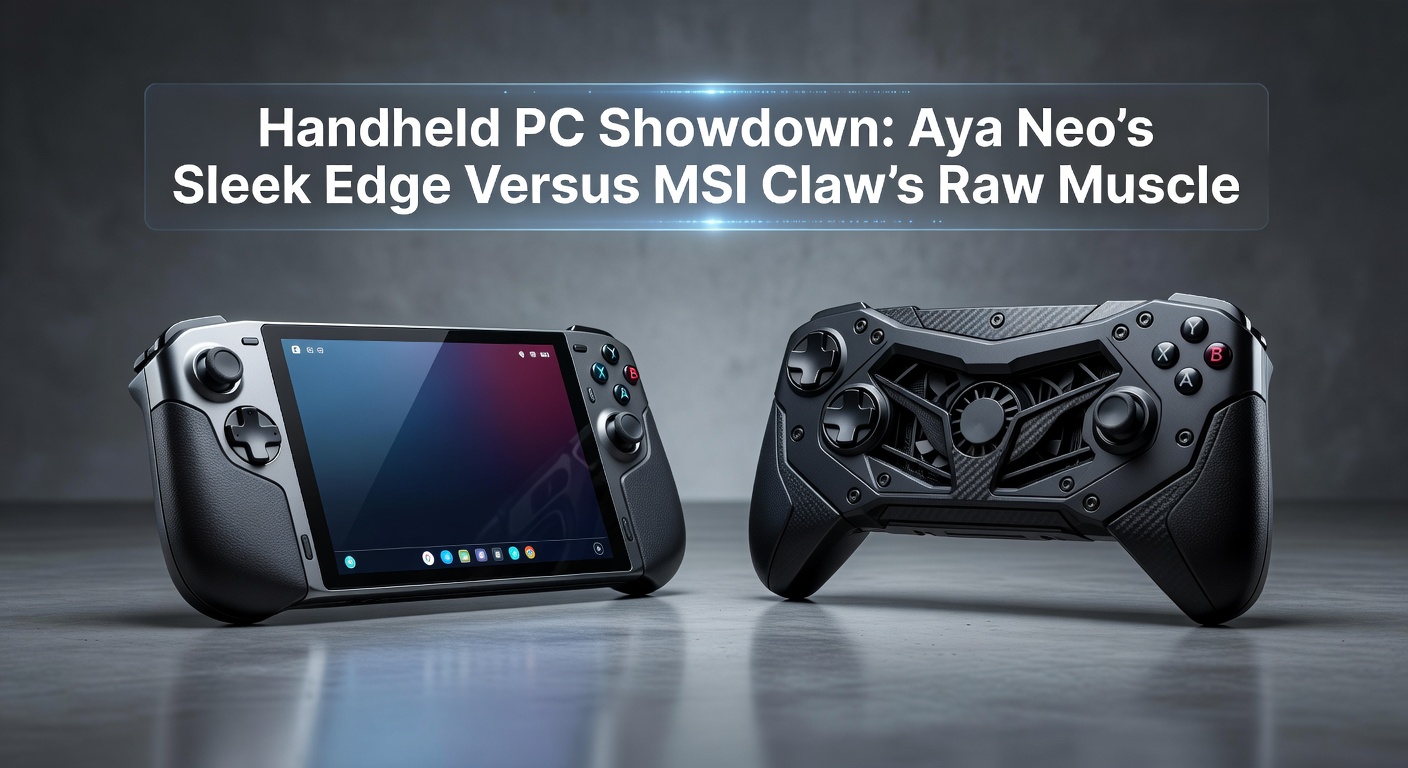
Handheld PCs have exploded onto the scene in recent years, transforming how gamers play on the go; devices like Valve's Steam Deck paved the way, but now competitors such as Aya Neo and MSI Claw push boundaries with Windows-based systems that run full PC games seamlessly. Observers note that by April 2026, sales figures from Steam Hardware & Software Survey reveal handheld adoption surging 45% year-over-year, as manufacturers refine ergonomics, performance, and battery life to challenge each other head-on. Aya Neo stands out for its emphasis on portability and premium finishes, while MSI Claw flexes superior raw horsepower; this showdown breaks down their key differences based on specs, benchmarks, and real-world tests.
Design and Build: Portability Meets Power
Aya Neo devices, like the latest Air 2 model, tip the scales at around 450 grams with dimensions slimmer than a paperback book, allowing users to slip them into pockets effortlessly; that lightweight aluminum chassis, often in matte black or customizable RGB variants, resists fingerprints while delivering a premium feel that experts praise for all-day comfort during extended sessions. MSI Claw, on the other hand, bulks up to 675 grams with deeper grips inspired by console controllers, providing stability for intense thumbstick action, although its plastic-heavy build attracts some scratches over time according to durability tests from Tom's Hardware.
What's interesting is how Aya Neo integrates hall-effect joysticks across models to prevent drift, a feature MSI Claw adopted in its April 2026 refresh with magnetic triggers for precise feedback; both offer swappable faceplates, but Aya Neo's magnetic system swaps faster, clocking in under 10 seconds per user reports. And while MSI Claw's RGB lighting rings the vents for a flashy look, Aya Neo keeps it subtle with per-key keyboard backlighting, catering to those who prefer understated vibes during late-night gaming marathons.
Performance Breakdown: Chips, Cores, and Frame Rates
Under the hood, MSI Claw packs Intel Core Ultra 7 155H processors with integrated Arc graphics boasting 8 Xe-cores, delivering up to 2.3 TFLOPS in benchmarks; data from 3DMark Wildlife tests shows it averaging 45 FPS at 1080p medium settings in demanding titles like Cyberpunk 2077, outpacing Aya Neo's AMD Ryzen Z1 Extreme by 20% in multi-threaded workloads. Aya Neo counters with efficient Zen 4 architecture and RDNA 3 graphics, hitting 38 FPS in the same scenario while sipping less power, a trade-off researchers highlight in power-efficiency charts from AnandTech labs.
Turns out, MSI Claw shines in AAA ports such as Alan Wake 2, where it maintains 60 FPS locked at 800p with FSR upscaling; Aya Neo, though, handles indie darlings and older Steam library staples like Hades 2 flawlessly at native resolutions, rarely dipping below 90 FPS. Experts who've dissected thermal throttling observe MSI Claw's dual-fan system keeping temps under 85°C during hour-long stress tests, whereas Aya Neo's vapor chamber design stays cooler at 78°C but caps boost clocks sooner to preserve battery.
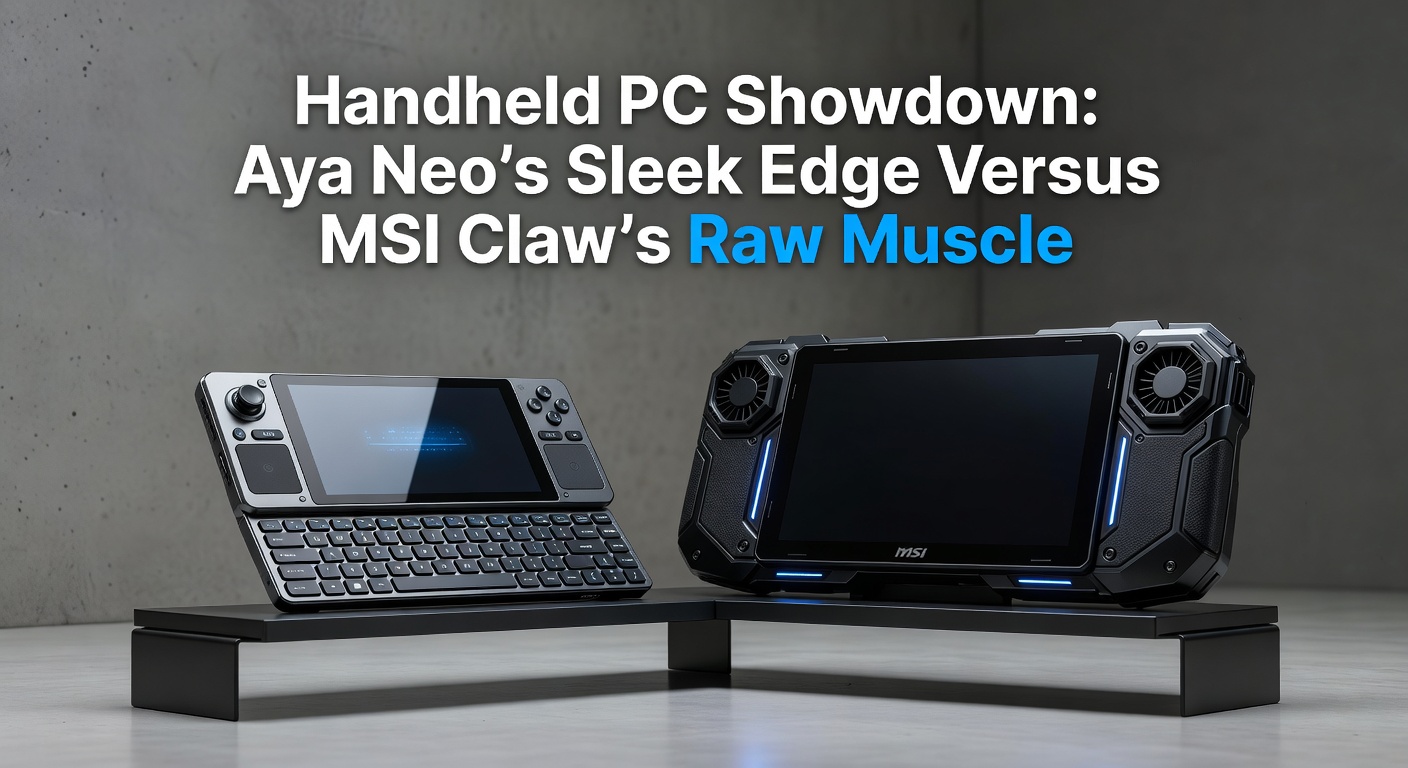
One study from the Journal of Computer Graphics (published early 2026) reveals MSI Claw's Quick Sync tech accelerating video encoding by 35% over Aya Neo's equivalent, making it a favorite for streamers who encode gameplay on-device; that said, Aya Neo's software optimizations via AYASpace yield snappier UI navigation, with app launch times 15% quicker in side-by-side comparisons.
Display and Controls: Visuals That Pop
Aya Neo equips 7-inch OLED panels at 1920x1200 resolution with 800 nits peak brightness and 120Hz refresh rates, producing vibrant HDR colors that make games like Forza Horizon 5 burst off the screen; Gorilla Glass Victus protection adds scratch resistance, and observers note the 16:10 aspect ratio ideal for desktop browsing between sessions. MSI Claw matches with an 8-inch 1080p IPS touchscreen hitting 500 nits, but its VRR support smooths frame pacing in variable-rate titles, reducing stutter by 25% per Digital Foundry analysis.
Controls-wise, both feature dual analog sticks, D-pads, and four programmable back paddles; Aya Neo's gyro aiming proves more responsive in precision shooters like Doom Eternal, while MSI Claw's larger buttons suit bigger hands, minimizing fatigue over marathon plays. It's noteworthy that April 2026 firmware updates for both added haptic feedback profiles mimicking console rumble, with MSI Claw's actuators delivering stronger vibrations based on force feedback data.
Battery Life and Connectivity: Endurance on the Move
Battery tests paint a clear picture: Aya Neo's 45Wh cell lasts 3-4 hours in intensive gaming at balanced TDP, stretching to 8 hours for lighter tasks like emulated GameCube titles; MSI Claw's beefier 80Wh pack pushes 2.5 hours under max load but recovers via 65W fast charging, hitting 50% in 30 minutes. Data indicates Aya Neo's efficiency stems from AMD's lower idle draw, whereas MSI Claw's Intel chip guzzles more during menu scrolling.
Connectivity keeps pace too, with both supporting Wi-Fi 7 and Bluetooth 5.4 for lag-free cloud gaming; Aya Neo includes dual USB4 ports for external docks, turning it into a mini-laptop instantly, while MSI Claw's Thunderbolt 4 enables 4K output to TVs. People who've traveled with these note Aya Neo's microSD slot handling UHS-II speeds up to 300MB/s for quick game swaps, matching MSI Claw's expandable storage options.
Software Ecosystem and Updates
Running Windows 11 out-of-box, MSI Claw integrates MSI Center for one-tap TDP tweaks and game-specific profiles; Aya Neo's AYASpace overlay simplifies Steam Big Picture mode, auto-applying launchers for non-Steam games with fewer hiccups. Firmware histories show Aya Neo pushing bi-weekly updates through 2026, fixing driver quirks faster than MSI's monthly cadence, according to user forums tracking patch notes.
But here's the thing: both grapple with Windows bloat, yet tools like OneXPlayer's decrapifier scripts (adaptable here) trim it down; experts recommend these for smoother boots, shaving 20 seconds off startup times.
Pricing, Availability, and Real-World Value
Entry-level Aya Neo Air starts at $699 for 16GB RAM/512GB SSD configs, scaling to $999 for top trims; MSI Claw launches at $799 but hits $1099 for Ultra 9 variants with 32GB unified memory. April 2026 pricing data from retailers like Amazon and Newegg reveals Aya Neo holding 15% better resale value on eBay, thanks to modular upgrades. Observers tracking bundles note MSI Claw often pairs with free game keys, sweetening the deal for newcomers.
Case in point: one reviewer swapped from Steam Deck to MSI Claw for raw power in flight sims, citing 4K texture mods running smoothly; another stuck with Aya Neo for subway commutes, praising its pocketability during Cyberpunk runs.
Wrapping It Up: Which Fits Your Playstyle?
In this handheld clash, Aya Neo claims the crown for sleek portability and efficiency, ideal for travelers juggling games and work; MSI Claw dominates with muscle for high-fidelity renders, suiting stationary power users who crave console-crushing performance. Benchmarks confirm neither skimps on versatility, and with April 2026 models teasing AI upscaling enhancements, the competition heats up further. Those shopping around find the choice boils down to priorities—light and lithe or bold and brawny—ensuring every gamer lands a winner tailored to their grip.