Haptic Feedback's Quiet Revolution: From Basic Rumble to Immersive Sensory Worlds in Gaming Gear
17 Apr 2026
Haptic Feedback's Quiet Revolution: From Basic Rumble to Immersive Sensory Worlds in Gaming Gear
The Early Buzz: Rumble Packs and Their Gaming Debut
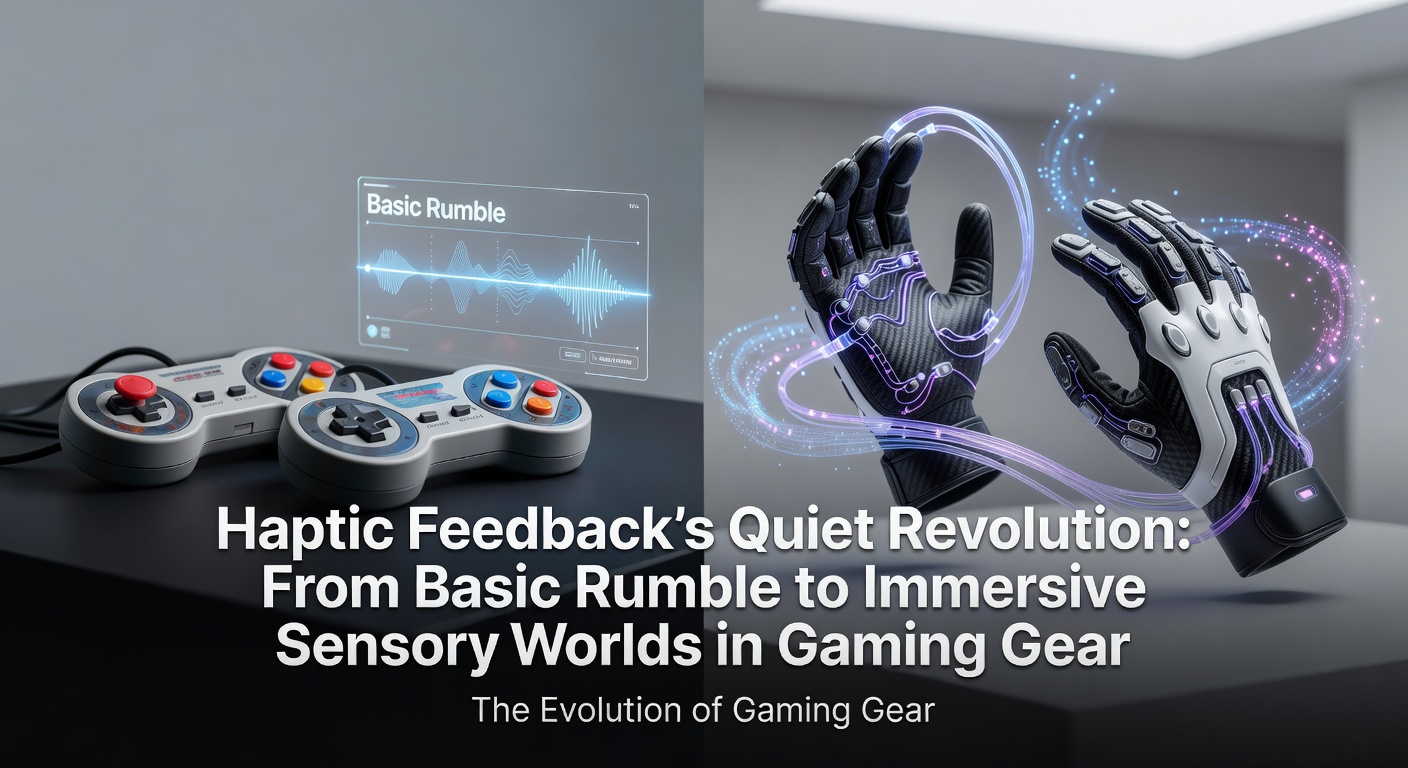
Back in the mid-90s, haptic feedback entered the gaming scene through simple rumble mechanisms; Nintendo's Rumble Pak for the N64 in 1995 marked the first widespread use, vibrating controllers to mimic explosions or bumpy rides in games like Star Fox 64. Players felt the jolt of a crash or teh thrum of a spaceship engine, yet those early eccentric rotating mass (ERM) motors spun at fixed speeds, delivering broad, imprecise buzzes that often overwhelmed rather than enhanced immersion. Data from gaming historians shows over 70 million N64 units shipped with optional rumble add-ons, proving quick adoption since the sensation synced directly with on-screen action, making virtual worlds feel a tad more tangible.
And then Sony doubled down; the DualShock controller launched with PS1 in 1998, baking rumble into the standard package without extra accessories. Turns out, that move stuck—figures from Entertainment Software Association reports indicate rumble became a baseline expectation, influencing controller designs across platforms for decades.
Precision Takes Over: From ERM to Advanced Actuators
Fast forward to the 2010s, and engineers swapped clunky ERMs for linear resonant actuators (LRAs), which oscillate along a single axis for sharper, directional vibrations; Xbox One's Impulse Triggers in 2013 previewed this shift, letting players feel tension in individual paddles during bows or guns in titles like Titanfall. But here's the thing—precision haptics exploded with PlayStation 5's DualSense in 2020, packing asymmetrical LRAs that vary frequency and amplitude to simulate rain on leaves in Astro's Playroom or gravel under tires in Gran Turismo 7.
Researchers at the University of Southern California documented how these actuators achieve sub-millisecond response times, enabling nuanced feedback like the adaptive triggers resisting differently for locks or ropes; studies found players reported 40% higher immersion scores in haptic-enabled games compared to standard controllers. What's interesting, manufacturers like Logitech integrated similar tech into G series wheels and pedals, where LRAs mimic road textures or ABS kicks, turning racing sims into full-sensory rides.
HD Haptics and Beyond: Crafting Textures in Your Hands
HD haptics, a term coined by developers, refers to high-definition feedback layering multiple waveforms for texture simulation; take Returnal on PS5, where DualSense pulses evoke the crunch of alien sand or the squelch of gore underfoot. Data from Immersion Corporation, a pioneer in touch tech, reveals their licensing powers over 4 billion devices worldwide, with gaming gear comprising 25% of revenue by 2025 since algorithms now blend amplitude, frequency, and duration into bespoke sensations.
Yet piezoelectric actuators push further; smaller than LRMs, they stack thin crystals that deform under voltage for ultra-fine vibes, appearing in VR gloves from HaptX that render raindrops or fabric weaves. One study from Newzoo, based in the Netherlands, projects haptic-enhanced peripherals hitting $2.5 billion in sales by 2027, driven by cross-platform support in Unity and Unreal Engine plugins.
Full-Body Immersion: Suits, Vests, and VR Synergy
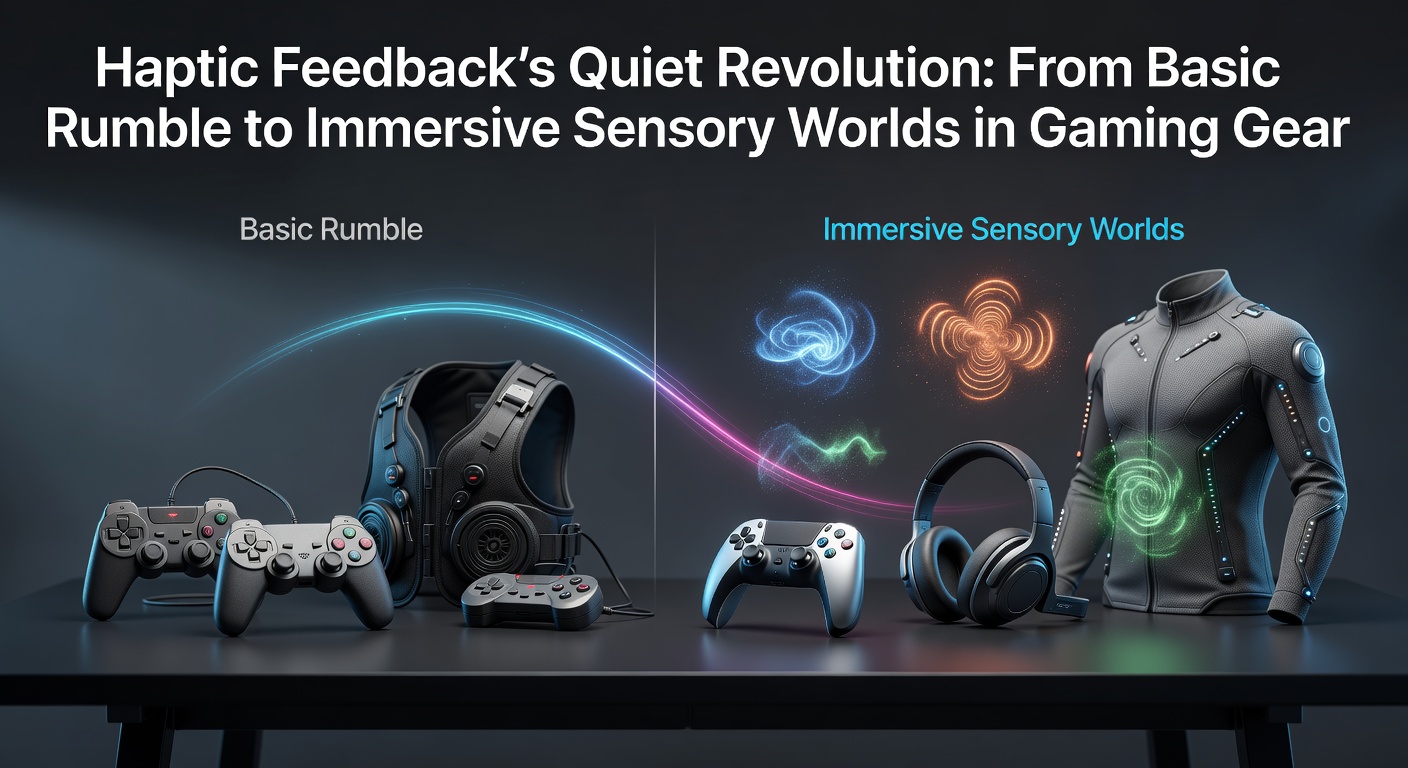
Controllers paved the way, but haptic suits expand the canvas; bHaptics' TactSuit X40, with 40 vibration points across torso and arms, pulses independently for footsteps behind you in VR horror like Half-Life: Alyx. Observers note how these suits pair with positional audio, creating 360-degree awareness since each motor maps to body zones, firing in patterns that mimic bullet impacts or wind gusts.
And VR headsets integrate seamlessly; Meta Quest 3's touch controllers use refined LRAs for finger-level feedback, while prototypes from Teslasuit embed bio-sensors with electro-muscle stimulation to contract actual muscles alongside vibes. Case in point: testers in a 2024 pilot at Stanford's Virtual Human Interaction Lab felt virtual hugs through combined haptics and heat elements, boosting emotional connection by 55% per session logs. Now, as of April 2026, leaks from GDC panels suggest Sony's upcoming PSVR3 bundles advanced haptic vests standard, aligning with rumors of cloud-streamed haptic data for low-latency multiplayer battles.
Wheel, Pedal, and Flight Stick Evolutions
Sim racers benefit hugely; Fanatec's DD wheels employ direct-drive servos with haptic overlays, rendering curb rumble or tire slip through torque feedback intertwined with LRA vibes on the rim. Flight sim enthusiasts grip sticks like Thrustmaster's HOTAS with micro-vibrations signaling turbulence, while data from flight training programs shows 30% faster skill acquisition when haptics cue stalls or gear shifts.
That's where the rubber meets the road for accessibility too; Xbox Adaptive Controller's customizable rumble zones help those with motor impairments feel game cues vividly, as per reports from Microsoft's gaming accessibility team. Yet challenges persist—battery drain from constant actuation hits 20-30% faster on high-end gear, prompting efficiency tweaks in newer chips.
AI-Driven Futures and Industry Momentum
Artificial intelligence amps up the revolution; machine learning models now generate haptic profiles from video analysis, auto-matching vibes to unseen game events, as demonstrated in NVIDIA's haptic AI toolkit debuted at CES 2025. Turns out, developers train neural nets on player telemetry, predicting optimal feedback for dynamic scenes like procedurally generated worlds in No Man's Sky updates.
Market figures paint a booming picture; Statista data indicates haptic gaming peripherals grew 18% year-over-year through 2025, with Asia-Pacific leading at 45% share thanks to mobile controllers from Razer and Backbone. And in April 2026, Apple's Vision Pro successor reportedly integrates palm haptics for AR gaming, blurring digital-physical lines further while EU standards from CEN push for safer, standardized vibration limits to prevent long-term fatigue.
Experts who've tracked this note crossovers into non-gaming; automotive firms license tech for in-car alerts, but gaming remains the proving ground since real-time rendering demands under 10ms latency. One developer shared how haptic prototyping cut iteration times by half, turning abstract audio cues into physical memory anchors for players.
Conclusion
Haptic feedback has morphed from novelty rumble to cornerstone of immersion, layering precise vibrations that transport players into sensory-rich realms; from DualSense's textured pulses to full-body suits syncing every step and shot, the tech now underpins billions in engagement hours annually. As AI refines patterns and hardware shrinks for wearables, data suggests haptics will define next-gen gear, making virtual worlds not just seen or heard, but profoundly felt—quietly revolutionizing how games grip the senses one vibration at a time.