31 May 2026
How Enthusiast Groups Document Thermal Throttling Patterns in Older GPU Architectures for Vintage Gaming Setups
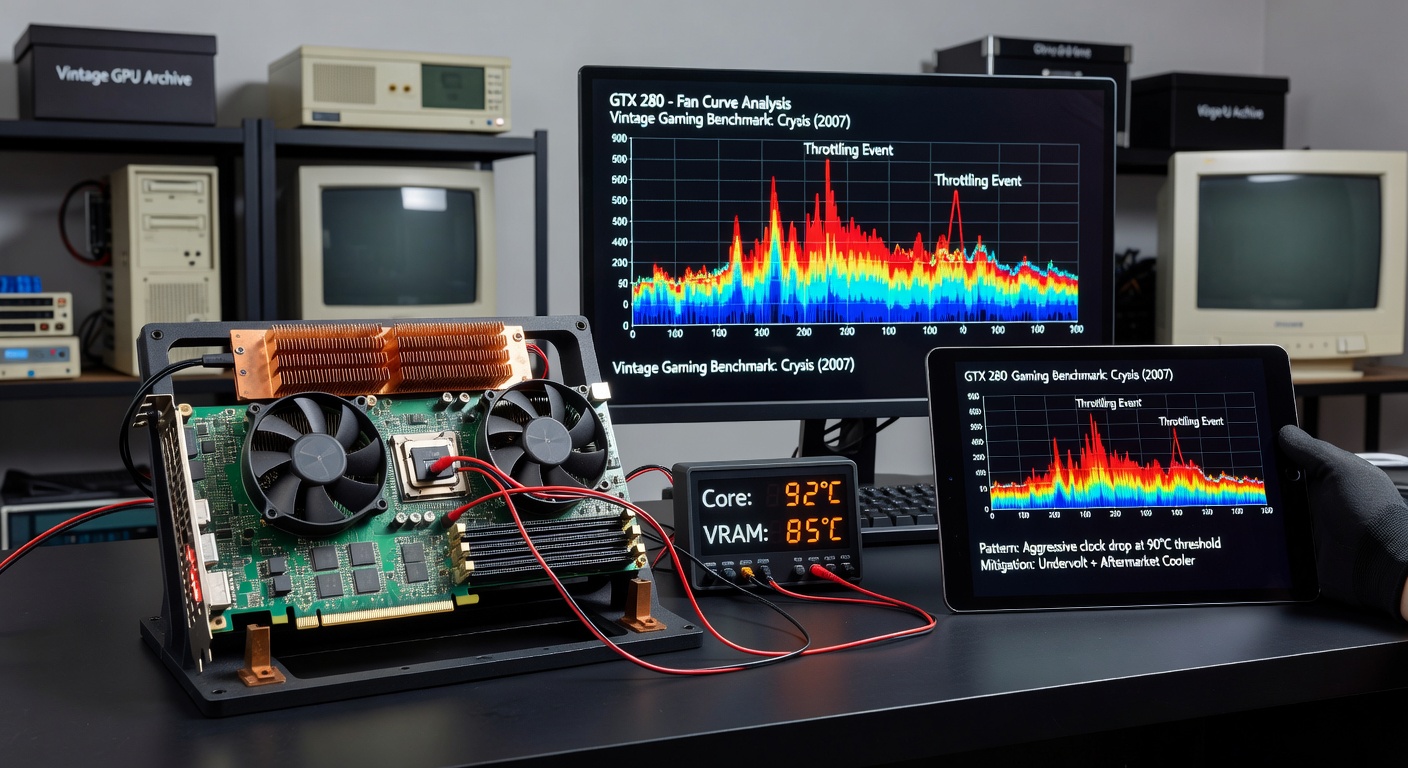
Enthusiast groups track thermal throttling in legacy graphics cards by combining hardware sensors, logging software, and shared databases that capture clock speed drops under sustained loads, and these patterns matter because older architectures like Kepler and GCN still power many preserved gaming systems from the 2010s. Groups collect temperature readings alongside core and memory frequencies every second during extended sessions that replicate typical vintage game workloads such as running titles from 2008 to 2015 at native resolutions.
Monitoring Tools and Data Collection Methods
Participants rely on utilities including MSI Afterburner paired with HWInfo or custom Python scripts that interface directly with GPU APIs to record junction temperatures and fan curves while games execute in windowed or borderless modes. These tools export CSV files that community members upload to centralized repositories where automated scripts flag throttling events defined as sustained frequency reductions exceeding 10 percent below advertised boost clocks. Data sets often span multiple card models from the same silicon generation so analysts can compare how manufacturing variances affect heat dissipation thresholds across batches produced between 2012 and 2016.
Thermal Patterns in Pre-2017 Architectures
Older GPUs exhibit throttling when die temperatures cross manufacturer-specified limits that range from 80 to 95 degrees Celsius depending on the series, and groups have mapped how Kepler-based cards reduce shader clock rates first while memory clocks remain stable until higher thresholds trigger secondary cuts. GCN and Maxwell implementations show different sequences where memory controllers throttle earlier under VRAM heat buildup, and enthusiasts document these sequences through repeated test loops that cycle through benchmark scenes for 30 to 60 minutes to establish baseline curves before applying case modifications such as additional case fans or aftermarket heatsinks.
Community Databases and Pattern Analysis
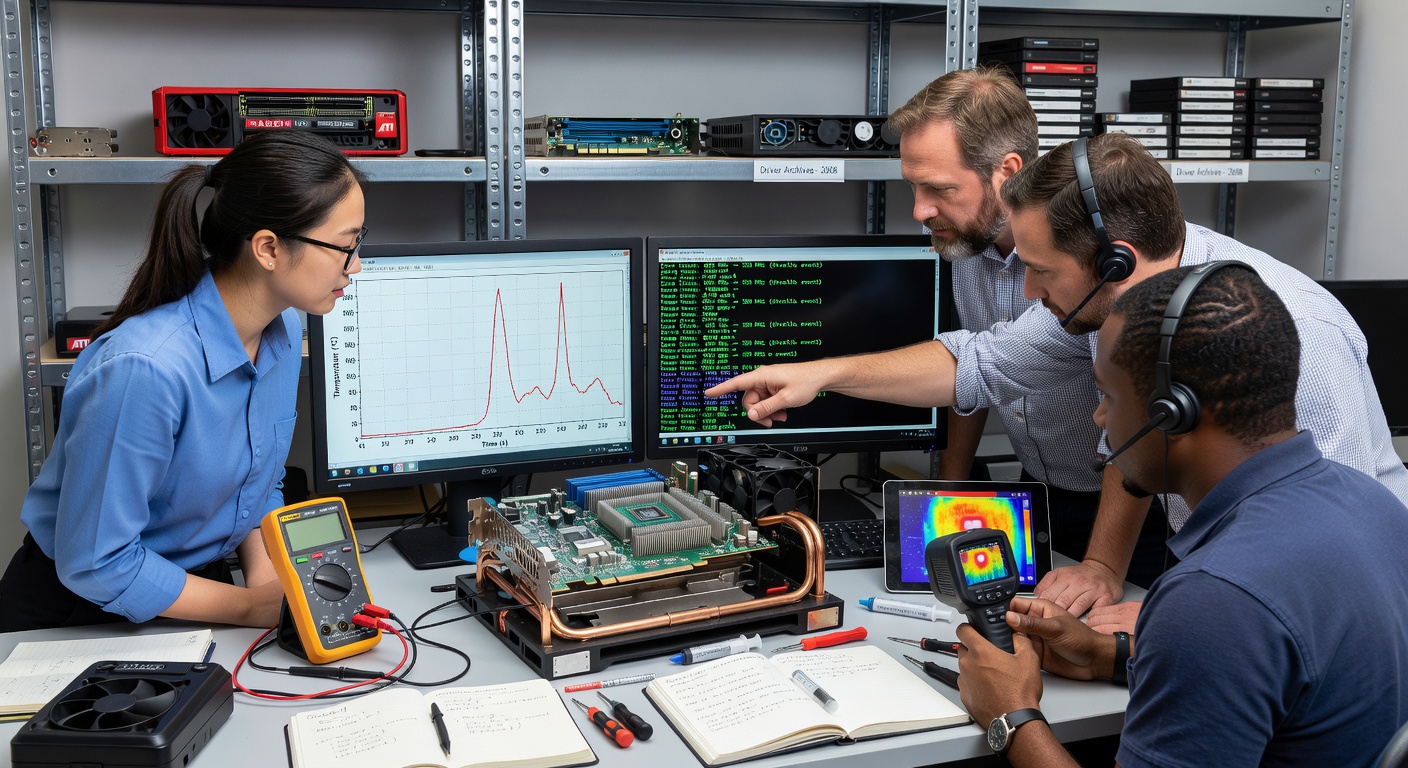
Repositories maintained by volunteer teams store anonymized logs tagged with GPU model, BIOS version, ambient room temperature, and cooling solution type, allowing queries that reveal how a 5 degree Celsius rise in intake air correlates with earlier onset of throttling on reference blower designs compared with open-air coolers. Analysis scripts calculate average time-to-throttle metrics across hundreds of submissions, and participants present these aggregated statistics at annual retro computing gatherings where hardware preservation remains a central focus. In May 2026 several groups plan to release an updated dataset covering over 1,200 individual test runs that incorporate new entries from cards recovered from decommissioned office machines.
Cross-referencing with power draw measurements helps isolate whether throttling stems from thermal limits or from power delivery constraints in aging VRMs, and enthusiasts apply this distinction when deciding between repasting with modern compounds or replacing voltage regulators entirely. Reports from the Canadian Centre for Advanced Computing indicate that similar sensor calibration techniques used in scientific clusters can improve accuracy of consumer-grade logging by up to 3 percent when ambient conditions stay within 18 to 24 degrees Celsius.
Applications for Vintage Gaming Preservation
Accurate throttling profiles allow retro gamers to select settings that keep frame rates consistent without exceeding thermal budgets, and communities share configuration files that adjust fan curves or cap frame rates to maintain clocks just below throttling points during long play sessions of older titles. Groups also test undervolting offsets that lower voltage while preserving performance until heat builds, and these adjustments appear in wikis alongside before-and-after log excerpts that demonstrate reduced peak temperatures of 8 to 12 degrees under identical workloads.
Industry reports from the Australian Interactive Games Association highlight rising interest in legacy hardware maintenance as commercial support for pre-2017 cards ends, prompting enthusiasts to develop open documentation standards that future researchers can use when studying silicon aging effects. Observers note that shared thermal data reduces duplication of effort across independent preservation projects and accelerates identification of common failure modes such as dried thermal pads on memory modules.
Conclusion
Enthusiast documentation efforts produce verifiable datasets that map thermal behavior across discontinued GPU lines and support continued operation of vintage gaming hardware through informed cooling and configuration choices. These records continue to expand as new contributors submit logs from previously untested board revisions and cooling variants.