22 May 2026
How Niche Communities Restore Original Capacitors in 1990s Console Motherboards to Preserve Authentic Audio Fidelity
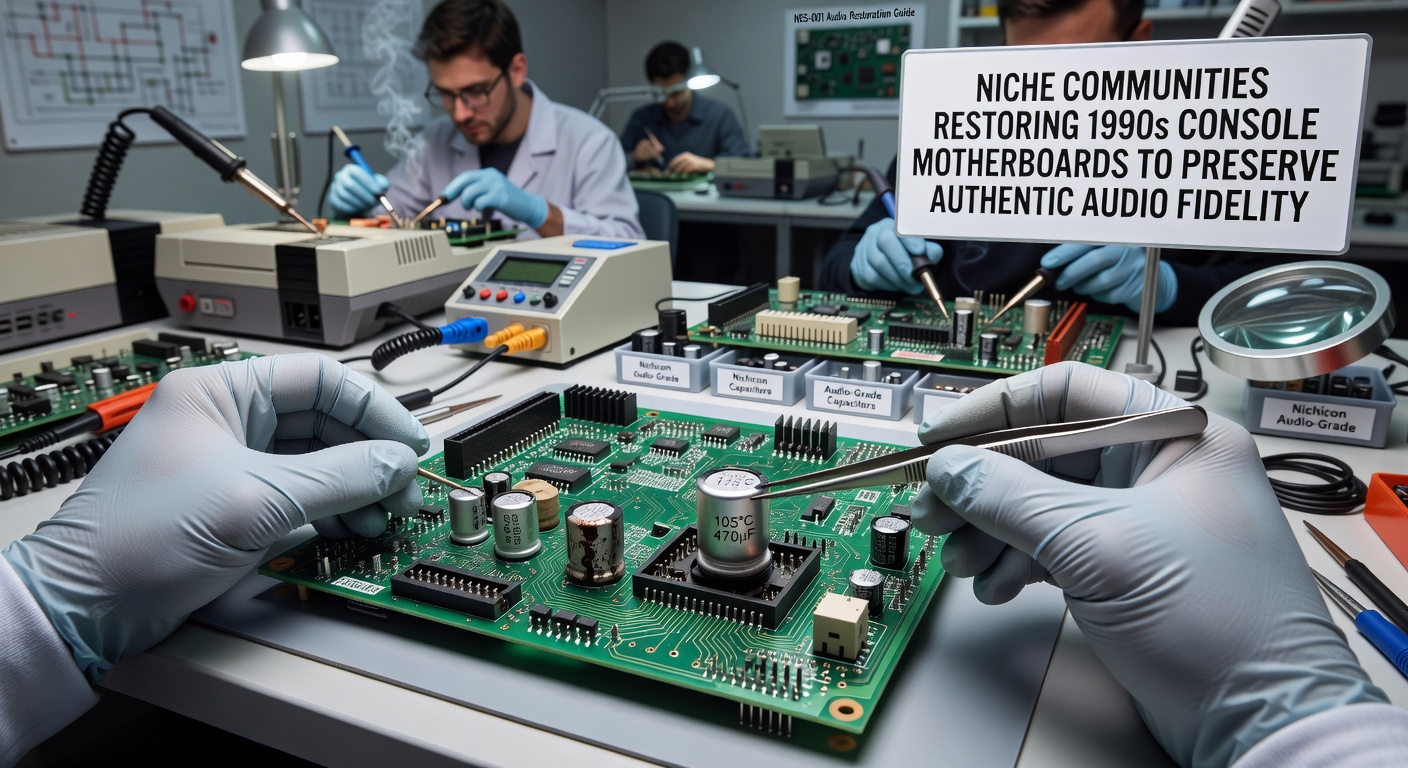
Technicians and hobbyists working with 1990s console hardware often encounter audio degradation caused by failing electrolytic capacitors on motherboards, and niche communities have developed systematic approaches to replace these components while maintaining the original sound characteristics produced by chips such as the Yamaha YM2612 or the Sony SPC700.
These groups document board revisions, measure equivalent series resistance values, and source replacement parts that align with factory specifications from the era, which allows restored systems to reproduce waveforms without the added noise or frequency roll-off that occurs when aged capacitors alter circuit behavior.
Capacitor Aging and Audio Signal Paths
Electrolytic capacitors placed near audio output stages and power regulation sections in consoles like the Sega Genesis and Super Nintendo Entertainment System absorb moisture over decades, which raises their internal resistance and reduces capacitance below rated tolerances. Observers note that this process introduces hum, distortion, and weakened bass response because the capacitors no longer filter ripple or couple signals effectively to the sound hardware. Research indicates that original parts installed between 1990 and 1999 typically begin showing measurable drift after twenty-five years of storage or intermittent use, prompting preservation projects to intervene before complete failure occurs.
Community Documentation and Diagnostic Methods
Participants in specialized online forums compile revision-specific service notes that list capacitor values, physical dimensions, and recommended replacement sources for each motherboard variant. They employ ESR meters and oscilloscopes to compare live measurements against archived factory data, which identifies units that have drifted far enough to affect the frequency response of the audio path. Data from academic electronics laboratories shows that precise matching of both capacitance and ESR characteristics helps retain the transient response and harmonic content that developers engineered into game soundtracks during the 1990s.
One documented workflow begins with non-destructive visual inspection for bulging or leaking electrolyte, followed by in-circuit testing that avoids full disassembly until confirmation of failure. Groups share annotated photographs and waveform captures so newcomers can replicate the same verification steps without risking damage to surrounding traces or solder pads.
Replacement Techniques and Material Selection
Restoration sessions typically involve temperature-controlled desoldering stations set between 320 and 350 degrees Celsius to lift original components without lifting pads on the multi-layer boards common in 1990s hardware. Technicians then clean residual flux and install new parts using leaded or high-purity solder alloys that match the thermal profile of original joints. Communities emphasize selecting replacements with identical lead spacing and case sizes to preserve mechanical stability during cartridge insertion and transport. Figures from industry component distributors reveal that new-old-stock capacitors manufactured in the same factories as the originals remain available in limited quantities, allowing restorers to retain the exact material formulation that influenced the original audio signature.
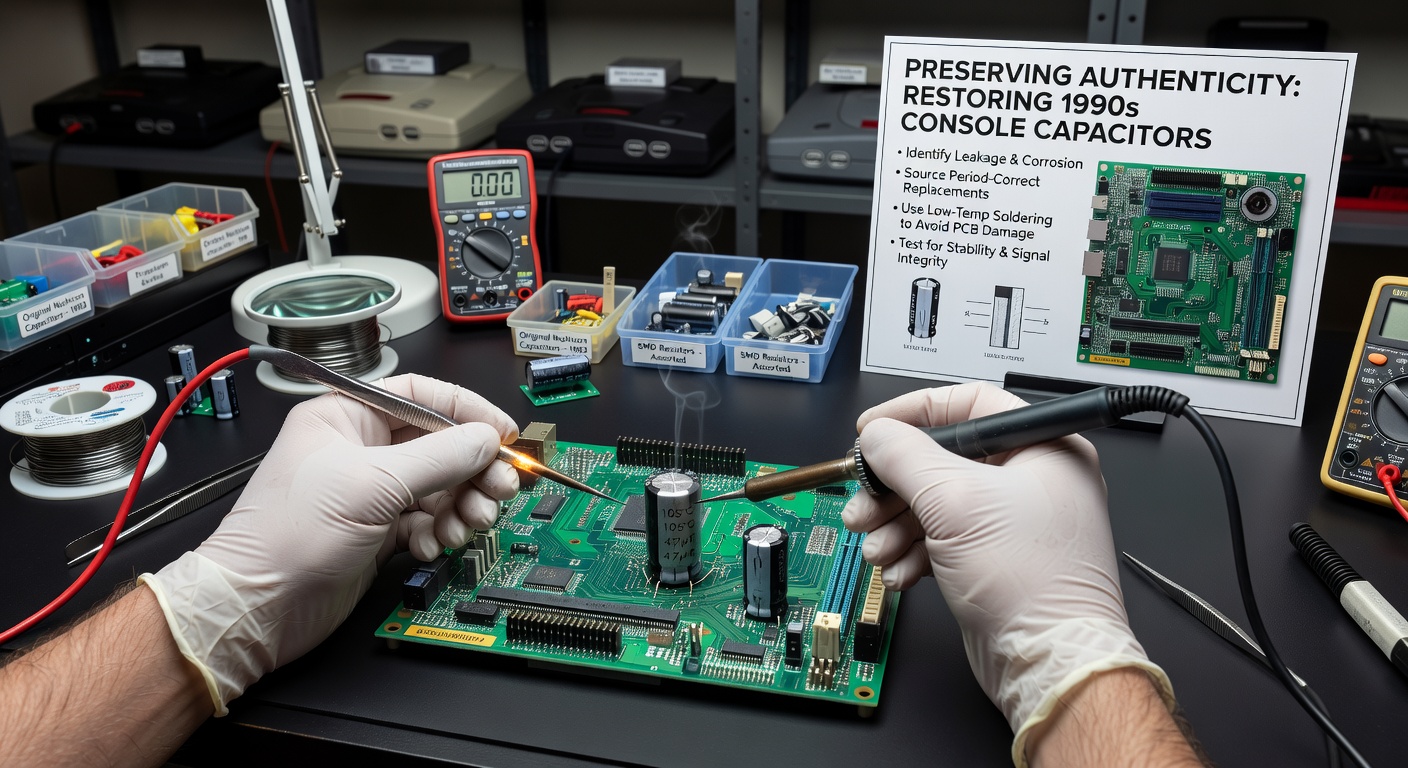
As of May 2026, several regional preservation networks continue to coordinate bulk purchases of remaining stock to ensure consistent supply for ongoing projects across North America and Europe.
Verification and Long-Term Outcomes
After reassembly, restorers route audio through calibrated test equipment to confirm that frequency response curves align with measurements taken from unmodified reference units. They record both restored and unrestored examples of the same game title, which demonstrates measurable recovery of low-frequency content and reduction of broadband noise. Studies conducted by university engineering departments confirm that proper capacitor restoration returns output levels within one decibel of factory specifications across the audible spectrum when the correct component values are used. Participants archive these test results alongside the hardware so future owners can verify continued performance without repeating the entire diagnostic sequence.
Conclusion
Niche communities focused on 1990s console preservation have established repeatable processes for identifying, sourcing, and installing replacement capacitors that maintain the intended audio output of period hardware. Their shared documentation, measurement protocols, and material sourcing networks provide a factual framework that supports consistent results across different console models and board revisions. Continued collection of reference data and component inventories ensures that these restoration methods remain available to subsequent generations of technicians.