12 Aug 2026
Modder Networks Calibrate Pressure-Sensitive Triggers on Vintage Gamepads to Match Input Curves from Modern Esports Peripherals for Cross-Era Training Rigs
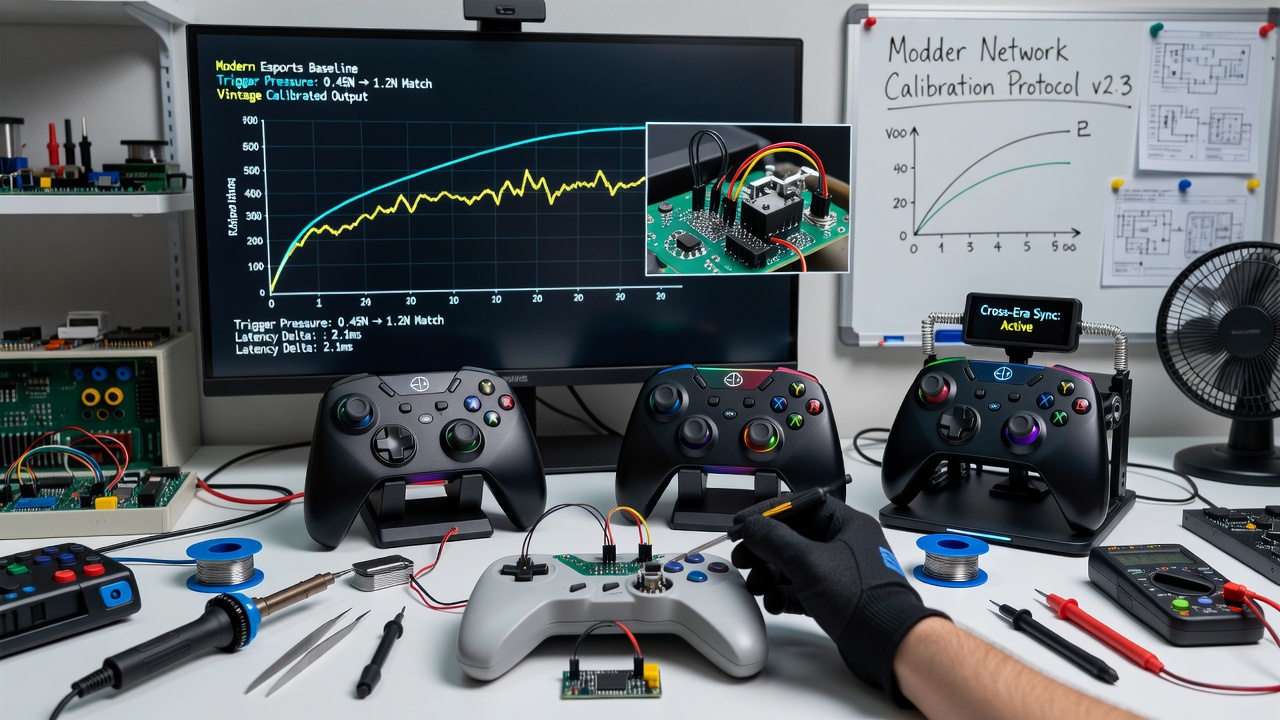
Modder networks have developed systematic approaches to adjust pressure-sensitive triggers on vintage gamepads so their response profiles align with the input curves found in contemporary esports peripherals, and this work supports training rigs that bridge hardware from different eras. Communities document these methods through shared repositories where data from high-precision sensors guides the mapping process, while hardware modifications ensure compatibility across devices originally designed for distinct operating systems and signal standards.
Pressure Response Mapping Fundamentals
Pressure-sensitive triggers on older gamepads register analog values through potentiometers or early force-sensing resistors, and calibration begins when technicians record the full range of output voltages under controlled force application. Modern esports devices often employ hall-effect sensors or optical systems that deliver linear or custom curves optimized for rapid repeated inputs, so networks compare these profiles by feeding identical force sequences into both types of hardware and logging the resulting digital signals. Software utilities then interpolate the vintage output to approximate the target curve, and adjustments occur through resistor swaps, firmware patches on programmable microcontrollers, or variable voltage dividers that reshape the signal before it reaches the host system.
Community Documentation and Tool Sharing
Groups maintain databases that catalog trigger behavior across dozens of console generations, and contributors upload raw calibration files alongside step-by-step hardware schematics that others can replicate. In August 2026 several repositories reported increased activity around adapters that convert legacy analog signals into formats accepted by current training platforms, allowing direct comparison of input timing without intermediate translation layers. These resources frequently reference measurement protocols developed at institutions such as the Eindhoven University of Technology, where researchers have quantified latency contributions from different sensor types under standardized test conditions.
Calibration workflows often proceed through iterative testing cycles in which a vintage pad connects to a rig alongside a reference esports controller, and automated scripts apply ramped pressure profiles while recording deviation metrics at each step. Technicians refine resistor values or microcontroller code until the output curve falls within acceptable tolerance bands, and the resulting configurations get versioned so later users can apply them to identical hardware models without repeating the full measurement sequence.
Integration with Cross-Era Training Setups
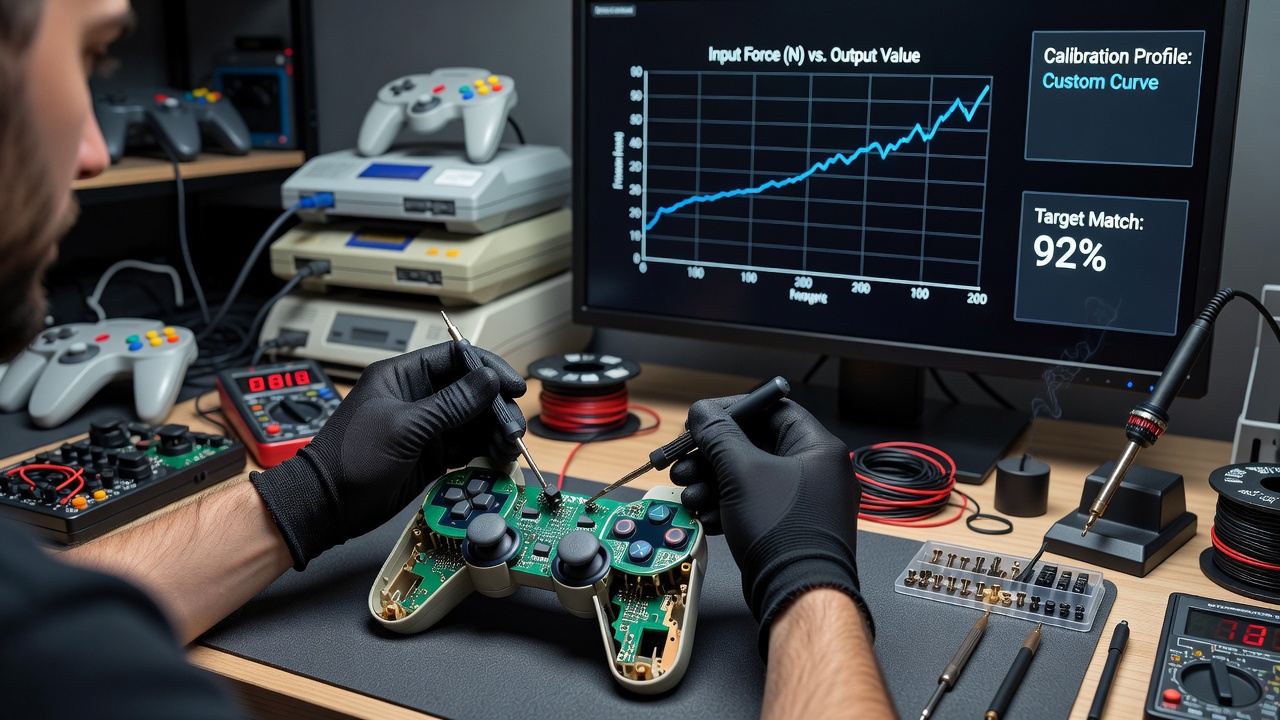
Training rigs that incorporate both vintage and current peripherals rely on these calibrated triggers to maintain consistent muscle memory when users switch between devices during practice sessions. Signal conditioning boards normalize the voltage ranges and sampling rates so that software running on the host computer receives comparable data streams regardless of the physical controller in use. Observers note that such setups appear in facilities where players train for titles that support legacy controller emulation, and the calibrated triggers allow direct transfer of technique between hardware generations without requiring separate input profiles for each device.
Additional layers of processing sometimes include dead-zone compensation and acceleration matching that further align the feel of older triggers with newer models, while preserving the original mechanical travel distance of the trigger itself. Networks share test results that quantify how closely the calibrated output tracks the reference curve across the full force spectrum, and these figures help users decide whether a given modification meets the precision requirements of specific competitive scenarios.
Hardware Modifications and Signal Conditioning
Physical modifications typically involve replacing stock potentiometers with higher-resolution units or installing auxiliary circuitry that applies custom transfer functions before the signal exits the controller. Some implementations embed small microcontrollers directly inside the gamepad housing to perform real-time curve remapping, and these units receive updates through community-maintained firmware that incorporates newly measured data from recent esports peripherals. External adapter boxes provide an alternative route by intercepting the controller output and applying digital corrections without altering the original hardware, and this approach preserves collectible devices while still achieving functional parity in training environments.
Conclusion
Networks continue to expand their calibration libraries as new esports peripherals enter the market and as additional vintage models receive documentation. The resulting standardized input curves support training rigs that treat controllers from separate decades as interchangeable components within a single practice ecosystem, and ongoing measurement efforts ensure that updates remain available as sensor technologies evolve on both sides of the hardware timeline.