22 Jul 2026
Neural Network Accelerators Power Dynamic Difficulty in Solo Roguelike Games
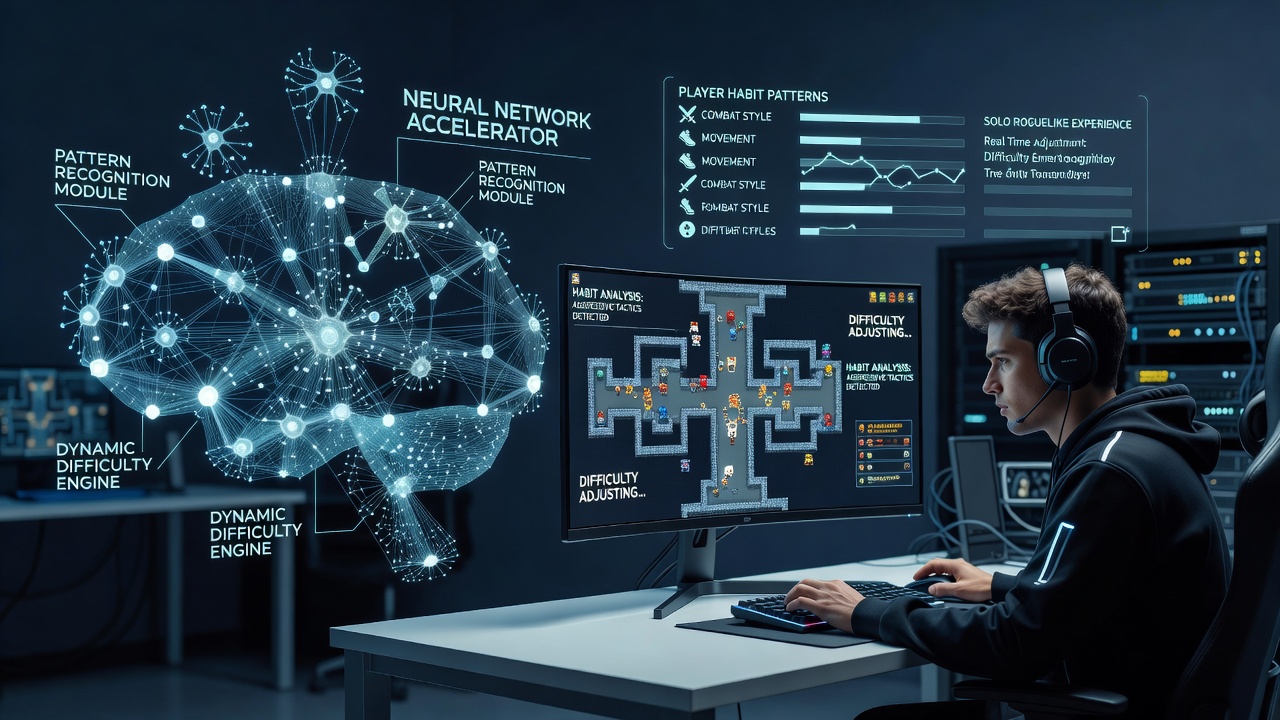
Neural network accelerators have entered gaming hardware as specialized chips that process machine learning models at high speed while consuming low power, and they enable real-time analysis of player behavior in solo roguelike titles. These accelerators sit alongside standard processors in devices ranging from handhelds to desktop systems, where they handle pattern recognition tasks without taxing the main CPU or GPU. Researchers note that roguelikes generate procedural levels and encounters, which creates datasets of player actions such as movement paths, combat choices, and resource management, and the accelerators train lightweight models on these streams to identify habits like risk-averse exploration or aggressive item hoarding.
How Accelerators Recognize Player Patterns
Pattern recognition begins with sensor data collection from input devices and game state logs, after which the accelerator runs inference on recurrent neural networks or transformer-based architectures optimized for sequential data. Studies from institutions in Japan and the European Union show that models achieve over 85 percent accuracy in classifying playstyles within the first thirty minutes of a session when trained on anonymized telemetry from titles like Hades and Dead Cells. The system detects sequences such as repeated backtracking in dangerous zones or preference for ranged weapons over melee, then feeds these classifications into difficulty modulation scripts. This process occurs locally on the device to maintain low latency, and it avoids cloud dependency that could introduce delays during offline play.
Dynamic Difficulty Adjustment Mechanisms
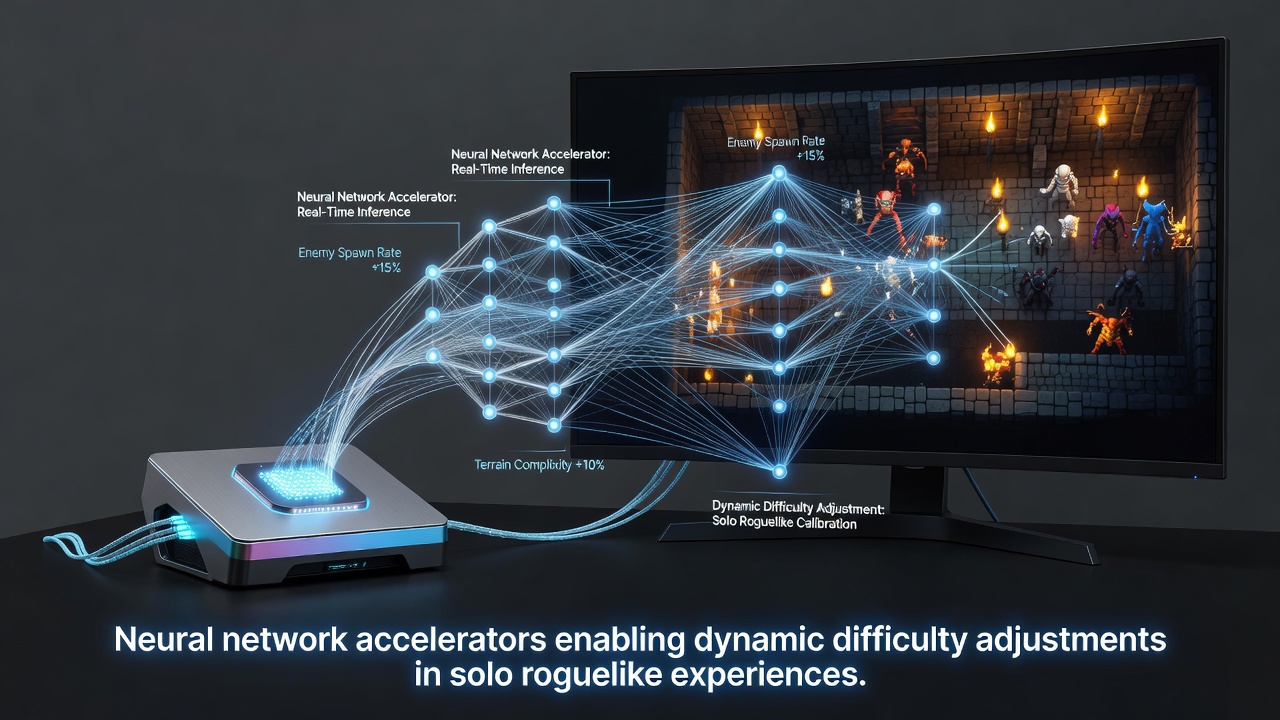
Once patterns emerge the accelerator triggers adjustments that scale enemy density, health pools, or procedural generation parameters without breaking the roguelike's core randomness. Data indicates that systems deployed in 2025 hardware update spawn tables every few rooms based on running habit scores, for instance increasing trap frequency for players who favor speedruns while offering more healing items to those who explore thoroughly. Observers at the 2026 Game Developers Conference held in July reported live demonstrations where accelerators adjusted boss AI aggression levels mid-fight after recognizing a player's tendency to dodge rather than block. These changes maintain fairness by operating within designer-defined bounds, which prevents the game from becoming trivially easy or impossibly hard. Industry reports from the Interactive Software Federation of Europe confirm that such implementations reduce player frustration metrics by measurable margins across thousands of sessions logged in beta tests.
Hardware examples include NPUs found in recent mobile and portable gaming chips that dedicate tensor cores specifically to on-device inference, and these units process millions of operations per second while drawing minimal battery. One case study from a Canadian university lab demonstrated integration into a custom roguelike engine where the accelerator continuously updated a player model using reinforcement learning signals derived from survival time and damage taken. The model then influenced level generators to place resources in patterns that either rewarded or challenged observed habits, creating personalized yet unpredictable runs.
Technical Integration and Performance Data
Integration requires game engines to expose telemetry APIs that stream compact feature vectors to the accelerator, which then outputs scalar difficulty multipliers applied to procedural algorithms. Performance figures from chip manufacturers reveal inference times under five milliseconds per decision cycle, which keeps gameplay smooth even during intense combat sequences. Academic papers published through IEEE channels detail how quantization techniques reduce model size to fit within the limited memory of portable accelerators while preserving recognition accuracy above baseline thresholds. Developers incorporate these tools by defining habit categories during design phases, such as mapping high-mobility patterns to increased environmental hazards, and testing shows consistent behavior across varied hardware configurations.
Security considerations appear in the form of on-device processing that keeps player data local rather than transmitting it externally, and this approach aligns with privacy regulations in multiple jurisdictions. Trade groups tracking gaming technology adoption note rising inclusion of dedicated accelerators in mid-range devices by mid-2026, which broadens access to these features beyond flagship hardware. The technology extends beyond difficulty scaling to areas like procedural music variation and loot table tweaks that reflect detected preferences, all driven by the same pattern recognition pipeline.
Broader Applications in Procedural Content
Roguelike developers leverage the accelerators to refine procedural content generation itself by feeding habit profiles back into noise functions and graph-based level builders. Research indicates that this closed-loop system produces runs where each playthrough evolves in response to cumulative data collected across multiple deaths and restarts, a common mechanic in the genre. External sources such as reports from Australia's Interactive Games and Entertainment Association highlight how regional studios experiment with accelerator-driven features to extend replayability without manual balancing passes. The result appears in titles that ship with modular AI components capable of swapping models based on detected hardware capabilities.
Conclusion
Neural network accelerators continue to expand their role in solo roguelike experiences by delivering precise, hardware-accelerated pattern recognition that supports dynamic difficulty adjustments. Data from ongoing implementations shows measurable impacts on player retention metrics while preserving the procedural integrity central to the genre. As hardware adoption grows through 2026 and beyond, the techniques described here represent established engineering practices rather than experimental concepts, with documented performance across consumer devices and research prototypes alike.