14 Jun 2026
Open-Source Mapping Tools Address Electromagnetic Interference in Multi-Room Console Gaming Setups
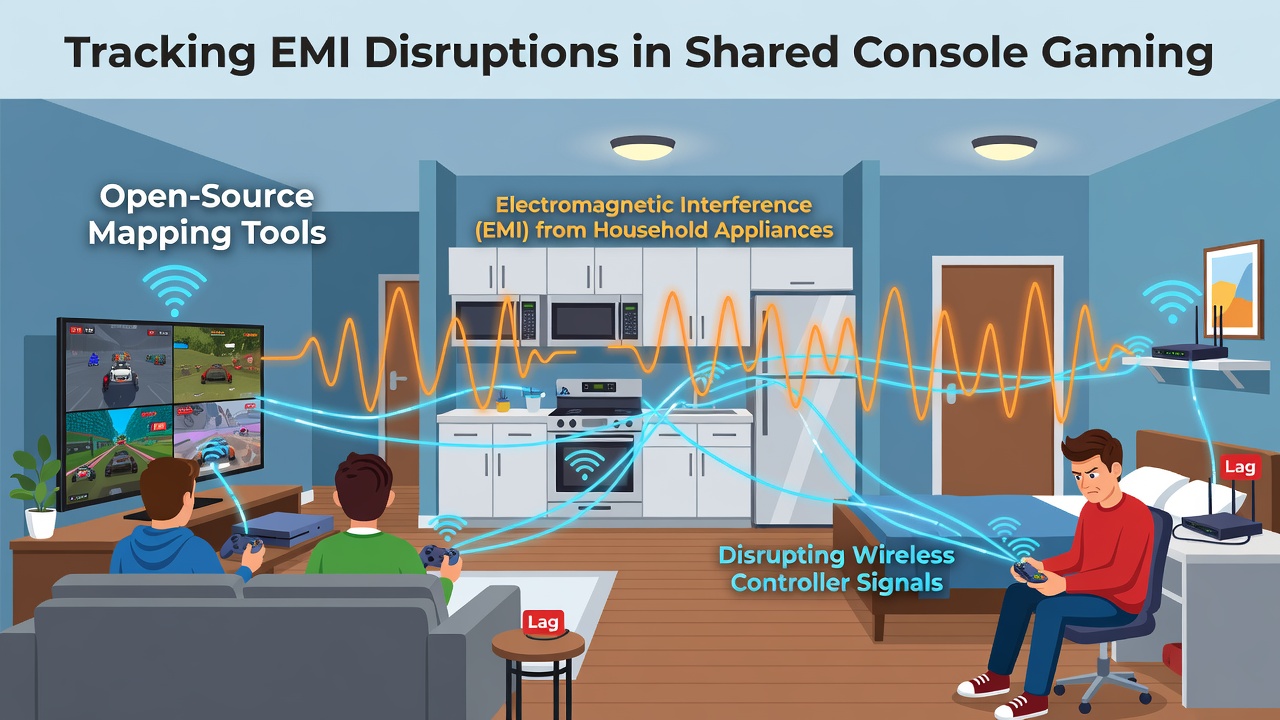
Wireless controllers operating on 2.4 GHz bands face signal disruptions when household appliances generate electromagnetic interference, and open-source mapping tools now allow users to visualize these patterns across multiple rooms in shared gaming households. Data from regulatory bodies shows that devices such as microwaves, refrigerators with inverter motors, and Wi-Fi routers produce emissions that overlap with controller frequencies, leading to input lag or disconnections during multiplayer sessions.
Studies conducted by research institutions indicate that interference strength varies by appliance cycle and distance, with measurements taken in typical North American homes revealing peak disruptions when kitchen appliances run concurrently with gaming setups in adjacent living areas. These tools combine software-defined radio hardware with mapping algorithms to generate real-time interference overlays on digital floor plans, helping households identify problem zones without specialized lab equipment.
How Household Appliances Create Interference Patterns
Appliances emit broadband noise through power lines and wireless radiation, and observations from field tests demonstrate that a running microwave can raise noise floors by 20 to 30 decibels within a 10-meter radius, directly affecting controller receivers placed in separate rooms. Refrigerators cycle their compressors at irregular intervals, producing pulsed interference that aligns with peak gaming hours in the evening, while induction cooktops add continuous high-frequency components that bleed through walls in multi-room layouts.
Engineers at academic labs have documented these effects using spectrum analyzers, noting that older appliances lacking modern shielding contribute more heavily than newer Energy Star models. Mapping software processes raw signal data from affordable USB dongles, then plots intensity gradients across room boundaries to reveal pathways where signals weaken most during shared console sessions.
Development and Capabilities of Open-Source Mapping Tools
Communities on collaborative platforms have released several projects that integrate with common wireless protocols, allowing gamers to scan environments and log interference events over time. One such toolkit processes data from RTL-SDR receivers to create animated heatmaps, showing how interference moves as appliances activate and as people move controllers between rooms. Another project incorporates machine learning classifiers trained on labeled appliance signatures, enabling automatic identification of the source device causing disruptions in a given area.
Users input basic floor plan dimensions and place multiple receiver nodes throughout the household, after which the software correlates signal strength readings with appliance schedules collected via smart plugs. This produces actionable reports that list optimal controller channel selections and suggests appliance usage timing adjustments to minimize overlap during gaming windows. In June 2026, updates to several of these projects introduced support for 5 GHz and 6 GHz bands alongside legacy 2.4 GHz tracking, reflecting shifts in newer console hardware.
Practical Deployment in Shared Multi-Room Households
Households with gaming setups spanning living rooms, bedrooms, and basements report using these maps to reposition routers or add signal repeaters at identified weak points. Data collected during evening sessions shows reduced packet loss when maps guide placement of controllers away from kitchen walls where refrigerator motors generate consistent interference. Groups coordinating multiplayer tournaments within the same building have shared anonymized datasets, building larger databases that reveal common interference profiles across different home constructions and appliance brands.

Regulatory guidance from agencies such as the Federal Communications Commission outlines emission limits for consumer devices, and open-source tools help verify compliance within individual homes by comparing measured values against those thresholds. European research networks have contributed datasets from similar testing in multi-story dwellings, expanding the geographic scope of available interference profiles for global users.
Integration with Existing Gaming Infrastructure
Mapping outputs feed directly into controller configuration utilities, allowing automatic channel hopping based on current interference levels detected across the household. Console manufacturers have begun referencing community-generated interference databases in firmware notes, acknowledging that household variables play a measurable role in wireless performance. Technicians working with legacy systems note that these tools also assist in troubleshooting older controllers that lack adaptive frequency selection features built into current models.
Conclusion
Open-source mapping tools continue to evolve by incorporating additional sensor inputs and refined visualization methods, providing households with precise data on how everyday appliances affect wireless controller reliability during shared gaming. Continued contributions from users and research groups expand the reference libraries available for different regional appliance standards and building types, supporting more stable multiplayer experiences across varied home environments.