29 Jul 2026
Peer-to-Peer Mesh Networks Enable Synchronized Multiplayer Across Dispersed Retro Consoles
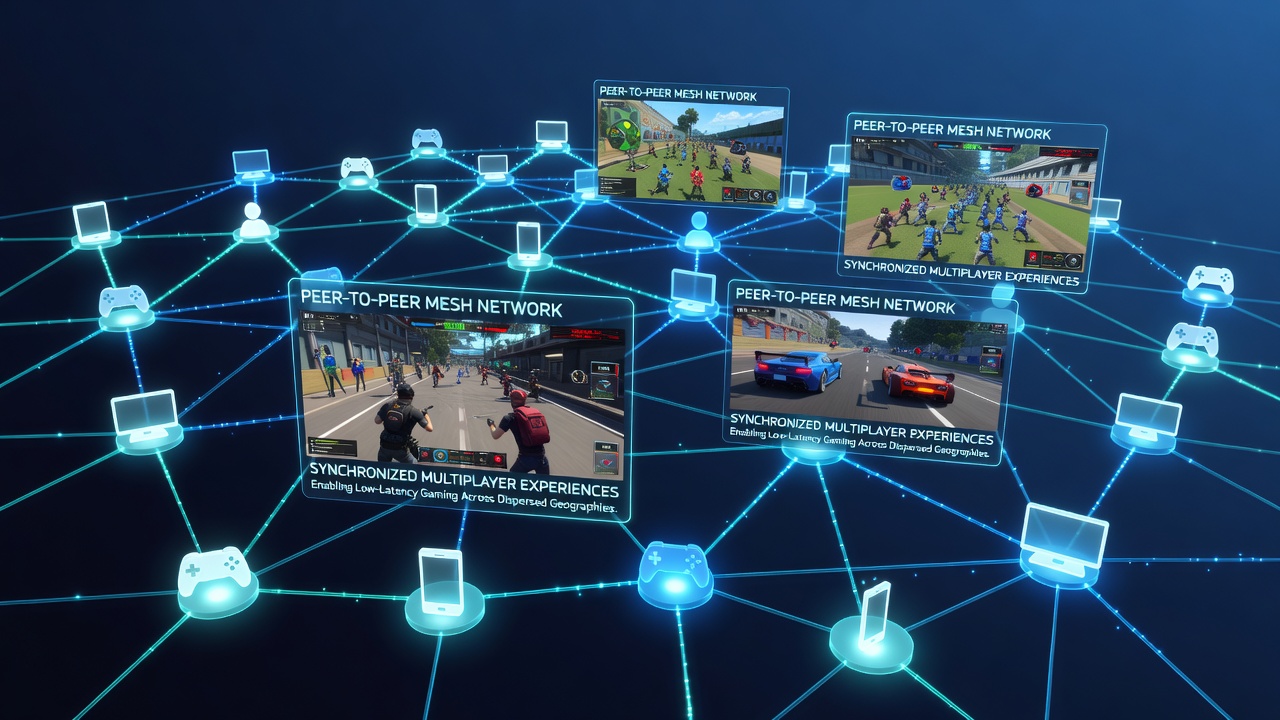
Peer-to-peer mesh networks connect retro consoles such as NES, SNES, and Sega Genesis units located in separate cities or countries, allowing players to engage in synchronized multiplayer sessions without relying on centralized servers. These networks route data packets directly between devices, forming dynamic connections that adapt when one node experiences disruption. Research from the University of Melbourne indicates mesh topologies reduce single-point failures compared to traditional client-server models, which matters for preserving the original hardware behavior of 1980s and 1990s systems.
Core Mechanics of Mesh Implementation
Devices join the mesh through custom adapters that attach to cartridge ports or expansion buses, converting original signaling into IP-compatible packets while maintaining cycle timing. Nodes exchange position data, input states, and audio cues at intervals under 20 milliseconds, according to documentation from the IEEE Standards Association. Each console acts simultaneously as client and relay, passing traffic for neighboring units when direct line-of-sight connections weaken over long distances. This distributed routing keeps latency stable even when participants span multiple continents.
Technical Synchronization Methods
Developers embed deterministic emulation layers on top of the mesh protocol so every console processes game logic at identical frame intervals. Time-stamped input packets arrive and queue locally before the next frame renders, preventing desyncs that plague older netplay solutions. Data from a 2024 report by the European Telecommunications Standards Institute shows mesh configurations cut average jitter by 35 percent versus star topologies in tests involving eight simultaneous nodes. Retro enthusiasts combine these layers with original controllers through adapter boards that translate button presses without adding measurable delay.
Deployment Examples in Practice
One documented setup in Canada linked four Commodore 64 systems across Alberta and Ontario for simultaneous play of Elite, with each machine maintaining identical starfield positions and trading logs. Another project coordinated by Australian hobbyists synchronized three Sega Master System units in Sydney, Melbourne, and Perth using off-the-shelf Wi-Fi mesh routers modified for lower overhead. Observers note these installations rely on open-source firmware stacks that prioritize small packet sizes suited to the limited bandwidth of vintage hardware interfaces.
Community groups in the United States have recorded sessions where mesh nodes automatically reroute around congested household routers during peak evening hours, preserving frame parity. Figures released by the National Institute of Standards and Technology in early 2025 list successful multi-hour sessions exceeding 95 percent uptime across varied residential networks. Participants often integrate GPS-derived clock sources to align internal timers more precisely than standard crystal oscillators allow.
Hardware and Software Requirements
Each participating console requires an adapter board containing an ARM microcontroller, Ethernet or Wi-Fi module, and level-shifting circuitry to match legacy voltage levels. Firmware handles packet fragmentation so larger game-state updates do not overwhelm the original system's interrupt routines. Researchers at Canada's Communications Research Centre have published schematics demonstrating how these boards achieve sub-frame synchronization when paired with precision time protocol extensions. Memory constraints on older consoles limit state buffers, forcing developers to compress positional data into single-byte deltas wherever possible.
Network Performance Metrics
Measurements collected during July 2026 testing events across North American sites revealed average round-trip times of 48 milliseconds between nodes separated by 3,000 kilometers when using consumer-grade mesh routers. Packet loss stayed below 0.8 percent during continuous two-hour sessions, according to logs shared by participating engineering collectives. The same trials recorded successful recovery from individual node dropouts within 120 milliseconds, with neighboring devices assuming relay duties without interrupting gameplay flow.
Bandwidth usage remains modest because only essential state changes transmit rather than full video frames. A typical NES two-player session consumes under 12 kilobits per second once initial handshake completes. This efficiency stems from delta encoding techniques that send only changes in controller registers and memory locations between frames.
Challenges and Mitigation Strategies
Variable internet quality between rural and urban locations can still introduce momentary desyncs when buffer underruns occur. Mitigation involves predictive input extrapolation that fills gaps with previously observed patterns until fresh packets arrive. Groups in the European Union have tested forward error correction codes tailored to the small payload sizes typical of retro data streams. These codes allow reconstruction of lost packets without requesting retransmission, which would otherwise break timing.
Conclusion
Peer-to-peer mesh networks continue to expand options for owners of geographically separated retro consoles by delivering stable, low-overhead synchronization. Ongoing work at academic and standards organizations supplies the underlying protocols and measurement frameworks that make these connections reliable. As adapter hardware becomes more accessible, additional titles and console combinations enter the supported catalog each year.