21 Aug 2026
Piezoelectric Actuator Arrays Transform Tactile Feedback in Mechanical Keyboards for Rhythm Gaming
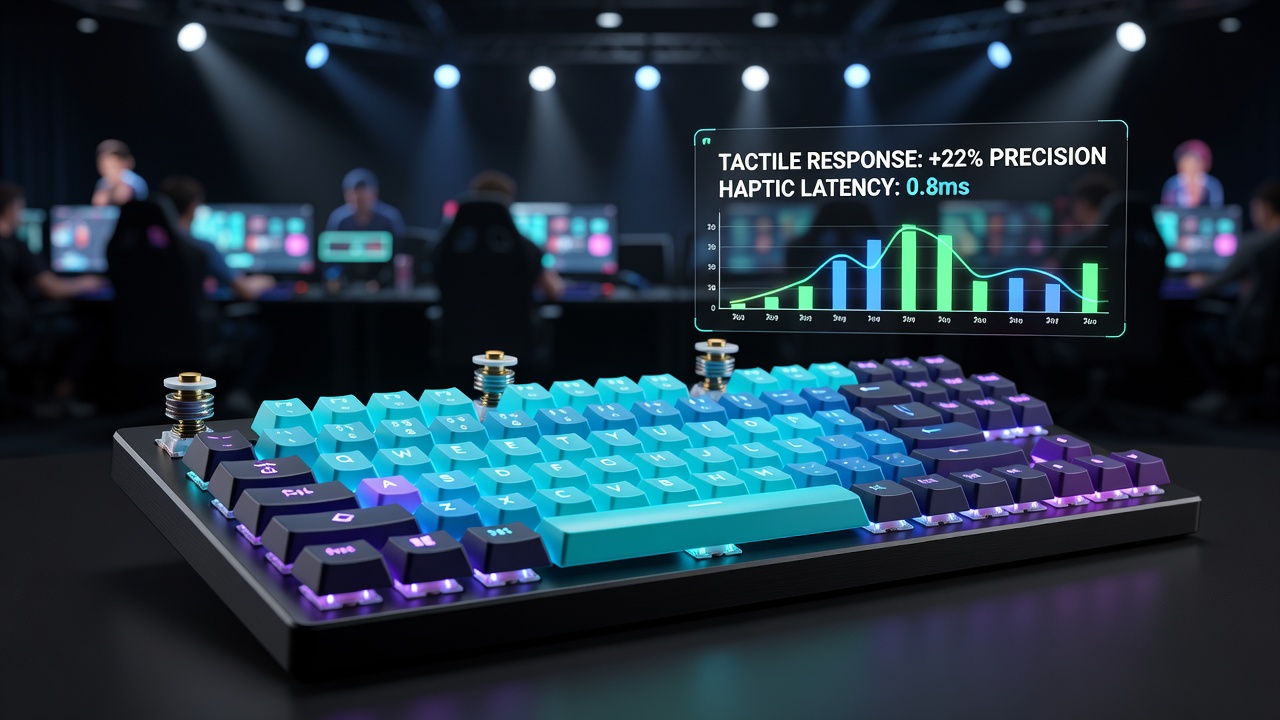
Competitive rhythm gaming events rely on precise input timing where even slight variations in key travel and force feedback affect player performance, and piezoelectric actuator arrays now provide adjustable tactile profiles that respond in microseconds to voltage changes. These arrays consist of multiple thin ceramic layers that deform when electrical current passes through them, creating localized vibrations or resistance adjustments without traditional motor mechanisms. Manufacturers integrate the components directly beneath switch housings in custom keyboards designed for titles such as osu! and rhythm game tournaments held worldwide.
Technical Operation of Piezoelectric Arrays
Each actuator element converts electrical signals into mechanical displacement through the inverse piezoelectric effect, allowing rapid expansion or contraction that modulates the force curve felt by the finger during key presses. Data from material science studies indicates response times under 0.1 milliseconds, which aligns with the frame rates common in competitive rhythm setups. Engineers program microcontrollers to vary voltage amplitude and frequency across the array, producing distinct bump patterns or progressive resistance that match specific note densities in game charts.
Observers note that arrays replace or supplement standard mechanical springs in select switch designs, delivering consistent feedback across thousands of actuations while consuming minimal power compared with electromagnetic alternatives. Research from the European Commission's Joint Research Centre shows energy draw remains below 50 milliwatts during sustained high-intensity play sessions, a factor that extends battery life in wireless tournament boards. Calibration software maps actuator output to individual player preferences stored in profiles that load automatically when competitors register at event stations.
Application in Competitive Rhythm Events
Tournament organizers began deploying keyboards equipped with these arrays at major rhythm gaming gatherings starting in 2024, with expanded adoption tracked through August 2026 when several regional circuits reported standardized hardware requirements for top brackets. Players experience tailored tactile cues that highlight note timing windows, reducing missed inputs during complex streams or jack patterns common in high-level charts. One documented case involved a European circuit where participants using calibrated arrays recorded average accuracy improvements of 1.8 percent across 120-second test maps according to post-event data logs compiled by the International eSports Federation.
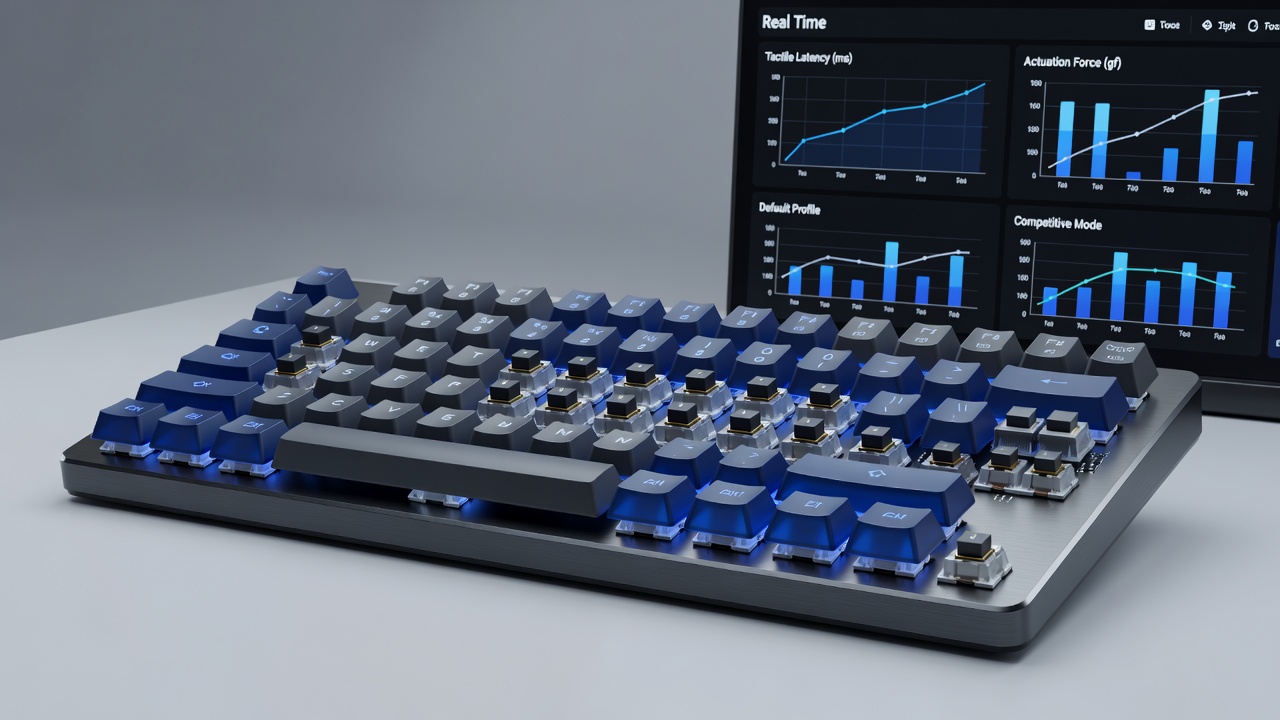
Event technicians connect each station to a central control unit that broadcasts firmware updates and uniform haptic presets before matches begin, ensuring no participant gains an unintended hardware advantage. The system logs every actuation timestamp alongside actuator activation data, creating audit trails that verify equipment compliance during disputes. Community firmware projects hosted on open repositories allow further refinement of response curves, with contributors publishing datasets that compare latency measurements taken on different switch types.
Integration Challenges and Solutions
Engineers address heat buildup in densely packed arrays by incorporating thermal vias and low-resistance conductive paths that maintain stable performance during extended sets lasting several hours. Testing protocols from the Australian Centre for Advanced Computing and Communications establish that actuator longevity exceeds 50 million cycles when operated within specified voltage limits, matching or surpassing the lifespan of conventional linear switches. Interference with nearby wireless devices remains minimal because the operating frequencies stay below common 2.4 GHz bands used for tournament networking.
Keyboard manufacturers collaborate with switch designers to embed the arrays without increasing overall deck height, preserving the low-profile aesthetics preferred by traveling competitors. Supply chain reports from component distributors indicate rising orders for specialized multilayer ceramics sourced from suppliers in East Asia, reflecting broader industry investment in haptic-enhanced input hardware through the 2025-2026 period.
Measurement Standards and Data Collection
Independent laboratories measure force-displacement curves using automated test rigs that record actuator output at 10 kHz sampling rates, generating reference datasets shared among hardware developers. Figures released by the IEEE Standards Association working group on input device performance reveal that piezoelectric systems achieve sub-millimeter spatial resolution when multiple actuators activate simultaneously across a single keycap. These metrics help organizers set baseline specifications that ensure equipment parity at sanctioned events.
Participants in training programs review logged tactile profiles alongside replay files to identify patterns where custom feedback correlates with improved consistency on particular song difficulties. The approach remains grounded in empirical testing rather than subjective preference, with data aggregated across hundreds of sessions providing statistical backing for array configuration guidelines.
Conclusion
Piezoelectric actuator arrays continue to appear in mechanical keyboards deployed at rhythm gaming competitions, supported by measurable improvements in response timing and standardized calibration methods. Ongoing development focuses on refining voltage control algorithms and expanding compatibility with existing tournament ecosystems while maintaining strict equipment verification processes. Data collected through 2026 events provides a growing foundation for further optimization of tactile profiles tailored to competitive play requirements.