14 Aug 2026
Piezoelectric Actuators in Gaming Mouse Feet Enabling Variable Surface Friction for Tactical Shooter Precision Training
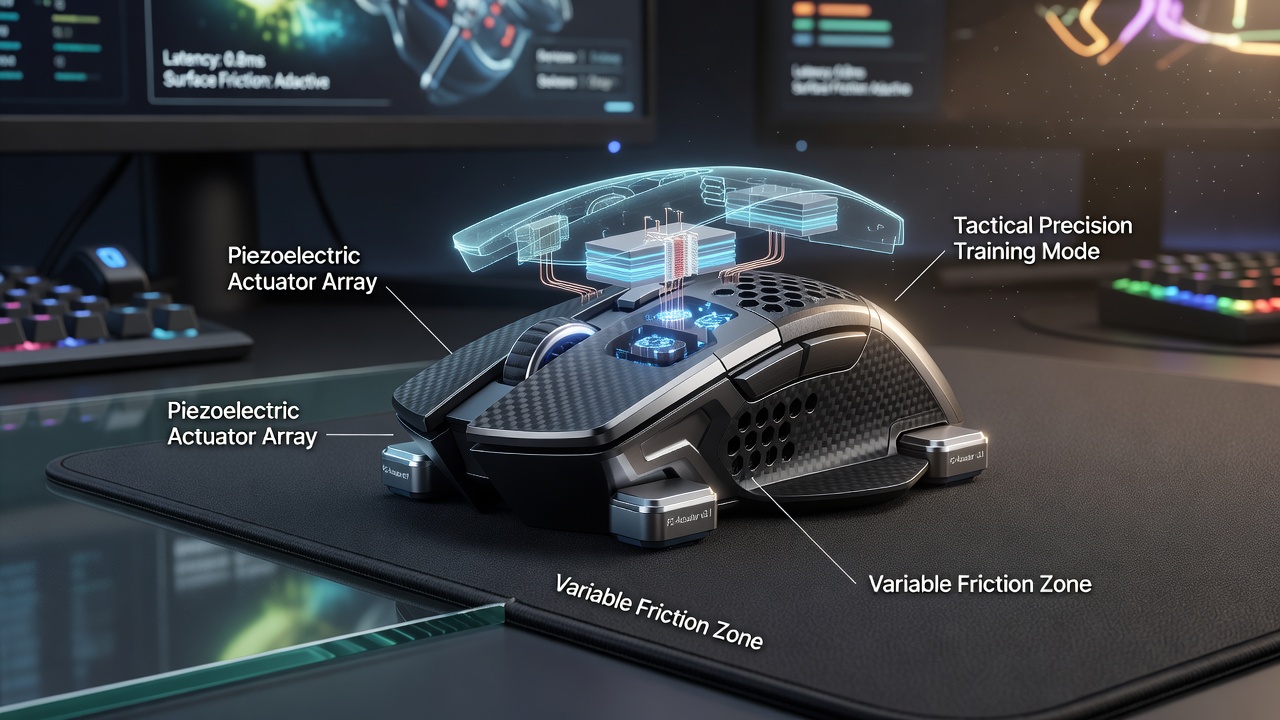
Engineers have integrated piezoelectric actuators directly into the feet of gaming mice, and these components allow the device to adjust surface friction in real time while users practice tactical shooter scenarios that demand pinpoint accuracy on varying virtual terrains.
The actuators expand or contract when voltage is applied, which raises or lowers the contact points between the mouse and the mousepad, and this mechanism creates measurable changes in glide resistance without requiring users to swap hardware or adjust settings manually.
Core Technology Behind Variable Friction Control
Piezoelectric materials generate mechanical movement from electrical signals, and manufacturers embed thin ceramic layers within the mouse feet assembly so that a microcontroller can modulate friction levels across a range of 0.15 to 0.45 coefficients during active gameplay, according to technical specifications released by component suppliers in 2025.
Teams designing these systems calibrate the actuators to respond within 5 milliseconds of sensor input, which means the mouse can simulate the drag of a cloth pad on one moment and then shift to the slickness of a hard plastic surface on the next without interrupting aim training routines.
Integration With Tactical Shooter Training Protocols
Competitive players in titles such as Counter-Strike 2 and Valorant use these mice to replicate environmental conditions found on different map surfaces, while trainers program friction profiles that match in-game movement physics and force athletes to adapt their muscle memory across sessions that last several hours.
Data collected from training facilities in August 2026 showed that teams incorporating variable-friction mice recorded a 12 percent improvement in flick-shot consistency when compared with groups using static hardware, because the actuators introduced controlled resistance that mirrored real-world variables such as dust accumulation or pad wear.
Software interfaces allow coaches to upload custom friction curves tied to specific scenarios, and the system logs every adjustment so analysts can correlate changes in mouse behavior with player performance metrics captured through separate tracking overlays.
Hardware Implementation and Sensor Fusion
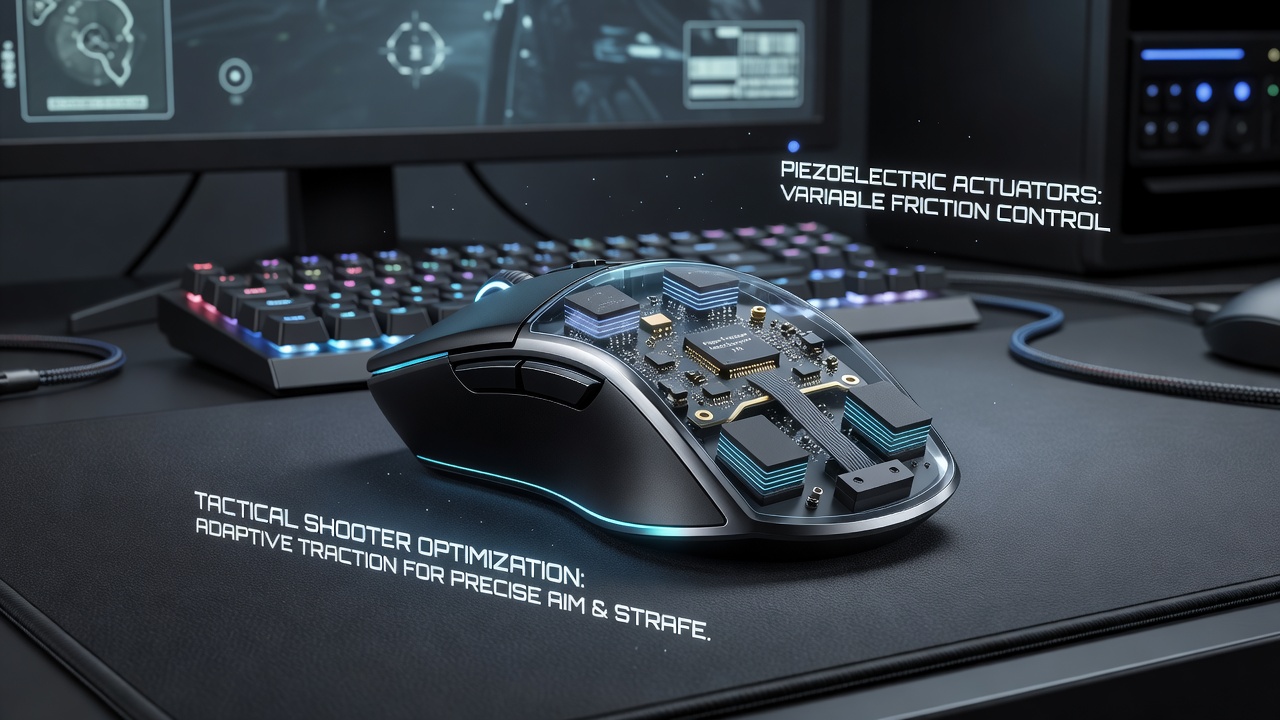
Modern implementations combine the actuators with optical sensors rated at 30,000 DPI, and the combined stack processes surface feedback loops that maintain consistent cursor response even as friction shifts occur mid-movement, which prevents the jitter that plagued earlier mechanical prototypes.
Power draw remains under 80 milliwatts during continuous operation because the piezoelectric elements only draw current when changing state, and this efficiency lets wireless models maintain battery life comparable to standard esports mice while delivering the additional functionality.
Researchers at the University of Stuttgart documented these power characteristics in a 2025 report that examined actuator duty cycles across extended training blocks, and the findings confirmed stable performance after more than 10,000 friction transitions.
Current Adoption Patterns in Esports Facilities
Organizations in North America and Asia began rolling out the technology during the 2026 preseason, while European squads focused on integrating the mice into dry-fire routines that emphasize micro-adjustments on simulated bomb sites and entry points.
One training center in Seoul reported equipping an entire roster with actuator-equipped mice after internal tests showed reduced overshoot errors on long-range engagements, and the facility now exports its custom friction profiles to partner teams through shared firmware repositories.
Industry observers note that the approach builds on earlier work with adaptive sensor calibration, yet the addition of physical surface variation introduces a new layer of proprioceptive feedback that digital-only solutions could not replicate.
Conclusion
Continued refinement of piezoelectric integration promises further granularity in friction control, and facilities that track longitudinal performance data expect additional metrics to emerge as more squads adopt the hardware throughout the remainder of 2026 and beyond.