15 Jul 2026
Procedural Audio Synthesis Techniques for Dynamic Soundscapes in Open-World Games
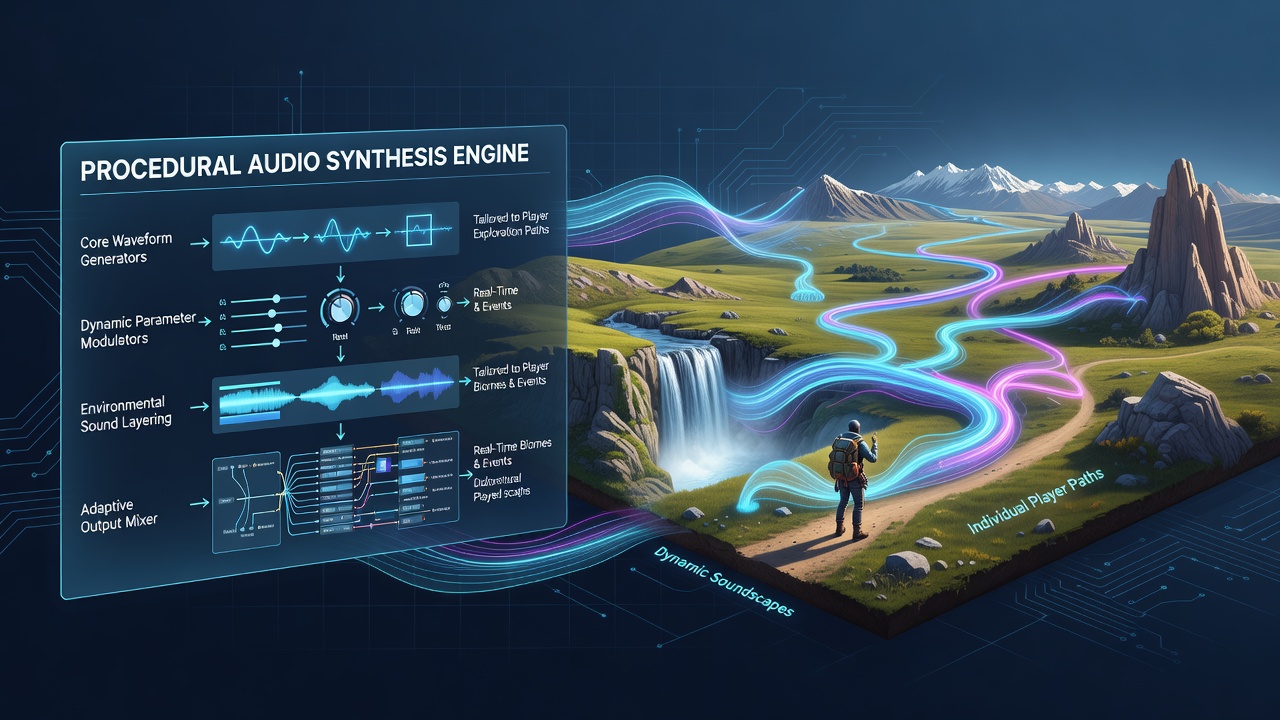 Developers integrate procedural audio synthesis into open-world titles to generate sound elements algorithmically rather than relying solely on pre-recorded files. These systems analyze player position, velocity, environmental data, and exploration history to produce audio that shifts continuously along individual paths. Research from institutions such as the University of Melbourne indicates that such methods reduce memory overhead while enabling greater variation across large maps.
Core Synthesis Methods in Use
Engineers apply several established techniques when building these adaptive systems. Granular synthesis breaks audio sources into tiny segments and reassembles them according to real-time parameters derived from player behavior. Frequency modulation synthesis generates complex tones through carrier and modulator waves whose relationships change based on terrain type or discovery events. Physical modeling simulates acoustic properties of virtual materials, allowing footsteps or wind interactions to evolve naturally as players traverse different biomes.
Data shows these approaches often combine within hybrid pipelines. One pipeline might route positional data from the game engine into a synthesis engine that adjusts parameters every few milliseconds. Observers note that this setup produces distinct auditory experiences even when two players follow similar routes at different times of day or after different prior actions.
Adaptation to Exploration Paths
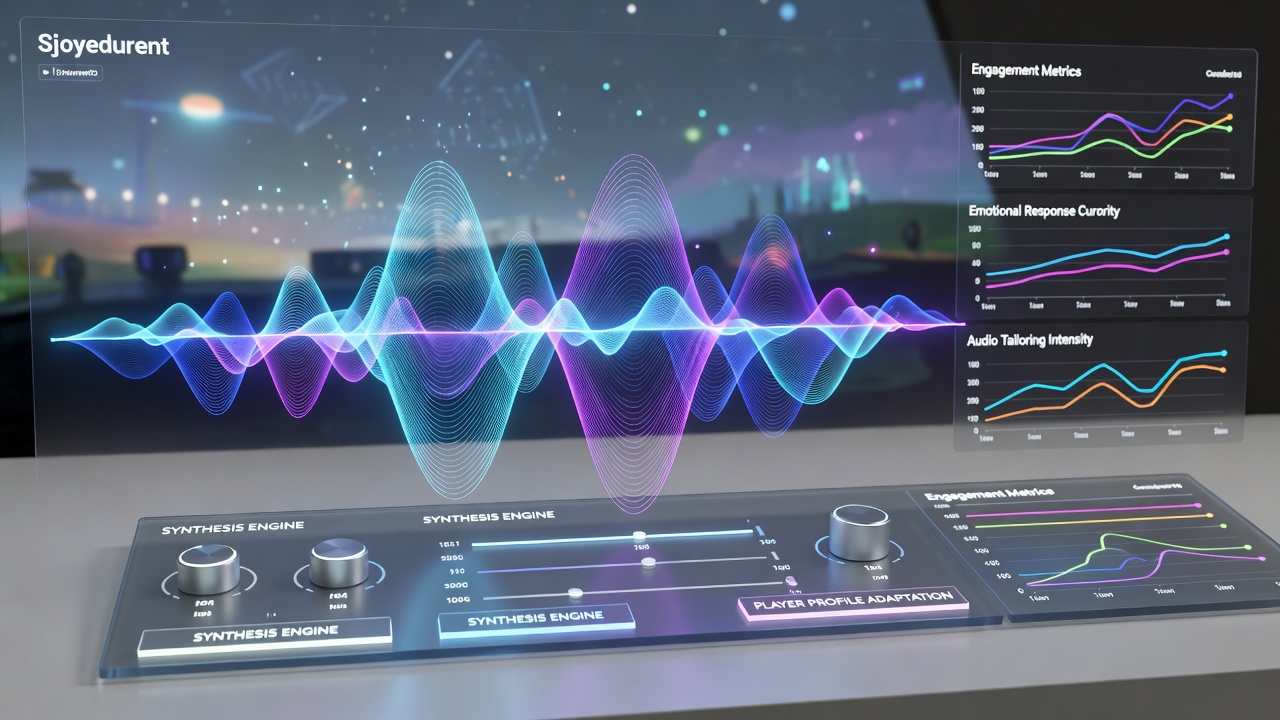
Path-specific tailoring occurs through layered parameter control. Systems track cumulative player statistics such as total distance traveled, unique locations visited, and interaction frequency with objects. These metrics feed into modulation matrices that alter pitch, timbre, and spatial positioning of generated sounds. In titles released before July 2026, developers documented cases where repeated visits to the same region gradually introduced new harmonic layers reflecting player familiarity.
Environmental sensors within the game world contribute additional variables. Temperature, time of day, and weather conditions modify synthesis parameters independently of player input. When combined with path history, the result creates soundscapes that feel personalized without requiring manual composition for every possible route combination.
Implementation Examples Across Titles
Several open-world releases demonstrate these techniques at scale. No Man's Sky employs procedural generation for planetary audio, where atmospheric sounds derive from procedural rules tied to planet composition and player altitude. Minecraft uses simpler procedural layering for biome transitions yet still tailors ambient tracks to exploration progress through seed-based variation. Newer engines released around 2025 incorporate machine learning models trained on player telemetry to predict likely path segments and precompute partial synthesis states.
Industry reports from the Entertainment Software Association highlight that studios allocate increasing resources to audio teams specializing in these methods. Integration typically happens through middleware such as FMOD or Wwise extended with custom procedural nodes. These tools allow designers to define rules rather than fixed sequences, shifting the workflow from asset creation toward parameter tuning.
Technical Considerations and Performance
Real-time synthesis demands careful resource management. Developers balance CPU load by limiting active synthesis voices and using predictive caching for upcoming terrain sections. Studies conducted at the Technical University of Denmark reveal that optimized systems maintain stable frame rates while delivering audio variation exceeding several hundred distinct combinations per hour of play. Latency between player action and audible response stays under 20 milliseconds in well-tuned implementations.
Networked play introduces further variables when multiple explorers occupy the same region. Servers synchronize synthesis seeds and parameter offsets so that shared environmental events produce consistent results across clients while still allowing individual path history to influence personal audio layers.
Conclusion
Procedural audio synthesis continues to expand the auditory dimension of open-world exploration. By linking synthesis parameters directly to player-specific data streams, developers create sound environments that respond uniquely to each journey. Ongoing refinements in algorithm efficiency and integration tools suggest these methods will appear in additional titles throughout 2026 and beyond.