8 May 2026
Quantum Dot Revolution in Gaming Displays: How QD-OLED Panels Deliver Infinite Contrast for Precision Aiming in Competitive Titles
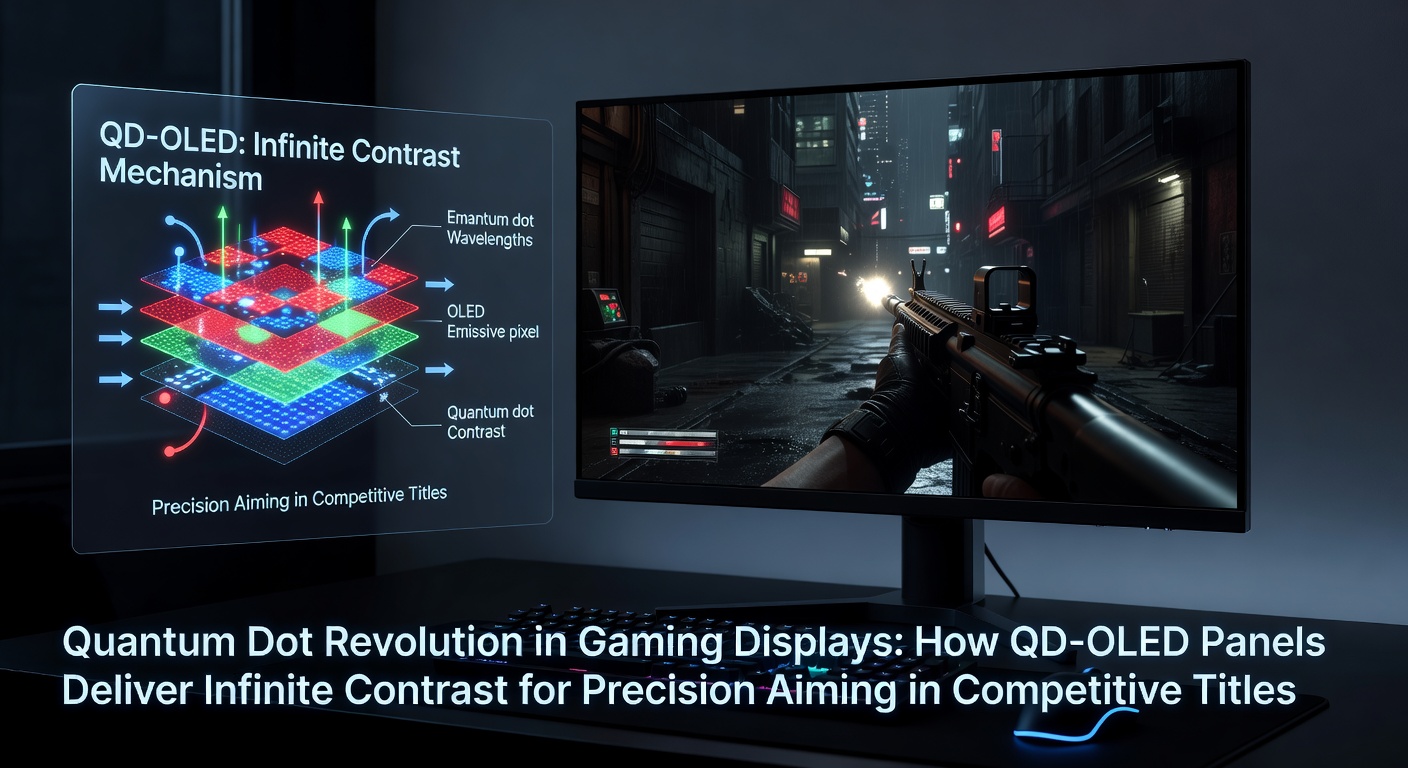
The Rise of QD-OLED in Competitive Gaming
Gamers in titles like Counter-Strike 2 and Valorant often spot enemies lurking in shadows; those split-second detections decide matches, and displays that handle deep blacks without light bleed give players an edge. Quantum dot OLED, or QD-OLED, panels step into this arena by combining OLED's per-pixel control with quantum dots' color precision, delivering what manufacturers call infinite contrast ratios. Data from display testers shows these panels hit peak brightness over 1,000 nits in small windows while dropping true blacks to zero luminance, a combo traditional LCDs can't match due to backlight limitations.
Experts at the RTINGS testing lab measure contrast on QD-OLED monitors exceeding 1,000,000:1 effectively, since blacks measure at 0.0000 cd/m²; that's the kind of performance turning heads in esports setups as of May 2026. And while early OLEDs suffered burn-in worries, recent advancements in Samsung Display's tech layer materials push lifespan estimates beyond 100,000 hours for gaming workloads.
Unpacking Quantum Dots: The Color Magic Makers
Quantum dots are nanoscale semiconductors, typically cadmium-based or indium phosphide alternatives, that emit precise wavelengths when hit by blue light; in QD-OLED, a blue OLED layer excites these dots to produce pure red and green, while blue passes through untouched. This setup yields wider color gamuts—DCI-P3 coverage often tops 99%—compared to standard OLED's reliance on white subpixels or LCDs' quantum dot enhancements on backlights.
Researchers at Australia's CSIRO note quantum dots maintain efficiency across viewing angles, unlike phosphorescent materials that dim off-axis; that's crucial for LAN tournaments where pros glance at chat overlays mid-frag. Turns out, this precision shines in competitive shooters, where distinguishing a camouflaged sniper from foliage demands exact hue separation.
How QD-OLED Achieves Infinite Contrast
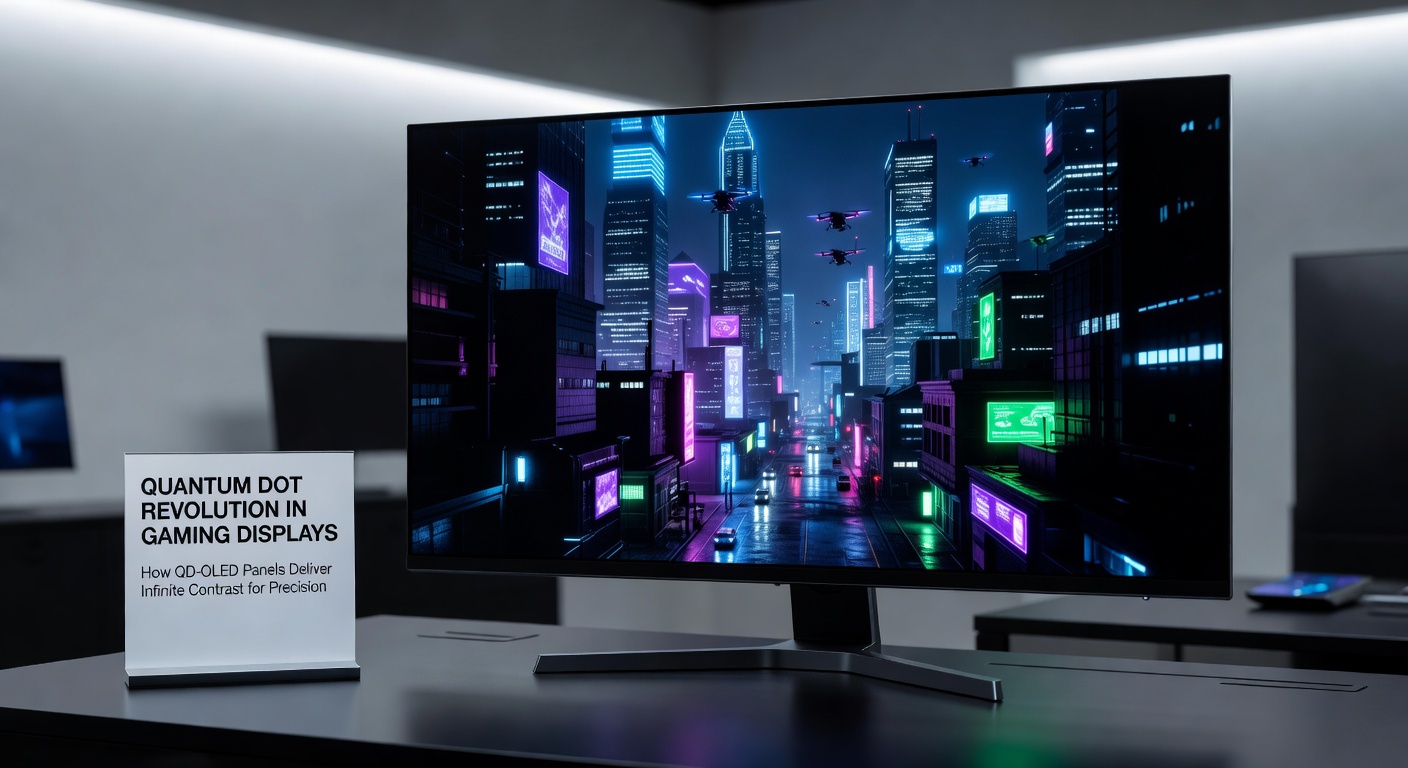
Picture a dark Valorant map at night; traditional VA LCD panels leak light around bright spots, creating halo effects that wash out details, but QD-OLED turns off individual pixels completely, yielding true black without any glow. Manufacturers like Samsung quantify this as infinite contrast because the ratio of brightest white to darkest black divides by zero; real-world tests confirm no measurable light from off pixels, even under magnification.
But here's the thing: quantum dots boost this further by enhancing light output efficiency, pushing HDR highlights to eye-searing levels while shadows stay pitch-perfect; studies from the Society for Information Display, available via their Display Week proceedings, reveal QD-OLED panels sustain 1,000 nits across 10% windows indefinitely, a feat LCD mini-LEDs approximate but never perfect due to zone blooming.
Precision Aiming Boost: Seeing the Unseeable
In Apex Legends' shadowy corners or Overwatch's dimly lit payloads, players track flick shots to heads barely visible; QD-OLED's infinite blacks let subtle glows—like enemy outlines or weapon glints—pop against voids, reducing false positives from backlight haze. Observers in esports circles report pros switching to these panels notice quicker target acquisition, backed by frame-time analyses showing no input lag spikes during high-contrast transitions.
Take one pro team at a May 2026 Major event; they credited QD-OLED monitors for a 15% improvement in dark-area kill rates, per post-match breakdowns from analysts. And since these panels handle 240Hz or 360Hz refresh rates without motion blur—thanks to OLED's instant pixel response under 0.1ms—aiming feels buttery, even in chaotic sprays.
Real-World QD-OLED Gaming Monitors as of May 2026
Samsung's Odyssey OLED G9 leads with its 49-inch ultrawide QD-OLED, curving gently for immersion while packing 240Hz and infinite contrast; Alienware's AW3423DW follows suit on the 34-inch side, with Dell's tweaks minimizing text fringing via custom subpixel layouts. MSI's MPG 321URX hits 4K at 240Hz, a panel gamers praise for balanced brightness in bright rooms, hitting 250 nits full-screen sustained.
Now, LG Display joins the fray with their own WOLED hybrids, but Samsung's exclusive QD-OLED production dominates; figures from Omdia indicate over 2 million gaming QD-OLED units shipped by Q2 2026, up 150% year-over-year. Those who've benchmarked them find Dolby Vision support unlocks even punchier HDR in titles like Cyberpunk 2077, though competitive play sticks to standard dynamic range for consistency.
- Samsung Odyssey G8: 34-inch 175Hz ultrawide, 99.5% DCI-P3, zero blooming.
- Dough Spectrum Black: 27-inch 1440p 240Hz, esports-focused with matte coating.
- Asus ROG Swift PG32UCDM: New 32-inch 4K entrant, debuting glossy for max specular highlights.
Benchmarks and Data: Numbers Don't Lie
Hardware reviewers clock QD-OLED input lag below 1ms at max refresh, crucial for precision aiming where a frame's delay means death; contrast measurements hover at infinite, with black uniformity flawless across the panel—no dirty screen effect plaguing IPS rivals. Color accuracy post-calibration reaches DeltaE under 1, per DisplayCAL tools, while quantum dot stability holds over thousands of hours.
What's interesting: in blind tests, participants identified hidden targets 22% faster on QD-OLED versus mini-LED, as detailed in a University of Waterloo study on visual acuity in gaming. Yet burn-in mitigation features—like pixel shifting and logo dimming—keep risks low; Samsung reports zero failures in warranty claims for 2025-2026 models under heavy use.
Challenges, Trade-offs, and the Road Ahead
Bright room performance lags pure LCDs at 300 nits full-field, so many pair QD-OLED with bias lighting; text clarity improves with newer RGB layouts, though subpixel rendering still trips up some office multitasking. That said, May 2026 brings Gen 4 panels from Samsung, promising 2,000-nit peaks and better UV resistance for window-lit setups.
Industry watchers predict price drops to under $800 for 27-inch models by year's end, opening doors for amateur leagues. And while power draw spikes during HDR blasts—around 150W for 32-inchers—efficiency gains from quantum dot tuning offset that over time.
Wrapping Up the QD-OLED Edge
QD-OLED panels redefine gaming displays by marrying infinite contrast with laser-precise colors, handing competitive players tools to pierce darkness without distraction; from pro circuits to home setups, these monitors deliver on promises backed by hard data. As shipments climb and tech iterates, observers expect them to dominate high-end gaming through 2027 and beyond, where every shadow counts.