12 Jul 2026
Spectroscopic Studies Reveal Color Shift Patterns in Aging OLED Panels Used by Professional Gamers Over Multi-Year Periods
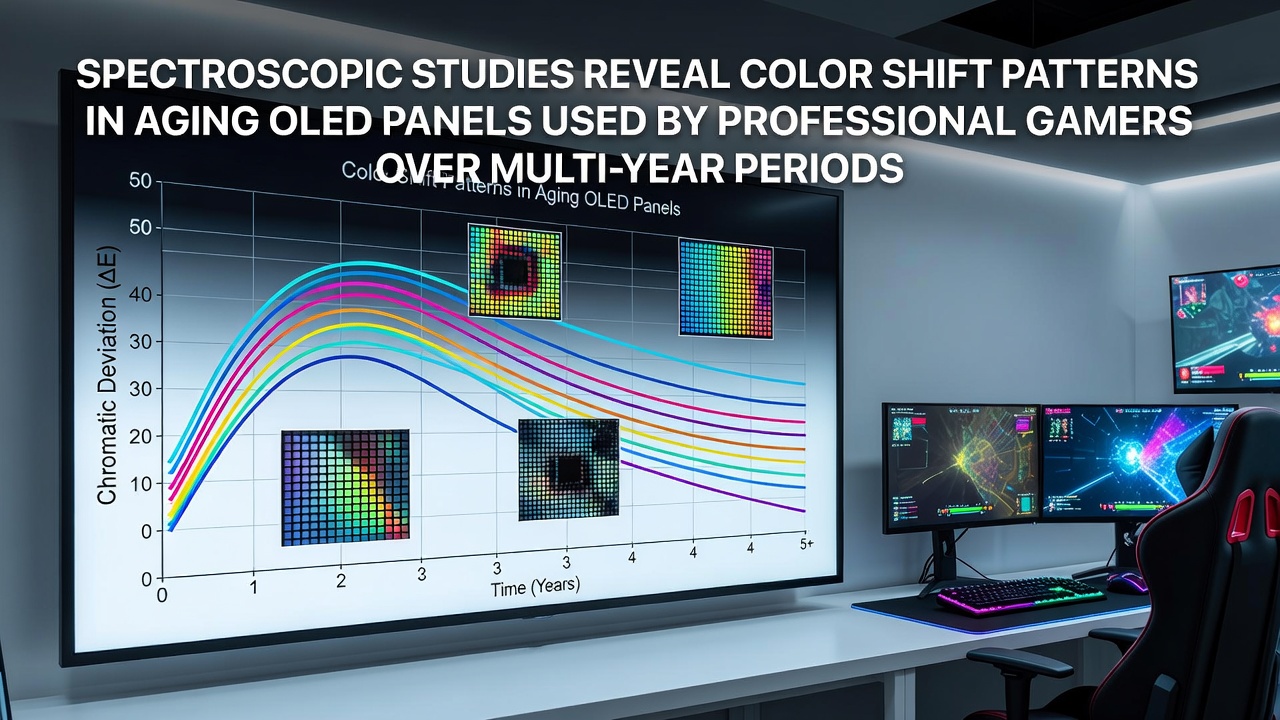 Spectroscopic analysis has become a key tool for tracking how OLED panels change over extended use in competitive gaming environments, where monitors often run for thousands of hours each year. Researchers apply techniques such as Raman spectroscopy and photoluminescence mapping to measure shifts in emission spectra, and these methods detect gradual alterations in red, green, and blue subpixel output that accumulate across multi-year periods. Data collected from professional setups shows consistent patterns tied to usage intensity, with blue subpixels typically exhibiting the most pronounced drift because of higher energy demands during rapid refresh cycles. Professional gamers frequently operate OLED displays at peak brightness for extended sessions, and this practice accelerates certain degradation pathways that spectroscopic readings can isolate. Studies indicate that after approximately 8,000 to 12,000 hours of operation, color temperature begins to skew toward warmer tones as blue luminance declines relative to red and green. Observers note that these changes remain subtle in casual viewing yet become measurable through calibrated instruments that compare initial factory spectra against current output profiles.
Key Factors Driving Observed Shifts
Panel age combines with environmental variables to shape degradation rates, and heat buildup from high-refresh-rate operation plays a central role in accelerating molecular changes within the organic layers. Spectroscopic data collected across multiple esports facilities reveals that ambient temperatures above 25 degrees Celsius correlate with faster blue subpixel decay, while consistent cooling protocols slow the process. Usage logs paired with spectral measurements further demonstrate that static HUD elements common in strategy games contribute to localized burn-in effects that alter surrounding color accuracy over time.
Material composition differences between various OLED generations also influence outcomes, and newer panels incorporating improved phosphorescent emitters show reduced shift magnitudes compared with earlier models. Research conducted at institutions such as those affiliated with the National Research Council Canada has quantified these variations through controlled aging tests that replicate tournament schedules.
Data Collection Methods Across Esports Facilities
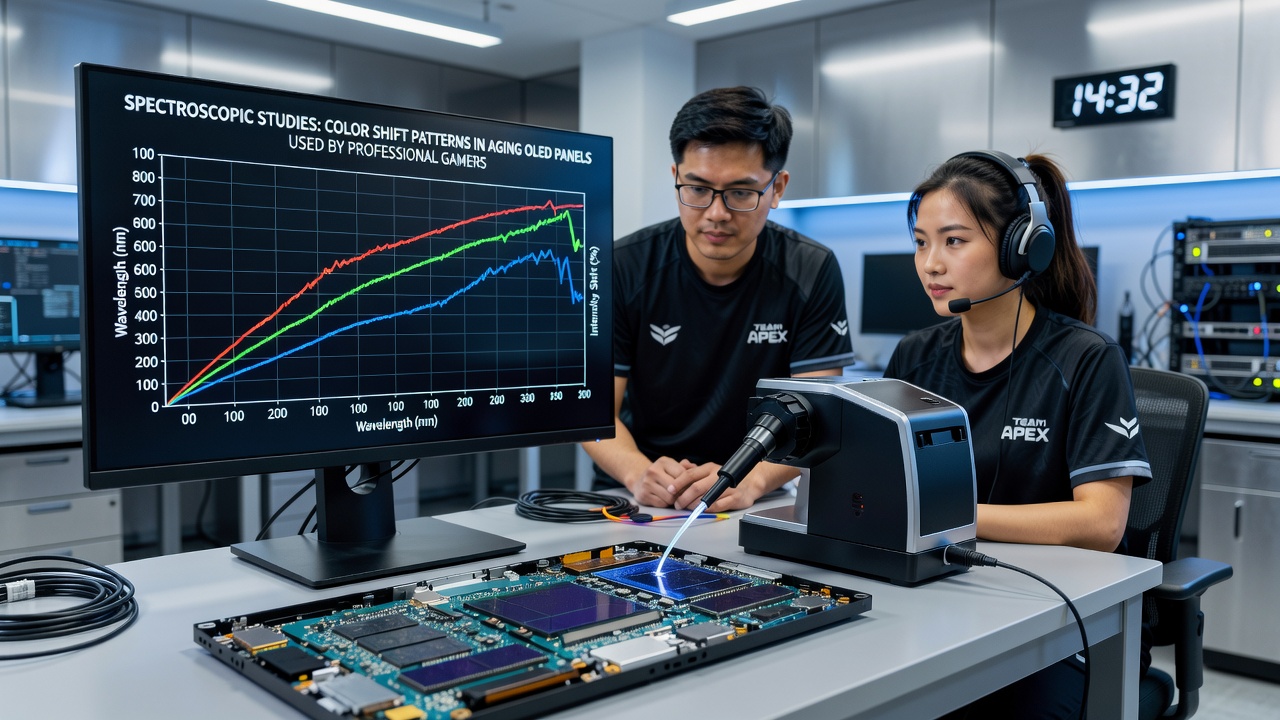
Teams in organized leagues have begun integrating periodic spectroscopic checks into equipment maintenance routines, and portable spectrometers allow technicians to capture readings without removing monitors from active stations. Readings taken in July 2026 across several North American training centers indicated average delta-E shifts of 3.2 units in blue channels after three years of daily use, while red and green channels remained below 1.8 units on average. These figures emerged from repeated measurements on the same panels rather than cross-sectional comparisons, which strengthens the reliability of trend identification.
Regional Variations and Industry Responses
European research groups have contributed complementary datasets that highlight how different calibration standards affect perceived color stability, and one collaborative project involving multiple universities documented smaller shift rates when panels received firmware updates that adjust subpixel drive voltages dynamically. Australian gaming hardware labs have reported similar findings using hyperspectral imaging techniques that provide additional spatial resolution beyond standard point measurements. Industry organizations such as the Society for Information Display have compiled these regional results into broader reports that track panel longevity across competitive environments.
Manufacturers have responded by introducing mitigation features including pixel shifting algorithms and automatic brightness limiters calibrated specifically for extended gaming sessions. Spectroscopic validation of these features shows measurable reductions in shift rates when enabled consistently, although the degree of improvement varies by panel model and usage profile.
Long-Term Monitoring Implications
Continued spectroscopic tracking offers esports organizations concrete metrics for scheduling panel replacements before color accuracy falls below competitive thresholds. Facilities that maintain detailed spectral histories can correlate usage hours with shift progression and plan equipment rotations accordingly. Such data-driven approaches help preserve visual consistency across tournament environments where precise color differentiation can influence gameplay decisions.
Conclusion
Spectroscopic studies continue to map color shift patterns in aging OLED panels deployed within professional gaming setups, and accumulated evidence points to predictable relationships between operational hours, environmental conditions, and subpixel degradation rates. Organizations that incorporate regular spectral monitoring into maintenance protocols gain practical tools for managing display performance over multi-year periods, while ongoing research refines understanding of material-level changes that drive these observable trends.