10 Jun 2026
Volumetric Capture Pipelines Enabling Lifelike Performer Integration in Branching Narrative VR Experiences
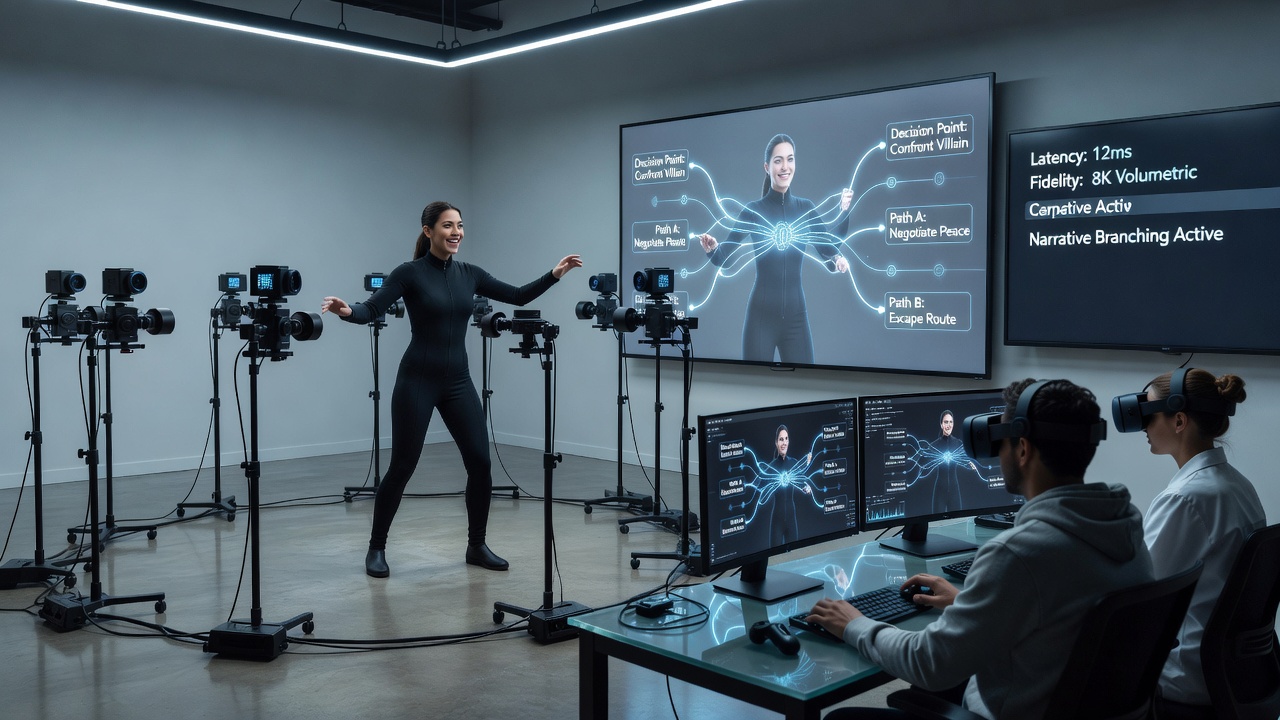 Researchers have developed volumetric capture pipelines that record performers using arrays of synchronized cameras positioned around a capture volume, generating three-dimensional models that retain surface details, textures, and motion data for direct import into virtual environments. These pipelines process raw footage through depth estimation algorithms, point cloud reconstruction, and mesh optimization stages before compressing the output for real-time rendering in VR headsets. The technology supports branching narrative structures where user decisions alter story paths because the captured performers appear as volumetric video assets rather than pre-rendered animations. Studios integrate these assets into game engines such as Unity and Unreal Engine, allowing dynamic lighting and occlusion that match the virtual scene.
Pipeline Components and Processing Stages
Multiple synchronized RGB-D cameras capture simultaneous video streams from different angles, after which software aligns the footage using calibration markers and reconstructs geometry frame by frame. Data compression techniques reduce file sizes while preserving visual fidelity, enabling playback at interactive frame rates inside head-mounted displays.
Observers note that temporal consistency algorithms smooth transitions between frames, reducing visual artifacts that would otherwise break immersion when performers interact with branching plot points. Hardware requirements typically include high-bandwidth storage arrays and GPU clusters for initial processing, though cloud-based services have begun offering remote rendering options for smaller production teams.Integration in Branching Narratives
Developers embed volumetric performers into narrative graphs where each branch loads the appropriate performance segment based on user input detected through hand tracking or controller signals. Because the assets retain full three-dimensional presence, characters can occupy physical space within the virtual scene and respond to viewer movement with natural parallax effects.
Studies from institutions in Canada and the European Union have examined synchronization between performer motion and narrative triggers, finding that accurate spatial registration improves user retention across multiple play sessions. Production pipelines now incorporate real-time retargeting tools that adjust performer scale and position to fit different virtual environments without requiring new capture sessions.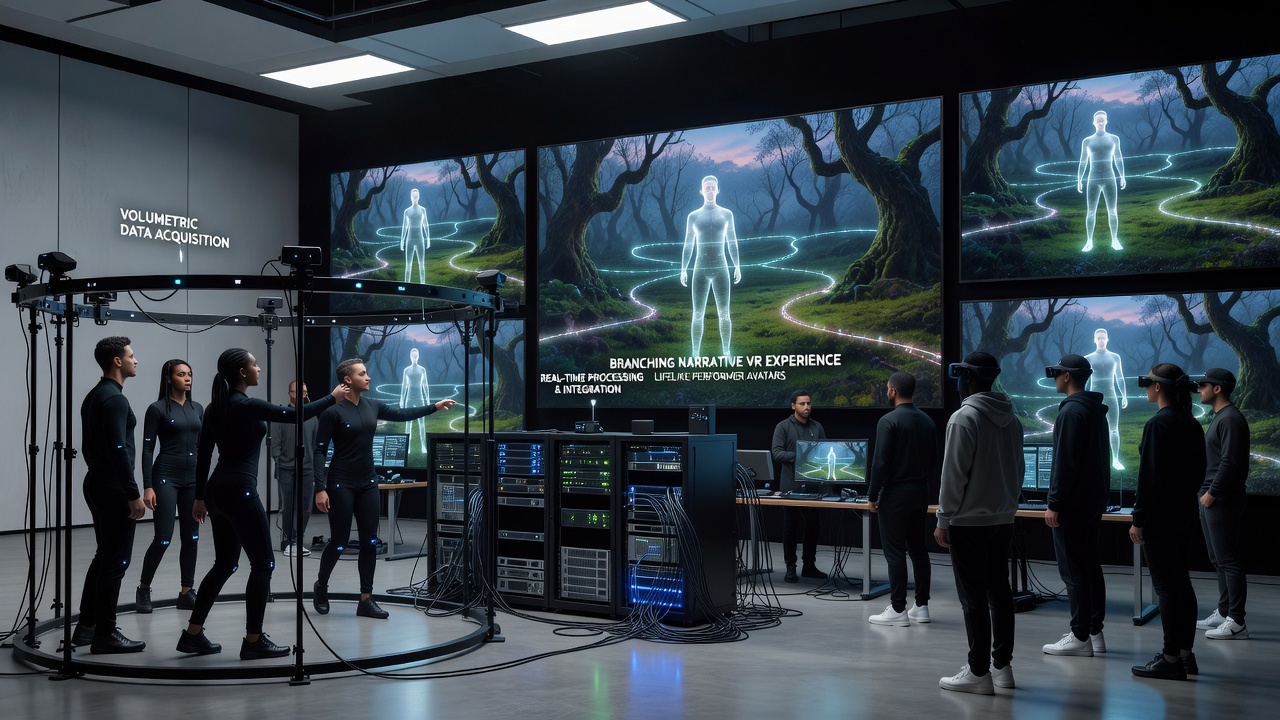
Developments Around June 2026
Industry reports indicate that several major platforms plan to release updated capture toolkits in June 2026 that include improved AI-driven cleanup for noisy depth data captured under variable lighting conditions. These updates aim to shorten post-production time from days to hours while maintaining compatibility with existing branching narrative authoring software.
Research teams at universities across Australia and the United States continue to publish findings on latency reduction methods that allow live volumetric streaming into multiplayer VR experiences, expanding the format beyond single-user stories.Technical Challenges and Solutions
Bandwidth constraints remain significant because uncompressed volumetric data can exceed several gigabytes per minute of performance. Engineers address this through layered encoding that prioritizes high-detail regions near the viewer while simplifying distant geometry. Motion prediction models further reduce data transmission needs during live integration sessions.
Those working with legacy VR hardware have documented methods for downsampling captured assets to maintain acceptable performance on older headsets without sacrificing core visual cues that support narrative comprehension.Conclusion
Volumetric capture pipelines continue to advance the technical foundation for placing recorded performers inside interactive VR stories that respond to user choices. As processing speeds increase and compression standards mature, the gap between captured reality and rendered environments narrows, supporting more complex branching structures across commercial and research projects. Data from ongoing deployments shows consistent growth in asset reuse rates, indicating pipelines are becoming standard components in immersive content creation workflows.